Opis produktu
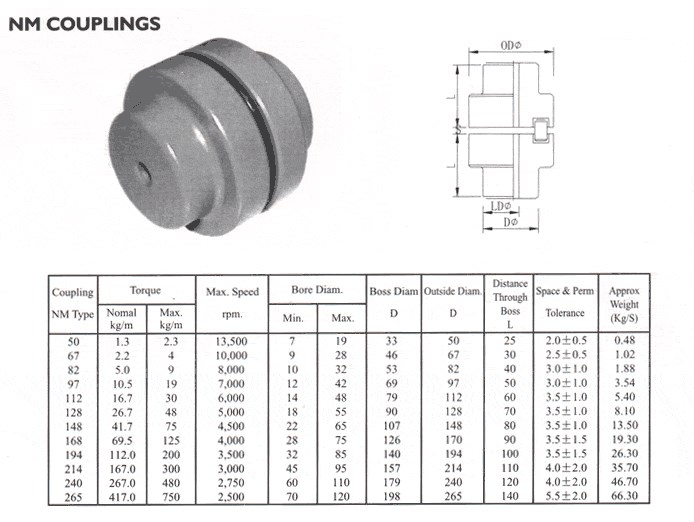
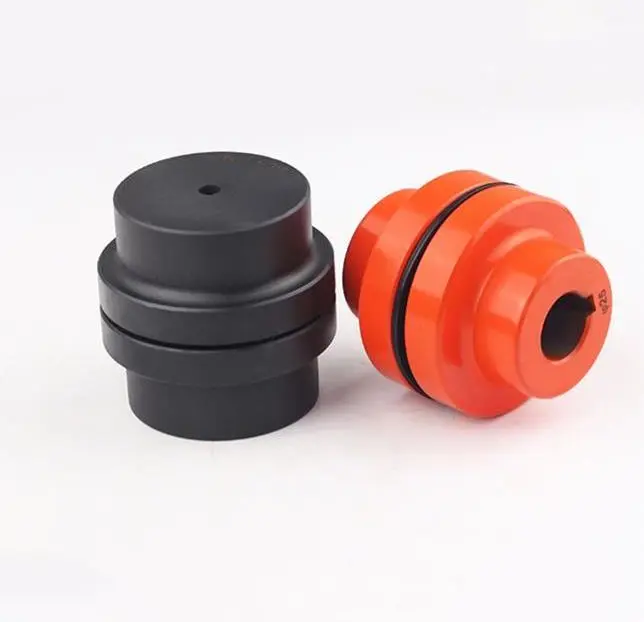
NM Coupling, NM Rubber Coupling Elements, NM Rubber Spider
| Tworzywo: | NBR, CSM/SBR | Kolor: | Czarny |
| Tensile Strength: | 12Mpa | Twardość: | 80shore A |
| Wydłużenie: | 350% | Gęstość: | 1,25 g/cm3 |
| Rozmiar: | NM50, NM67, NM82, NM97, NM112, NM128, NM148, NM168, NM194, NM214, NM240, NM265 |
Sprzęgło NM
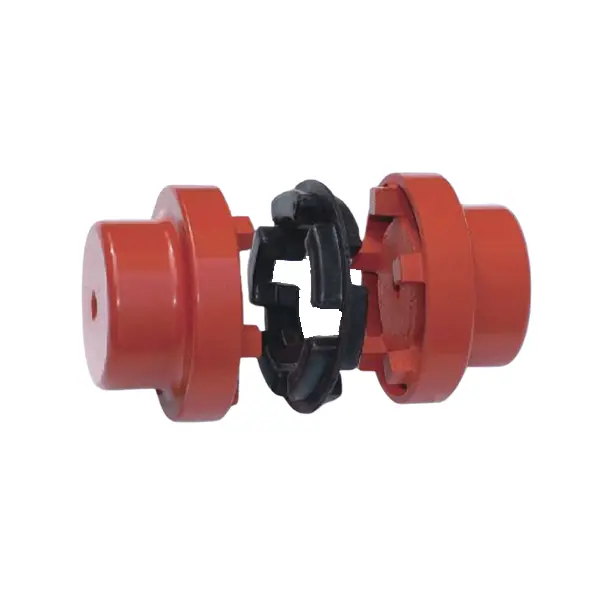
Typ NM jest precyzyjnie produkowany ze specjalnie zaprojektowanej gumy syntetycznej z 2 podobnymi korpusami z żeliwa
Kołnierze żeliwne:
Designed not only for the power transmission but also for protection of flexible rubber
Guma elastyczna: Zastosowania w pompach, wentylatorach, sprężarkach, pojazdach, urządzeniach transportowych, maszynach budowlanych, betoniarkach, traktorach, maszynach przekładniowych, maszynach do obróbki metali, walcach i wszystkich innych przekładniach
Wykonane z gumy i stalowych rdzeni, w które włożone są zęby, zapewniają doskonałą trwałość i wydajność sprzęgła
Cechy:
Ekonomiczne i praktyczne wykorzystanie
Cicha i płynna praca
Łatwa instalacja i konserwacja
Dostępne dla maszyn o wysokim momencie obrotowym i pracy przerywanej
Właściwości kauczuku syntetycznego: odpowiednia elastyczność i odporność na tłumienie, oleje, kwasy i zasady
Dane techniczne:
1: z certyfikatem CE
2: pełna kontrola jakości przed dostawą
3: OEM is welcomed
4: bogate doświadczenie w odlewnictwie precyzyjnym
materiał: CSM/SBR, NBR
kolor: czarny.
powierzchnia: gładka
wytrzymałość na rozciąganie: 12Mpa
twardość: 80Shore A
wydłużenie: 400%
gęstość: 1,25 g/cm3
wpływ elastyczności: >25%
wytrzymałość na rozdarcie: 35KN/m
temperatura pracy: 100oC
standardowy rozmiar:
NM50, NM67, NM82, NM97, NM112, NM128, NM148, NM168, NM194, NM214, NM240, NM265
Charakterystyka fizyczna: wykonana metodą wtrysku z wysokiej jakości poliestru lub formowanego CSM/SBR. Zaprojektowana specjalnie do wszelkiego rodzaju metalowych sprzęgieł wałowych, charakteryzuje się bardzo dobrą wytrzymałością na rozciąganie, wysoką odpornością na zużycie, wysoką sprężystością, wodoodpornością, odpornością na olej oraz doskonałą odpornością na zmęczenie i uderzenia. Posiadamy kompletne zestawy form i dostarczamy pełną gamę sprzęgieł serii GR, GS, MT, Hb, HRC, L, NM oraz Gear J, charakteryzujących się wysoką jakością i bogatym doświadczeniem. Stosowana do wszelkiego rodzaju przemysłowych metalowych sprzęgieł wałowych.
Dane techniczne:
materiał: poliester, CSM/SBR
color: yellow, red, purple, green, black etc.
powierzchnia: gładka
wytrzymałość na rozciąganie: 12-55Mpa
twardość: 80-98Shore A
wydłużenie: 400%-650%
gęstość: 1,25 g/cm3
wpływ elastyczności: >25%
wytrzymałość na rozdarcie: 35-155 kN/m
strata ścierna akronu: <0,05 cm3/1,61 km
odkształcenie trwałe przy ściskaniu (22h*70oC): <10%
temperatura pracy: 120oC
standardowy rozmiar złącza poliuretanowego:
GR14, GR19, GR24, GR28, GR38, GR42, GR48, GR55, GR65, GR75, GR90, GR100, GR110, GR125, GR140, GR160, GR180
MT1, MT2, MT3, MT4, MT5, MT6, MT7, MT8, MT9, MT10, MT11, MT12, MT13
HRC70, HRC90, HRC110, HRC130, HRC150, HRC180, HRC230, HRC280
L35, L50, L70, L75, L90/95, L99/100, L110, L150, L190, L225, L276
FALK-R 10R, 20R, 30R, 40R, 50R, 60R, 70R, 80R
standardowy rozmiar dla sprzęgieł gumowych:
Hb80, Hb95, Hb110, Hb125, Hb140, Hb160, Hb180, Hb200, Hb240, Hb280, Hb315
HRC70, HRC90, HRC110, HRC130, HRC150, HRC180, HRC230, HRC280
L35, L50, L70, L75, L90/95, L99/100, L110, L150, L190, L225
NM50, NM67, NM82, NM97, NM112, NM128, NM148, NM168, NM194, NM214, NM240, NM265
Bieg 3J, 4J, 5J, 6J, 7J, 8J, 9J, 10J, 11J
wykonanie form o specjalnych wymiarach według rysunków kupującego
***przy składaniu zapytania prosimy o potwierdzenie numeru i ilości produktu***
| Standard: | DIN, ANSI, GB |
|---|---|
| Tworzywo: | Nr+SBR |
| Connection: | Flange |
| Surface Treatment: | Nothing |
| Head Type: | Round |
| Wydłużenie: | 350% |
| Próbki: |
US$ 10/Piece
1 sztuka (minimalne zamówienie) | |
|---|
| Personalizacja: |
Dostępny
| Spersonalizowane żądanie |
|---|
Can flexible couplings accommodate high torque and high-speed applications?
Yes, flexible couplings can accommodate both high torque and high-speed applications, but the suitability depends on the specific design and material of the flexible coupling. Different types of flexible couplings have varying torque and speed capacities, and it’s crucial to select the right type of coupling based on the application requirements.
High Torque Applications:
Some flexible couplings, such as gear couplings and disc couplings, are designed to handle high torque levels. Gear couplings consist of toothed hubs that mesh with each other, providing a robust and efficient torque transmission. They are commonly used in heavy-duty industrial applications, such as steel mills, mining equipment, and power generation plants, where high torque loads are prevalent.
Disc couplings are also suitable for high torque applications. They use a series of flexible metal discs that can handle significant torque while compensating for misalignment. Disc couplings are often used in high-speed machinery and critical applications where precise torque transmission is essential.
High-Speed Applications:
Flexible couplings can also be used in high-speed applications. For instance, certain disc couplings, elastomeric couplings, and grid couplings are capable of handling high rotational speeds. These couplings have low inertia, which means they can respond quickly to changes in speed and provide efficient power transmission at high RPMs.
Elastomeric couplings, such as jaw couplings and tire couplings, are commonly used in various industrial applications, including pumps, compressors, and fans, where both torque and speed requirements are high. They offer good flexibility and damping properties, making them suitable for applications with high-speed variations and vibrations.
Considerations:
When selecting a flexible coupling for high torque and high-speed applications, several factors should be considered:
- The torque and speed ratings provided by the coupling manufacturer should be checked to ensure they meet or exceed the application’s requirements.
- The design and materials of the coupling should be suitable for the specific operating conditions, including temperature, environment, and potential exposure to corrosive substances.
- Proper alignment and installation of the coupling are critical to ensure optimal performance and prevent premature wear.
- In some cases, it may be necessary to use additional components, such as torque limiters or speed reducers, to protect the coupling and the connected equipment from excessive loads or speed fluctuations.
In conclusion, flexible couplings can indeed accommodate high torque and high-speed applications, but the appropriate coupling type and proper selection are essential to ensure reliable and efficient performance in these demanding conditions.
Can flexible couplings be used in corrosive or harsh environments?
Yes, flexible couplings can be designed and selected to be used in corrosive or harsh environments. The choice of materials and coatings plays a crucial role in ensuring the coupling’s durability and performance under challenging conditions.
Corrosion-Resistant Materials:
In corrosive environments, it is essential to use materials that can withstand chemical attacks and oxidation. Stainless steel, specifically grades like 316 or 17-4 PH, is commonly chosen for flexible couplings in such situations. Stainless steel offers excellent corrosion resistance, making it suitable for applications where the coupling may come into contact with corrosive substances or moisture.
Special Coatings:
For certain harsh environments, coupling manufacturers may apply special coatings to enhance the coupling’s corrosion resistance. Examples of coatings include zinc plating, nickel plating, or epoxy coatings. These coatings provide an additional layer of protection against corrosive agents and help extend the coupling’s lifespan.
Sealed Designs:
In environments where the coupling is exposed to contaminants like dust, dirt, or moisture, sealed designs are preferred. Sealed flexible couplings prevent these substances from entering the coupling’s internal components, thus reducing the risk of corrosion and wear. The sealed design also helps to maintain the coupling’s performance over time in challenging conditions.
High-Temperature Applications:
For harsh environments with high temperatures, flexible couplings made from high-temperature resistant materials, such as certain heat-resistant stainless steels or superalloys, can be used. These materials retain their mechanical properties and corrosion resistance even at elevated temperatures.
Chemical Resistance:
For applications where the coupling might encounter chemicals or solvents, it is essential to select a coupling material that is chemically resistant. This prevents degradation and ensures the coupling’s integrity in such environments.
Specialized Designs:
In some cases, where the environment is exceptionally harsh or unique, custom-designed flexible couplings may be necessary. Engineering a coupling to meet the specific demands of the environment ensures optimal performance and reliability.
Consultation with Manufacturers:
When considering flexible couplings for corrosive or harsh environments, it is advisable to consult with coupling manufacturers or engineering experts. They can provide valuable insights and recommend suitable materials, coatings, and designs based on the specific operating conditions.
Summary:
Flexible couplings can indeed be used in corrosive or harsh environments, provided the appropriate materials, coatings, and designs are chosen. Stainless steel, sealed designs, and special coatings are some of the solutions that enhance the coupling’s corrosion resistance and performance. It is essential to consider the specific environment and application requirements when selecting a flexible coupling to ensure optimal functionality and durability in challenging conditions.
Jakie materiały są powszechnie stosowane do produkcji sprzęgieł elastycznych?
Sprzęgła elastyczne są produkowane z różnorodnych materiałów, z których każdy oferuje inne właściwości i charakterystyki, dostosowane do konkretnych zastosowań. Wybór materiału zależy od takich czynników, jak wymagania danego zastosowania, warunki środowiskowe, moment obrotowy i pożądana elastyczność. Oto niektóre z materiałów powszechnie stosowanych w produkcji sprzęgieł elastycznych:
- Stal: Stal jest powszechnie stosowanym materiałem w sprzęgłach elastycznych ze względu na swoją wytrzymałość, trwałość i doskonałe właściwości przenoszenia momentu obrotowego. Sprzęgła stalowe nadają się do ciężkich zastosowań przemysłowych, wymagających wysokiego momentu obrotowego i trudnych warunków pracy.
- Stal nierdzewna: Stal nierdzewna jest często używana do produkcji elastycznych złączy w środowiskach o wysokim potencjale korozyjnym. Złącza ze stali nierdzewnej charakteryzują się doskonałą odpornością na rdzę i inne czynniki korozyjne, dzięki czemu idealnie nadają się do zastosowań w przemyśle morskim, spożywczym i chemicznym.
- Aluminium: Sprzęgła aluminiowe są lekkie, charakteryzują się niską bezwładnością i zapewniają doskonałą równowagę. Są powszechnie stosowane w zastosowaniach, w których redukcja masy ma kluczowe znaczenie, takich jak przemysł lotniczy i robotyka.
- Mosiądz: Złączki mosiężne znane są ze swojej przewodności elektrycznej i są używane w zastosowaniach, w których wymagane jest uziemienie lub izolacja elektryczna, np. w niektórych maszynach przemysłowych lub sprzęcie elektronicznym.
- Lane żelazo: Sprzęgła żeliwne charakteryzują się dobrą wytrzymałością i trwałością, dlatego też są często wykorzystywane w przemyśle, gdzie wymagana jest odporność na obciążenia udarowe i wibracje.
- Plastik/Polimer: Niektóre elastyczne sprzęgła wykorzystują wysokowydajne polimery lub tworzywa sztuczne, takie jak poliuretan czy nylon. Materiały te zapewniają dobrą elastyczność, niskie tarcie i odporność na działanie chemikaliów. Złącza plastikowe nadają się do zastosowań, w których odporność na korozję i niska masa są kluczowe.
- Elastomery: Elastomery są stosowane jako elementy elastyczne w wielu złączach elastycznych. Materiały takie jak kauczuk naturalny, neopren lub uretan są powszechnie stosowane jako elementy elastomerowe, zapewniające elastyczność i właściwości tłumiące drgania.
Wybór materiału sprzęgła zależy od specyficznych potrzeb danego zastosowania. Na przykład, w zastosowaniach o wysokiej wydajności i dużej wytrzymałości, ze względu na ich wytrzymałość, wymagane mogą być sprzęgła stalowe lub ze stali nierdzewnej, natomiast w zastosowaniach, w których redukcja masy ma kluczowe znaczenie, korzystne mogą okazać się sprzęgła aluminiowe lub polimerowe. Ponadto, na wybór materiału wpływają takie czynniki, jak zakres temperatur, narażenie na działanie substancji chemicznych oraz wymagania elektryczne w środowisku pracy danego zastosowania.
Producenci zazwyczaj podają specyfikacje materiałowe swoich sprzęgieł, pomagając użytkownikom podejmować świadome decyzje w oparciu o konkretne wymagania ich zastosowań.


editor by CX 2023-10-17