Produktbeskrivelse
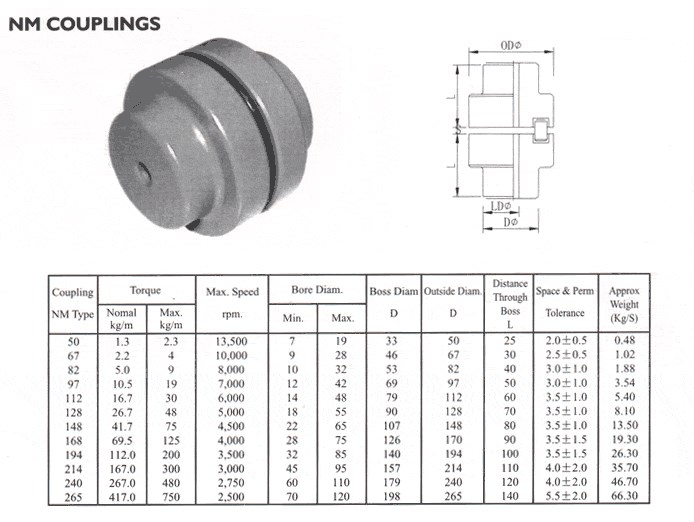
NM Coupling, NM Rubber Coupling Elements, NM Rubber Spider
| Materiale: | NBR, CSM/SBR | Farge: | Svart |
| Tensile Strength: | 12 MPa | Hardhet: | 80-land A |
| Forlengelse: | 350% | Tetthet: | 1,25 g/cm3 |
| Størrelse: | NM50, NM67, NM82, NM97, NM112, NM128, NM148, NM168, NM194, NM214, NM240, NM265 |
NM-kobling
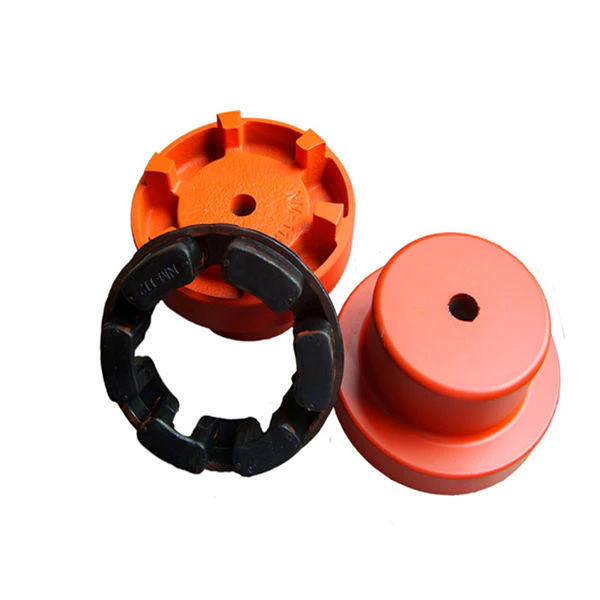
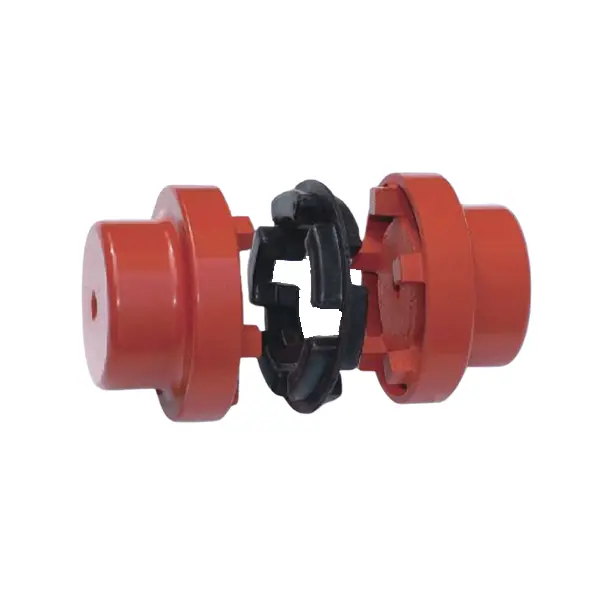
NM-typen er presist produsert av en spesialdesignet syntetisk gummi med to lignende støpejernslegemer
Støpejernsflenser:
Designed not only for the power transmission but also for protection of flexible rubber
Fleksibel gummi: Bruksområder for pumper, vifter, kompressorer, kjøretøy, transportutstyr, konstruktører, sementblandere, traktorer, girkasser, metallbearbeidingsmaskiner, valser og alle andre girkasser
Laget av gummi og stålkjerner satt inn i tennene for å gi utmerket holdbarhet og koblingsytelse
Funksjoner:
Økonomisk og praktisk bruk
Stille og jevn drift
Enkel installasjon og vedlikehold
Tilgjengelig for maskiner med høyt dreiemoment og intermitterende drift
Kjennetegn ved syntetisk gummi: riktig elastisitet og motstand mot demping, olje, syrer og alkalier
Spesifikasjoner:
1: med CE-sertifikat
2: full kvalitetskontroll før levering
3: OEM is welcomed
4: rik erfaring med presisjonsstøping
Materiale: CSM/SBR, NBR
farge: svart.
overflate: glatt
strekkfasthet: 12 MPa
hardhet: 80 Shore A
forlengelse: 400%
tetthet: 1,25 g/cm3
elastisitetspåvirkning: >25%
rivestyrke: 35 kN/m²
arbeidstemperatur: 100 °C
standard størrelse:
NM50, NM67, NM82, NM97, NM112, NM128, NM148, NM168, NM194, NM214, NM240, NM265
Fysisk egenskap: Laget ved injeksjon med høykvalitets polyester eller støpeform CSM/SBR. Den er designet og spesialdesignet for alle typer metallakselkoblinger med svært god ytelse med høy strekkfasthet, høy slitestyrke, høy elastisk motstandskraft, vannbestandighet, oljebestandighet og utmerket utmattingsmotstand, høy slagfasthet osv. Vi har komplette sett med støpeformer og leverer et komplett utvalg av GR-, GS-, MT-, Hb-, HRC-, L-, NM- og Gear J-seriekoblinger med høy kvalitet og utmerket erfaring. Gjelder alle typer industrielle metallakselkoblinger.
Spesifikasjoner:
materiale: polyester, CSM/SBR
color: yellow, red, purple, green, black etc.
overflate: glatt
strekkfasthet: 12-55 MPa
hardhet: 80–98 Shore A
forlengelse: 400%-650%
tetthet: 1,25 g/cm3
elastisitetspåvirkning: >25%
rivestyrke: 35–155 kN/m²
Akron slitasjetap: <0,05 cm³/1,61 km
kompresjonssett (22t*70oC): <10%
arbeidstemperatur: 120 °C
Standard størrelse for polyuretankobling:
GR14, GR19, GR24, GR28, GR38, GR42, GR48, GR55, GR65, GR75, GR90, GR100, GR110, GR125, GR140, GR160, GR180
MT1, MT2, MT3, MT4, MT5, MT6, MT7, MT8, MT9, MT10, MT11, MT12, MT13
HRC70, HRC90, HRC110, HRC130, HRC150, HRC180, HRC230, HRC280
L35, L50, L70, L75, L90/95, L99/100, L110, L150, L190, L225, L276
FALK-R 10R, 20R, 30R, 40R, 50R, 60R, 70R, 80R
Standard størrelse for gummikobling:
Hb80, Hb95, Hb110, Hb125, Hb140, Hb160, Hb180, Hb200, Hb240, Hb280, Hb315
HRC70, HRC90, HRC110, HRC130, HRC150, HRC180, HRC230, HRC280
L35, L50, L70, L75, L90/95, L99/100, L110, L150, L190, L225
NM50, NM67, NM82, NM97, NM112, NM128, NM148, NM168, NM194, NM214, NM240, NM265
Gir 3J, 4J, 5J, 6J, 7J, 8J, 9J, 10J, 11J
spesialstørrelseslist i henhold til kjøperens tegninger
***Når du sender en forespørsel, vennligst bekreft produktets nummer og antall***
/* March 10, 2571 17:59:20 */!function(){function s(e,r){var a,o={};try{e&&e.split(“,”).forEach(function(e,t){e&&(a=e.match(/(.*?):(.*)$/))&&1
| Standard: | DIN, ANSI, GB |
|---|---|
| Materiale: | Nr+SBR |
| Connection: | Flange |
| Surface Treatment: | Nothing |
| Head Type: | Round |
| Type: | Nm Type |
| Prøver: |
US$ 10/Piece
1 stk (min. bestilling) | |
|---|
| Tilpasning: |
Tilgjengelig
| Tilpasset forespørsel |
|---|
How does a flexible coupling handle angular, parallel, and axial misalignment?
A flexible coupling is designed to accommodate various types of misalignment between two rotating shafts: angular misalignment, parallel misalignment, and axial misalignment. The flexibility of the coupling allows it to maintain a connection between the shafts while compensating for these misalignment types. Here’s how a flexible coupling handles each type of misalignment:
- Angular Misalignment: Angular misalignment occurs when the axes of the two shafts are not collinear and form an angle with each other. Flexible couplings can handle angular misalignment by incorporating an element that can flex and bend. One common design is the “spider” or “jaw” element, which consists of elastomeric materials. As the shafts are misaligned, the elastomeric element can deform slightly, allowing the coupling to accommodate the angular offset between the shafts while still transmitting torque.
- Parallel Misalignment: Parallel misalignment, also known as offset misalignment, occurs when the axes of the two shafts are parallel but not perfectly aligned with each other. Flexible couplings can handle parallel misalignment through the same elastomeric element. The flexible nature of the element enables it to shift and adjust to the offset between the shafts, ensuring continuous power transmission while minimizing additional stresses on the machinery.
- Axial Misalignment: Axial misalignment, also called end-play misalignment, occurs when the two shafts move closer together or farther apart along their common axis. Flexible couplings can handle axial misalignment through specific designs that allow limited axial movement. For instance, some couplings use slotted holes or a floating member that permits axial displacement while maintaining the connection between the shafts.
By providing the capability to handle angular, parallel, and axial misalignment, flexible couplings offer several advantages for power transmission systems:
- They help to prevent premature wear and damage to the connected equipment, reducing maintenance and replacement costs.
- They minimize vibration and shock loads, enhancing the overall smoothness and reliability of the machinery.
- They reduce the risk of equipment failure due to misalignment-induced stresses, improving the system’s operational life.
- They allow for easier installation and alignment adjustments, saving time and effort during setup and maintenance.
Overall, flexible couplings play a crucial role in handling misalignment and ensuring efficient power transmission in various industrial applications.
Can flexible couplings be used in corrosive or harsh environments?
Yes, flexible couplings can be designed and selected to be used in corrosive or harsh environments. The choice of materials and coatings plays a crucial role in ensuring the coupling’s durability and performance under challenging conditions.
Corrosion-Resistant Materials:
In corrosive environments, it is essential to use materials that can withstand chemical attacks and oxidation. Stainless steel, specifically grades like 316 or 17-4 PH, is commonly chosen for flexible couplings in such situations. Stainless steel offers excellent corrosion resistance, making it suitable for applications where the coupling may come into contact with corrosive substances or moisture.
Special Coatings:
For certain harsh environments, coupling manufacturers may apply special coatings to enhance the coupling’s corrosion resistance. Examples of coatings include zinc plating, nickel plating, or epoxy coatings. These coatings provide an additional layer of protection against corrosive agents and help extend the coupling’s lifespan.
Sealed Designs:
In environments where the coupling is exposed to contaminants like dust, dirt, or moisture, sealed designs are preferred. Sealed flexible couplings prevent these substances from entering the coupling’s internal components, thus reducing the risk of corrosion and wear. The sealed design also helps to maintain the coupling’s performance over time in challenging conditions.
High-Temperature Applications:
For harsh environments with high temperatures, flexible couplings made from high-temperature resistant materials, such as certain heat-resistant stainless steels or superalloys, can be used. These materials retain their mechanical properties and corrosion resistance even at elevated temperatures.
Chemical Resistance:
For applications where the coupling might encounter chemicals or solvents, it is essential to select a coupling material that is chemically resistant. This prevents degradation and ensures the coupling’s integrity in such environments.
Specialized Designs:
In some cases, where the environment is exceptionally harsh or unique, custom-designed flexible couplings may be necessary. Engineering a coupling to meet the specific demands of the environment ensures optimal performance and reliability.
Consultation with Manufacturers:
When considering flexible couplings for corrosive or harsh environments, it is advisable to consult with coupling manufacturers or engineering experts. They can provide valuable insights and recommend suitable materials, coatings, and designs based on the specific operating conditions.
Summary:
Flexible couplings can indeed be used in corrosive or harsh environments, provided the appropriate materials, coatings, and designs are chosen. Stainless steel, sealed designs, and special coatings are some of the solutions that enhance the coupling’s corrosion resistance and performance. It is essential to consider the specific environment and application requirements when selecting a flexible coupling to ensure optimal functionality and durability in challenging conditions.
Hva er en fleksibel kobling, og hvordan fungerer den?
En fleksibel kobling er en mekanisk innretning som brukes til å koble sammen to aksler samtidig som den tillater relativ bevegelse mellom dem. Den er konstruert for å overføre dreiemoment fra en aksel til en annen, samtidig som den kompenserer for feiljustering, vibrasjoner og støt. Fleksible koblinger er viktige komponenter i ulike roterende maskiner og systemer, ettersom de bidrar til å beskytte det tilkoblede utstyret og forbedre den generelle ytelsen.
Typer fleksible koblinger:
Det finnes flere typer fleksible koblinger, hver med sitt unike design og egenskaper. Noen vanlige typer inkluderer:
- Kjevekoblinger: Kjevekoblinger har elastomerkoblinger som passer mellom to nav. De kan håndtere vinkel- og parallellforskyvning samtidig som de demper vibrasjoner.
- Skivekoblinger: Skivekoblinger bruker tynne metallskiver for å koble sammen akslingene. De er svært fleksible og gir utmerket kompensasjon for feiljustering.
- Girkoblinger: Girkoblinger bruker girtenner for å overføre dreiemoment. De tilbyr høy dreiemomentkapasitet og kan håndtere moderat feiljustering.
- Bjelkekoblinger: Bjelkekoblinger bruker et enkelt stykke fleksibelt materiale, for eksempel en metallbjelke, for å overføre dreiemoment samtidig som de kompenserer for feiljustering.
- Belgkoblinger: Belgkoblinger bruker en belglignende struktur for å tillate aksial, vinkelmessig og parallell feiljusteringskompensasjon.
- Oldham-koblinger: Oldham-koblinger bruker tre skiver, hvor den midterste har et vinkelrett spor for å tillate kompensasjon for feiljustering.
Slik fungerer en fleksibel kobling:
Virkemåten til en fleksibel kobling avhenger av den spesifikke designen, men de generelle prinsippene er like. La oss ta eksemplet med en kjevekobling for å forklare hvordan en fleksibel kobling fungerer:
- To aksler er koblet til koblingsnavene på hver side, med en elastomer-edderkopp plassert mellom dem.
- Når dreiemoment påføres den ene akselen, fører det til at edderkoppen komprimeres og deformeres litt, og overfører dreiemomentet til den andre akselen.
- Ved feiljustering mellom akslingene, bøyer elastomer-kjernen seg og kompenserer for feiljusteringen, noe som sikrer jevn momentoverføring uten å påføre akslingene eller tilkoblet utstyr for store belastninger.
- Elastomer-edderkoppen fungerer også som et dempingselement som absorberer vibrasjoner og støt under drift, noe som reduserer slitasje på utstyret og forbedrer systemstabiliteten.
Samlet sett er fleksibiliteten og evnen til å kompensere for feiljustering de viktigste egenskapene som gjør at en fleksibel kobling fungerer effektivt. Valget av en spesifikk fleksibel koblingstype avhenger av applikasjonens krav, som momentkapasitet, feiljusteringskompensasjon og miljøforhold.


editor by CX 2024-01-09