وصف المنتج
وصف المنتج
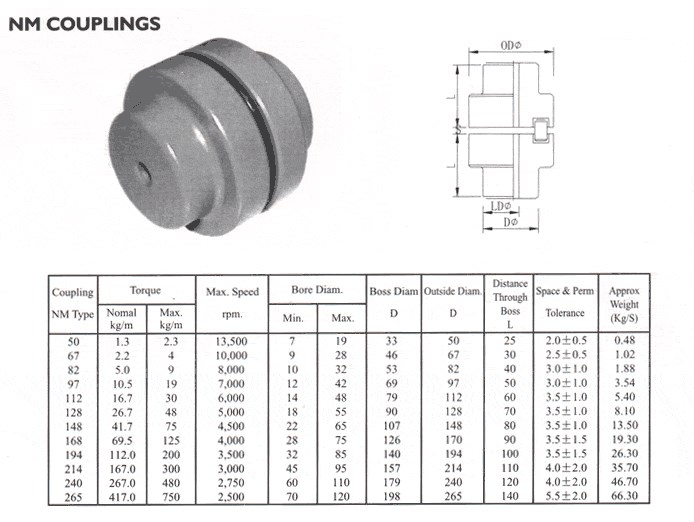
COUPLINGS
| HRC | FCL | Chain coupling | GE | L | NM | MH | Torque limiter |
| HRC 70B | FCL90 | KC4012 | GE14 | L050 | NM50 | MH45 | TL250-2 |
| HRC 70F | FCL100 | KC4014 | GE19 | L070 | NM67 | MH55 | TL250-1 |
| HRC 70H | FCL112 | KC4016 | GE24 | L075 | NM82 | MH65 | TL350-2 |
| HRC 90B | FCL125 | KC5014 | GE28 | L090 | NM97 | MH80 | TL350-1 |
| HRC 90F | FCL140 | KC5016 | GE38 | L095 | NM112 | MH90 | TL500-2 |
| HRC 90H | FCL160 | KC6018 | GE42 | L099 | NM128 | MH115 | TL500-1 |
| HRC 110B | FCL180 | KC6571 | GE48 | L100 | NM148 | MH130 | TL700-2 |
| HRC 110F | FCL200 | KC6571 | GE55 | L110 | NM168 | MH145 | TL700-1 |
| HRC 110H | FCL224 | KC8018 | GE65 | L150 | NM194 | MH175 | |
| HRC 130B | FCL250 | KC8571 | GE75 | L190 | NM214 | MH200 | |
| HRC 130F | FCL280 | KC8571 | GE90 | L225 | |||
| HRC 130H | FCL315 | KC1571 | |||||
| HRC 150B | FCL355 | KC12018 | |||||
| HRC 150F | FCL400 | KC12571 | |||||
| HRC 150H | FCL450 | ||||||
| HRC 180B | FCL560 | ||||||
| HRC 180F | FCL630 | ||||||
| HRC 180H | |||||||
| HRC 230B | |||||||
| HRC 230F | |||||||
| HRC 230H | |||||||
| HRC 280B | |||||||
| HRC 280F | |||||||
| HRC 280H |
Catalogue
Workshop
Lots of coupling in stock
التعليمات
Q1: Are you trading company or manufacturer ?
A: We are factory.
Q2: How long is your delivery time and shipment?
1.Sample Lead-times: 10-20 days.
2.Production Lead-times: 30-45 days after order confirmed.
Q3: What is your advantages?
1. The most competitive price and good quality.
2. Perfect technical engineers give you the best support.
3. OEM is available.
/* 22 يناير 2571 19:08:37 */!function(){function s(e,r){var a,o={};try{e&&e.split(“,").forEach(function(e,t){e&&(a=e.match(/(.*?):(.*)$/))&&1
| قياسي أم غير قياسي: | معيار |
|---|---|
| بناء: | مرن |
| Material: | Steel |
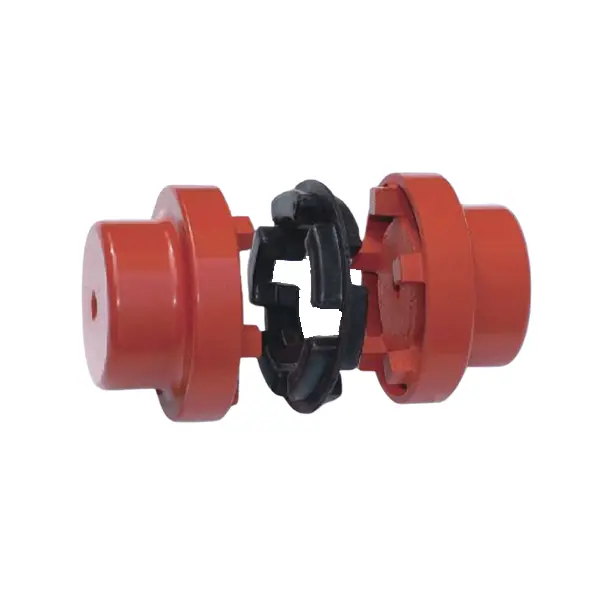
| Type 1: | Nm50 |
| Type 2: | Nm67 |
| Type 3: | Nm82 |
| التخصيص: |
متاح
| طلب مخصص |
|---|
How does a flexible coupling protect connected equipment from shock loads and vibrations?
Flexible couplings play a crucial role in protecting connected equipment from shock loads and vibrations by providing damping and isolation capabilities. When machines or mechanical systems experience sudden shock loads or vibrations, the flexible coupling acts as a buffer, absorbing and dissipating the impact, thereby reducing the transmitted forces and protecting the equipment. Here’s how flexible couplings achieve this:
- Damping of Vibrations: Flexible couplings are often made from materials that exhibit damping properties. When vibrations are transmitted through the shafts, the flexible coupling’s material can absorb a portion of the vibrational energy, converting it into heat. This dissipation of energy helps reduce the amplitude of the vibrations and prevents them from propagating further into the connected equipment.
- Vibration Isolation: In addition to damping vibrations, flexible couplings also offer a degree of vibration isolation. They are designed to decouple the two shafts, which means that vibrations occurring on one shaft are not directly transmitted to the other shaft. This isolation effect prevents vibrations from propagating across the entire system and minimizes the impact on sensitive equipment or nearby components.
- Shock Absorption: When the connected machinery experiences sudden shock loads, such as during a startup or abrupt changes in load, the flexible coupling can act as a shock absorber. The coupling’s design allows it to deform slightly under the impact, absorbing and distributing the shock energy. This prevents the shock from being directly transferred to the connected equipment, reducing the risk of damage or premature wear.
- Misalignment Compensation: Flexible couplings are capable of compensating for misalignment between the shafts. Misalignment can lead to additional stresses and vibrations in the system. By allowing for some degree of angular, parallel, and axial misalignment, the flexible coupling reduces the forces transmitted to the connected equipment and the supporting structures.
- Reduction of Resonance Effects: Resonance is a phenomenon that occurs when the natural frequency of a system matches the frequency of external vibrations, leading to amplified vibrations. Flexible couplings can help avoid resonance effects by altering the system’s natural frequency and providing some level of flexibility that damps the resonance response.
By incorporating a flexible coupling into the drivetrain or power transmission system, equipment manufacturers and operators can significantly improve the reliability and longevity of connected machinery. The coupling’s ability to dampen vibrations, isolate shocks, and compensate for misalignment contributes to a smoother and more stable operation, reducing maintenance requirements and enhancing overall system performance.
In summary, flexible couplings act as protective elements, shielding connected equipment from shock loads and vibrations. Their ability to dampen vibrations, isolate shocks, and compensate for misalignment contributes to a smoother and more reliable operation of various mechanical systems.
What are the differences between elastomeric and metallic flexible coupling designs?
Elastomeric and metallic flexible couplings are two distinct designs used to transmit torque and accommodate misalignment in mechanical systems. Each type offers unique characteristics and advantages, making them suitable for different applications.
Elastomeric Flexible Couplings:
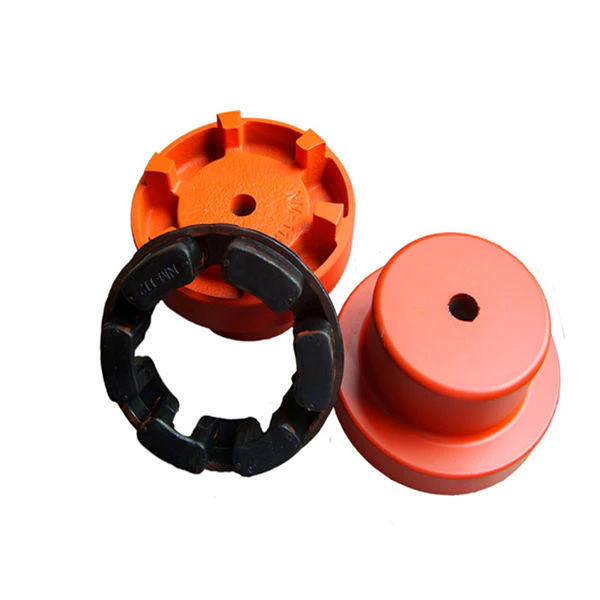
Elastomeric flexible couplings, also known as flexible or jaw couplings, employ an elastomeric material (rubber or similar) as the flexible element. The elastomer is typically molded between two hubs, and it acts as the connector between the driving and driven shafts. The key differences and characteristics of elastomeric couplings include:
- Misalignment Compensation: Elastomeric couplings are designed to handle moderate levels of angular, parallel, and axial misalignment. The elastomeric material flexes to accommodate the misalignment while transmitting torque between the shafts.
- Vibration Damping: The elastomeric material in these couplings offers excellent vibration dampening properties, reducing the transmission of vibrations from one shaft to another. This feature helps protect connected equipment from excessive vibrations and enhances system reliability.
- Shock Load Absorption: Elastomeric couplings can absorb and dampen shock loads, protecting the system from sudden impacts or overloads.
- Cost-Effective: Elastomeric couplings are generally more cost-effective compared to metallic couplings, making them a popular choice for various industrial applications.
- Simple Design and Installation: Elastomeric couplings often have a straightforward design, allowing for easy installation and maintenance.
- Lower Torque Capacity: These couplings have a lower torque capacity compared to metallic couplings, making them suitable for applications with moderate torque requirements.
- Common Applications: Elastomeric couplings are commonly used in pumps, compressors, fans, conveyors, and other applications that require moderate torque transmission and misalignment compensation.
Metallic Flexible Couplings:
Metallic flexible couplings use metal components (such as steel, stainless steel, or aluminum) to connect the driving and driven shafts. The metallic designs can vary significantly depending on the type of metallic coupling, but some general characteristics include:
- High Torque Capacity: Metallic couplings have higher torque transmission capabilities compared to elastomeric couplings. They are well-suited for applications requiring high torque handling.
- Misalignment Compensation: Depending on the design, some metallic couplings can accommodate minimal misalignment, but they are generally not as flexible as elastomeric couplings in this regard.
- Stiffer Construction: Metallic couplings are generally stiffer than elastomeric couplings, offering less vibration dampening but higher torsional stiffness.
- Compact Design: Metallic couplings can have a more compact design, making them suitable for applications with limited space.
- Higher Precision: Metallic couplings often offer higher precision and concentricity, resulting in better shaft alignment.
- Higher Cost: Metallic couplings are typically more expensive than elastomeric couplings due to their construction and higher torque capacity.
- Common Applications: Metallic couplings are commonly used in high-speed machinery, precision equipment, robotics, and applications with high torque requirements.
ملخص:
In summary, the main differences between elastomeric and metallic flexible coupling designs lie in their flexibility, torque capacity, vibration dampening, cost, and applications. Elastomeric couplings are suitable for applications with moderate torque, misalignment compensation, and vibration dampening requirements. On the other hand, metallic couplings are chosen for applications with higher torque and precision requirements, where flexibility and vibration dampening are less critical.
هل يمكنك شرح الأنواع المختلفة لتصميمات الوصلات المرنة المتاحة؟
تتوفر أنواع عديدة من تصميمات الوصلات المرنة، لكل منها بنيتها وخصائصها الفريدة. صُممت هذه الوصلات خصيصًا لتلبية متطلبات تطبيقات محددة ومعالجة أنواع مختلفة من عدم المحاذاة واحتياجات نقل عزم الدوران. فيما يلي بعض أكثر أنواع الوصلات المرنة شيوعًا:
- وصلات الفك: تتكون وصلات الفك من محورين بفكين منحنيين، وجزء مرن من مادة مطاطية بينهما. يعمل هذا الجزء كعنصر مرن، ويعوض عن عدم المحاذاة الزاوية والمتوازية. تُستخدم وصلات الفك على نطاق واسع في مختلف التطبيقات الصناعية نظرًا لتصميمها البسيط وفعاليتها في معالجة عدم المحاذاة وتخميد الاهتزازات.
- وصلات الأقراص: تستخدم وصلات الأقراص أقراصًا معدنية رقيقة مزودة بسلسلة من الشقوق والحواف المتناوبة لربط الأعمدة. يتيح تصميم وصلة القرص تعويضًا ممتازًا عن عدم المحاذاة، بما في ذلك عدم المحاذاة الزاوية والمتوازية والمحورية. وتُعرف وصلات الأقراص بصلابتها الالتوائية العالية وقدرتها على نقل عزم الدوران بدقة.
- وصلات التروس: تتكون وصلات التروس من محاور مسننة متصلة بواسطة غلاف خارجي مزود بأسنان تروس. وهي مناسبة تمامًا للتطبيقات التي تتطلب عزم دوران عالٍ وانحرافًا متوسطًا. توفر وصلات التروس تعويضًا جيدًا للانحراف وقدرة عالية على تحمل عزم الدوران، مما يجعلها شائعة الاستخدام في التطبيقات الصناعية الشاقة.
- وصلات الحزمة: تستخدم وصلات العوارض قطعة واحدة من مادة مرنة، غالباً ما تكون عارضة معدنية، لربط الأعمدة. تتيح مرونة المادة تعويض عدم المحاذاة الزاوية والمحورية. تتميز وصلات العوارض بصغر حجمها وخفة وزنها وانخفاض قصورها الذاتي، مما يجعلها مناسبة للتطبيقات التي تتطلب سرعات عالية.
- وصلات منفاخية: تتكون وصلات المنفاخ من هيكل مرن يشبه المنفاخ يربط بين المحورين. وهي قادرة على تعويض عدم المحاذاة الزاوية والمتوازية والمحورية. وتُعرف وصلات المنفاخ بصلابتها الالتوائية العالية وقدرتها على الحفاظ على نقل سرعة ثابتة.
- وصلات أولدهام: تستخدم وصلات أولدهام ثلاثة أقراص، يحتوي القرص الأوسط منها على فتحة عمودية. يتيح هذا التصميم تعويض عدم المحاذاة الزاوية أثناء نقل عزم الدوران بين المحاور. تُستخدم وصلات أولدهام غالبًا عند الحاجة إلى عزل كهربائي بين الأعمدة.
لكل تصميم من تصاميم الوصلات المرنة مزاياه وعيوبه، ويعتمد الاختيار على عوامل مثل متطلبات عزم الدوران للتطبيق، وظروف عدم المحاذاة، وبيئة التشغيل، والسرعة. ويضمن الاختيار الصحيح لنوع الوصلة الأداء الأمثل والكفاءة والموثوقية في مختلف الأنظمة الميكانيكية والآلات الدوارة.


editor by CX 2024-04-26