제품 설명
제품 설명
COUPLINGS
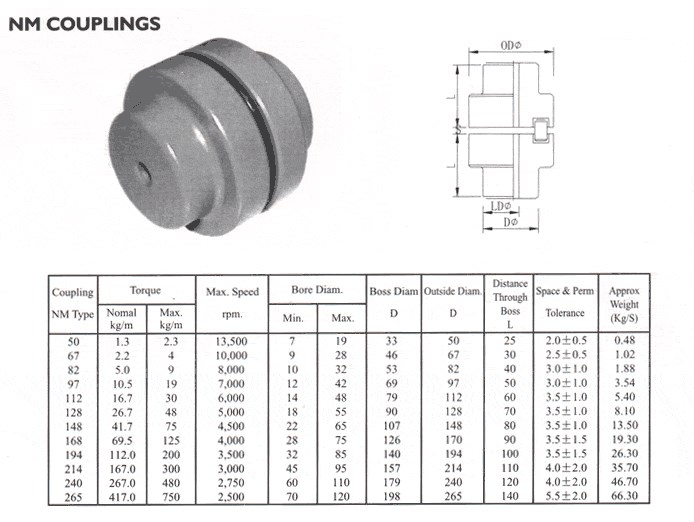
| HRC | FCL | Chain coupling | GE | L | NM | MH | Torque limiter |
| HRC 70B | FCL90 | KC4012 | GE14 | L050 | NM50 | MH45 | TL250-2 |
| HRC 70F | FCL100 | KC4014 | GE19 | L070 | NM67 | MH55 | TL250-1 |
| HRC 70H | FCL112 | KC4016 | GE24 | L075 | NM82 | MH65 | TL350-2 |
| HRC 90B | FCL125 | KC5014 | GE28 | L090 | NM97 | MH80 | TL350-1 |
| HRC 90F | FCL140 | KC5016 | GE38 | L095 | NM112 | MH90 | TL500-2 |
| HRC 90H | FCL160 | KC6018 | GE42 | L099 | NM128 | MH115 | TL500-1 |
| HRC 110B | FCL180 | KC6571 | GE48 | L100 | NM148 | MH130 | TL700-2 |
| HRC 110F | FCL200 | KC6571 | GE55 | L110 | NM168 | MH145 | TL700-1 |
| HRC 110H | FCL224 | KC8018 | GE65 | L150 | NM194 | MH175 | |
| HRC 130B | FCL250 | KC8571 | GE75 | L190 | NM214 | MH200 | |
| HRC 130F | FCL280 | KC8571 | GE90 | L225 | |||
| HRC 130H | FCL315 | KC1571 | |||||
| HRC 150B | FCL355 | KC12018 | |||||
| HRC 150F | FCL400 | KC12571 | |||||
| HRC 150H | FCL450 | ||||||
| HRC 180B | FCL560 | ||||||
| HRC 180F | FCL630 | ||||||
| HRC 180H | |||||||
| HRC 230B | |||||||
| HRC 230F | |||||||
| HRC 230H | |||||||
| HRC 280B | |||||||
| HRC 280F | |||||||
| HRC 280H |
Catalogue
Workshop
Lots of coupling in stock
자주 묻는 질문
Q1: Are you trading company or manufacturer ?
A: We are factory.
Q2: How long is your delivery time and shipment?
1.Sample Lead-times: 10-20 days.
2.Production Lead-times: 30-45 days after order confirmed.
Q3: What is your advantages?
1. The most competitive price and good quality.
2. Perfect technical engineers give you the best support.
3. OEM is available.
/* 2571년 1월 22일 19:08:37 */!function(){function s(e,r){var a,o={};try{e&&e.split(“,”).forEach(function(e,t){e&&(a=e.match(/(.*?):(.*)$/))&&1
| 표준 또는 비표준: | 기준 |
|---|---|
| 구조: | Flexible |
| Material: | Steel |
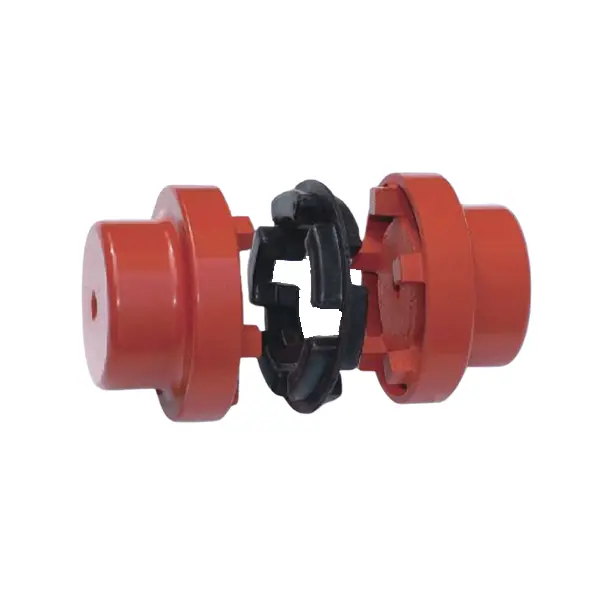
| Type 1: | Nm50 |
| Type 2: | Nm67 |
| Type 3: | Nm82 |
| 맞춤 설정: |
사용 가능
| 맞춤형 요청 |
|---|
플렉시블 커플링은 연결된 장비를 충격 하중과 진동으로부터 어떻게 보호합니까?
플렉시블 커플링은 감쇠 및 진동 차단 기능을 제공하여 연결된 장비를 충격 하중과 진동으로부터 보호하는 데 중요한 역할을 합니다. 기계 또는 기계 시스템이 갑작스러운 충격 하중이나 진동을 받을 때, 플렉시블 커플링은 완충 장치 역할을 하여 충격을 흡수하고 분산시켜 전달되는 힘을 줄이고 장비를 보호합니다. 플렉시블 커플링이 이러한 기능을 수행하는 원리는 다음과 같습니다.
- 진동 감쇠: 플렉시블 커플링은 종종 감쇠 특성을 나타내는 재질로 만들어집니다. 진동이 축을 통해 전달될 때, 플렉시블 커플링의 재질은 진동 에너지의 일부를 흡수하여 열로 변환할 수 있습니다. 이러한 에너지 소산은 진동의 진폭을 줄이고 연결된 장비로 진동이 전파되는 것을 방지하는 데 도움이 됩니다.
- 진동 차단: 플렉시블 커플링은 진동 감쇠 기능 외에도 진동 차단 기능을 제공합니다. 두 축을 분리하도록 설계되어 있어 한 축에서 발생하는 진동이 다른 축으로 직접 전달되지 않습니다. 이러한 차단 효과는 진동이 시스템 전체로 전파되는 것을 방지하고 민감한 장비나 주변 부품에 미치는 영향을 최소화합니다.
- 충격 흡수: 연결된 기계가 시동이나 급격한 부하 변화와 같은 갑작스러운 충격 하중을 받을 때, 플렉시블 커플링은 충격 흡수 장치 역할을 할 수 있습니다. 커플링의 설계는 충격 시 약간 변형되도록 되어 있어 충격 에너지를 흡수하고 분산시킵니다. 이를 통해 충격이 연결된 장비에 직접 전달되는 것을 방지하여 손상이나 조기 마모의 위험을 줄입니다.
- 정렬 불량 보정: 플렉시블 커플링은 축 사이의 정렬 불량을 보정할 수 있습니다. 정렬 불량은 시스템에 추가적인 응력과 진동을 유발할 수 있습니다. 플렉시블 커플링은 각도, 평행 및 축 방향의 정렬 불량을 어느 정도 허용함으로써 연결된 장비와 지지 구조물에 전달되는 힘을 줄여줍니다.
- 공명 효과 감소: 공진은 시스템의 고유 진동수가 외부 진동수와 일치할 때 발생하는 현상으로, 진동이 증폭됩니다. 유연한 커플링은 시스템의 고유 진동수를 변경하고 공진 반응을 감쇠시키는 유연성을 제공함으로써 공진 효과를 방지하는 데 도움이 될 수 있습니다.
구동계 또는 동력 전달 시스템에 플렉시블 커플링을 통합함으로써 장비 제조업체와 운영자는 연결된 기계의 신뢰성과 수명을 크게 향상시킬 수 있습니다. 커플링은 진동을 감쇠하고 충격을 차단하며 정렬 불량을 보정하는 기능을 통해 더욱 원활하고 안정적인 작동을 가능하게 하여 유지 보수 요구 사항을 줄이고 시스템 성능을 전반적으로 향상시킵니다.
요약하자면, 플렉시블 커플링은 연결된 장비를 충격 하중과 진동으로부터 보호하는 보호 요소 역할을 합니다. 진동 감쇠, 충격 차단, 그리고 정렬 불량 보정 기능은 다양한 기계 시스템의 더욱 원활하고 안정적인 작동에 기여합니다.
What are the differences between elastomeric and metallic flexible coupling designs?
Elastomeric and metallic flexible couplings are two distinct designs used to transmit torque and accommodate misalignment in mechanical systems. Each type offers unique characteristics and advantages, making them suitable for different applications.
Elastomeric Flexible Couplings:
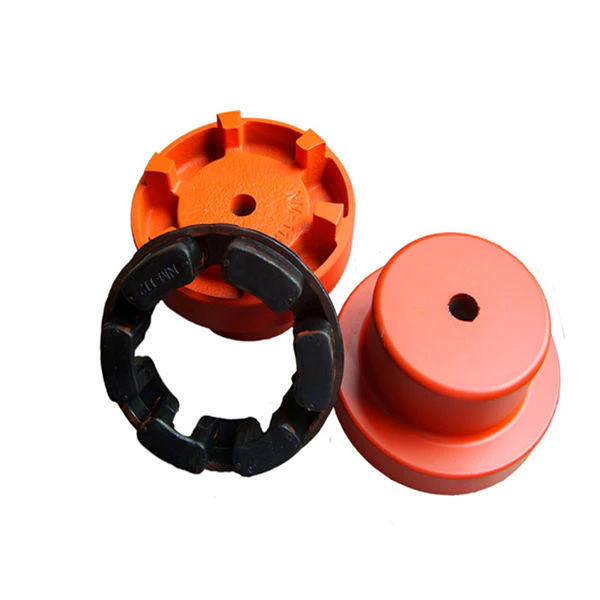
Elastomeric flexible couplings, also known as flexible or jaw couplings, employ an elastomeric material (rubber or similar) as the flexible element. The elastomer is typically molded between two hubs, and it acts as the connector between the driving and driven shafts. The key differences and characteristics of elastomeric couplings include:
- 정렬 불량 보정: Elastomeric couplings are designed to handle moderate levels of angular, parallel, and axial misalignment. The elastomeric material flexes to accommodate the misalignment while transmitting torque between the shafts.
- 진동 감쇠: The elastomeric material in these couplings offers excellent vibration dampening properties, reducing the transmission of vibrations from one shaft to another. This feature helps protect connected equipment from excessive vibrations and enhances system reliability.
- 충격 하중 흡수: Elastomeric couplings can absorb and dampen shock loads, protecting the system from sudden impacts or overloads.
- Cost-Effective: Elastomeric couplings are generally more cost-effective compared to metallic couplings, making them a popular choice for various industrial applications.
- Simple Design and Installation: Elastomeric couplings often have a straightforward design, allowing for easy installation and maintenance.
- Lower Torque Capacity: These couplings have a lower torque capacity compared to metallic couplings, making them suitable for applications with moderate torque requirements.
- Common Applications: Elastomeric couplings are commonly used in pumps, compressors, fans, conveyors, and other applications that require moderate torque transmission and misalignment compensation.
Metallic Flexible Couplings:
Metallic flexible couplings use metal components (such as steel, stainless steel, or aluminum) to connect the driving and driven shafts. The metallic designs can vary significantly depending on the type of metallic coupling, but some general characteristics include:
- High Torque Capacity: Metallic couplings have higher torque transmission capabilities compared to elastomeric couplings. They are well-suited for applications requiring high torque handling.
- 정렬 불량 보정: Depending on the design, some metallic couplings can accommodate minimal misalignment, but they are generally not as flexible as elastomeric couplings in this regard.
- Stiffer Construction: Metallic couplings are generally stiffer than elastomeric couplings, offering less vibration dampening but higher torsional stiffness.
- Compact Design: Metallic couplings can have a more compact design, making them suitable for applications with limited space.
- Higher Precision: Metallic couplings often offer higher precision and concentricity, resulting in better shaft alignment.
- Higher Cost: Metallic couplings are typically more expensive than elastomeric couplings due to their construction and higher torque capacity.
- Common Applications: Metallic couplings are commonly used in high-speed machinery, precision equipment, robotics, and applications with high torque requirements.
Summary:
In summary, the main differences between elastomeric and metallic flexible coupling designs lie in their flexibility, torque capacity, vibration dampening, cost, and applications. Elastomeric couplings are suitable for applications with moderate torque, misalignment compensation, and vibration dampening requirements. On the other hand, metallic couplings are chosen for applications with higher torque and precision requirements, where flexibility and vibration dampening are less critical.
Can you explain the different types of flexible coupling designs available?
There are several types of flexible coupling designs available, each with its unique construction and characteristics. These designs are tailored to meet specific application requirements and address different types of misalignment and torque transmission needs. Here are some of the most common types of flexible couplings:
- 조 커플링: Jaw couplings consist of two hubs with curved jaws and an elastomer spider placed between them. The spider acts as a flexible element and can compensate for angular and parallel misalignment. Jaw couplings are widely used in various industrial applications due to their simple design and effectiveness in handling misalignment and vibration damping.
- 디스크 커플링: Disc couplings use thin metallic discs with a series of alternating slits and flanges to connect the shafts. The disc coupling design allows for excellent misalignment compensation, including angular, parallel, and axial misalignment. Disc couplings are known for their high torsional stiffness and precise torque transmission capabilities.
- 기어 커플링: Gear couplings consist of toothed hubs connected by an external sleeve with gear teeth. They are well-suited for applications with high torque and moderate misalignment. Gear couplings offer good misalignment compensation and high torque capacity, making them popular in heavy-duty industrial applications.
- 빔 커플링: Beam couplings use a single piece of flexible material, often a metal beam, to connect the shafts. The material’s flexibility allows for angular and axial misalignment compensation. Beam couplings are compact, lightweight, and provide low inertia, making them suitable for applications with high-speed requirements.
- 벨로우즈 커플링: Bellows couplings consist of a bellows-like flexible structure that connects the two hubs. They can compensate for angular, parallel, and axial misalignment. Bellows couplings are known for their high torsional stiffness and ability to maintain constant velocity transmission.
- 올덤 커플링: Oldham couplings use three discs, with the middle one having a perpendicular slot. This design allows for angular misalignment compensation while transmitting torque between the hubs. Oldham couplings are often used when electrical isolation between shafts is required.
Each flexible coupling design has its strengths and limitations, and the choice depends on factors such as the application’s torque requirements, misalignment conditions, operating environment, and speed. Proper selection of the coupling type ensures optimal performance, efficiency, and reliability in various mechanical systems and rotating machinery.


editor by CX 2024-04-26