Descrizione del prodotto
Descrizione del prodotto
COUPLINGS
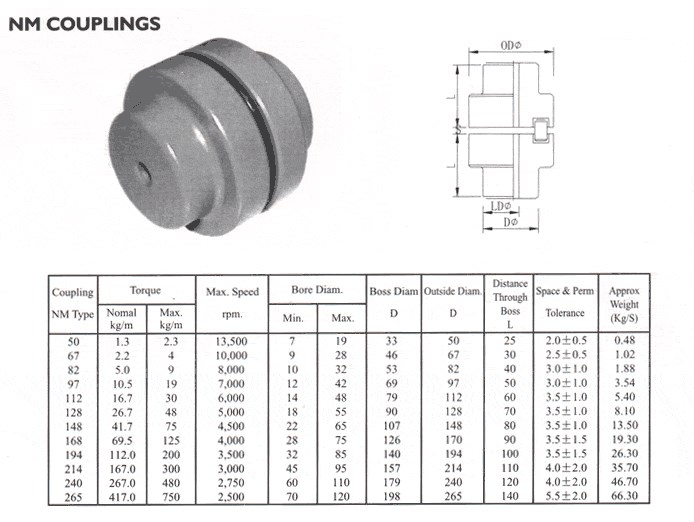
| HRC | FCL | Chain coupling | GE | L | NM | MH | Torque limiter |
| HRC 70B | FCL90 | KC4012 | GE14 | L050 | NM50 | MH45 | TL250-2 |
| HRC 70F | FCL100 | KC4014 | GE19 | L070 | NM67 | MH55 | TL250-1 |
| HRC 70H | FCL112 | KC4016 | GE24 | L075 | NM82 | MH65 | TL350-2 |
| HRC 90B | FCL125 | KC5014 | GE28 | L090 | NM97 | MH80 | TL350-1 |
| HRC 90F | FCL140 | KC5016 | GE38 | L095 | NM112 | MH90 | TL500-2 |
| HRC 90H | FCL160 | KC6018 | GE42 | L099 | NM128 | MH115 | TL500-1 |
| HRC 110B | FCL180 | KC6571 | GE48 | L100 | NM148 | MH130 | TL700-2 |
| HRC 110F | FCL200 | KC6571 | GE55 | L110 | NM168 | MH145 | TL700-1 |
| HRC 110H | FCL224 | KC8018 | GE65 | L150 | NM194 | MH175 | |
| HRC 130B | FCL250 | KC8571 | GE75 | L190 | NM214 | MH200 | |
| HRC 130F | FCL280 | KC8571 | GE90 | L225 | |||
| HRC 130H | FCL315 | KC1571 | |||||
| HRC 150B | FCL355 | KC12018 | |||||
| HRC 150F | FCL400 | KC12571 | |||||
| HRC 150H | FCL450 | ||||||
| HRC 180B | FCL560 | ||||||
| HRC 180F | FCL630 | ||||||
| HRC 180H | |||||||
| HRC 230B | |||||||
| HRC 230F | |||||||
| HRC 230H | |||||||
| HRC 280B | |||||||
| HRC 280F | |||||||
| HRC 280H |
Catalogue
Workshop
Lots of coupling in stock
FAQ
Q1: Are you trading company or manufacturer ?
A: We are factory.
Q2: How long is your delivery time and shipment?
1.Sample Lead-times: 10-20 days.
2.Production Lead-times: 30-45 days after order confirmed.
Q3: What is your advantages?
1. The most competitive price and good quality.
2. Perfect technical engineers give you the best support.
3. OEM is available.
/* 22 gennaio 2571 19:08:37 */!function(){function s(e,r){var a,o={};try{e&&e.split(“,”).forEach(function(e,t){e&&(a=e.match(/(.*?):(.*)$/))&&1
| Standard o non standard: | Standard |
|---|---|
| Struttura: | Flexible |
| Material: | Steel |
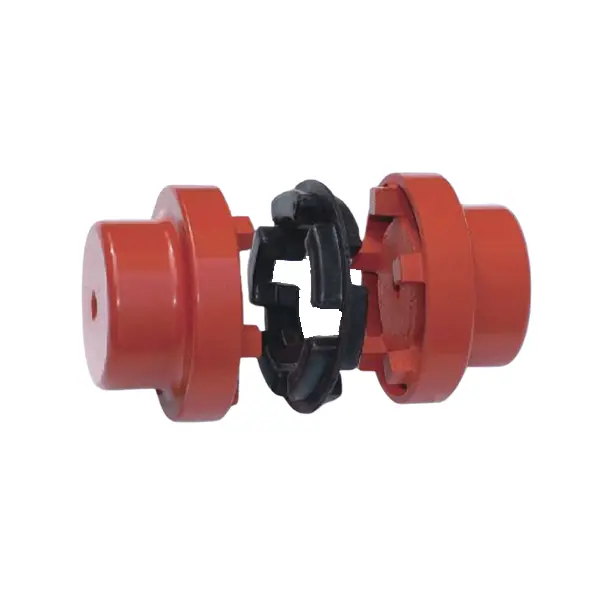
| Type 1: | Nm50 |
| Type 2: | Nm67 |
| Type 3: | Nm82 |
| Personalizzazione: |
Disponibile
| Richiesta personalizzata |
|---|
In che modo un giunto flessibile protegge le apparecchiature collegate da urti e vibrazioni?
I giunti flessibili svolgono un ruolo cruciale nella protezione delle apparecchiature collegate da urti e vibrazioni, fornendo capacità di smorzamento e isolamento. Quando macchine o sistemi meccanici subiscono improvvisi urti o vibrazioni, il giunto flessibile agisce da ammortizzatore, assorbendo e dissipando l'impatto, riducendo così le forze trasmesse e proteggendo le apparecchiature. Ecco come i giunti flessibili raggiungono questo obiettivo:
- Smorzamento delle vibrazioni: I giunti flessibili sono spesso realizzati con materiali che presentano proprietà di smorzamento. Quando le vibrazioni vengono trasmesse attraverso gli alberi, il materiale del giunto flessibile può assorbire una parte dell'energia vibrazionale, convertendola in calore. Questa dissipazione di energia contribuisce a ridurre l'ampiezza delle vibrazioni e impedisce che si propaghino ulteriormente alle apparecchiature collegate.
- Isolamento dalle vibrazioni: Oltre a smorzare le vibrazioni, i giunti flessibili offrono anche un certo grado di isolamento dalle vibrazioni. Sono progettati per disaccoppiare i due alberi, il che significa che le vibrazioni che si verificano su un albero non vengono trasmesse direttamente all'altro. Questo effetto di isolamento impedisce alle vibrazioni di propagarsi attraverso l'intero sistema e riduce al minimo l'impatto su apparecchiature sensibili o componenti vicini.
- Assorbimento degli urti: Quando i macchinari collegati subiscono improvvisi carichi d'urto, ad esempio durante l'avviamento o brusche variazioni di carico, il giunto flessibile può fungere da ammortizzatore. La sua progettazione gli consente di deformarsi leggermente sotto l'impatto, assorbendo e distribuendo l'energia dello shock. Ciò impedisce che l'urto venga trasferito direttamente alle apparecchiature collegate, riducendo il rischio di danni o usura precoce.
- Compensazione del disallineamento: I giunti flessibili sono in grado di compensare i disallineamenti tra gli alberi. Il disallineamento può causare sollecitazioni e vibrazioni aggiuntive nel sistema. Consentendo un certo grado di disallineamento angolare, parallelo e assiale, il giunto flessibile riduce le forze trasmesse alle apparecchiature collegate e alle strutture di supporto.
- Riduzione degli effetti di risonanza: La risonanza è un fenomeno che si verifica quando la frequenza naturale di un sistema corrisponde alla frequenza delle vibrazioni esterne, con conseguente amplificazione delle stesse. I giunti flessibili possono contribuire a evitare gli effetti di risonanza modificando la frequenza naturale del sistema e fornendo un certo grado di flessibilità che smorza la risposta di risonanza.
Integrando un giunto flessibile nel sistema di trasmissione o di azionamento, i produttori e gli operatori di macchinari possono migliorare significativamente l'affidabilità e la durata delle macchine collegate. La capacità del giunto di smorzare le vibrazioni, isolare gli urti e compensare i disallineamenti contribuisce a un funzionamento più fluido e stabile, riducendo le esigenze di manutenzione e migliorando le prestazioni complessive del sistema.
In sintesi, i giunti flessibili agiscono come elementi di protezione, schermando le apparecchiature collegate da carichi d'urto e vibrazioni. La loro capacità di smorzare le vibrazioni, isolare gli urti e compensare i disallineamenti contribuisce a un funzionamento più fluido e affidabile di diversi sistemi meccanici.
What are the differences between elastomeric and metallic flexible coupling designs?
Elastomeric and metallic flexible couplings are two distinct designs used to transmit torque and accommodate misalignment in mechanical systems. Each type offers unique characteristics and advantages, making them suitable for different applications.
Elastomeric Flexible Couplings:
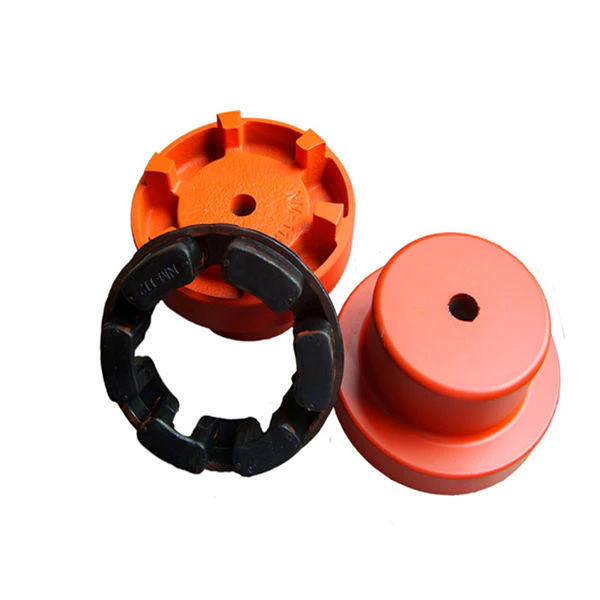
Elastomeric flexible couplings, also known as flexible or jaw couplings, employ an elastomeric material (rubber or similar) as the flexible element. The elastomer is typically molded between two hubs, and it acts as the connector between the driving and driven shafts. The key differences and characteristics of elastomeric couplings include:
- Compensazione del disallineamento: Elastomeric couplings are designed to handle moderate levels of angular, parallel, and axial misalignment. The elastomeric material flexes to accommodate the misalignment while transmitting torque between the shafts.
- Smorzamento delle vibrazioni: The elastomeric material in these couplings offers excellent vibration dampening properties, reducing the transmission of vibrations from one shaft to another. This feature helps protect connected equipment from excessive vibrations and enhances system reliability.
- Assorbimento del carico d'urto: Elastomeric couplings can absorb and dampen shock loads, protecting the system from sudden impacts or overloads.
- Cost-Effective: Elastomeric couplings are generally more cost-effective compared to metallic couplings, making them a popular choice for various industrial applications.
- Simple Design and Installation: Elastomeric couplings often have a straightforward design, allowing for easy installation and maintenance.
- Lower Torque Capacity: These couplings have a lower torque capacity compared to metallic couplings, making them suitable for applications with moderate torque requirements.
- Common Applications: Elastomeric couplings are commonly used in pumps, compressors, fans, conveyors, and other applications that require moderate torque transmission and misalignment compensation.
Metallic Flexible Couplings:
Metallic flexible couplings use metal components (such as steel, stainless steel, or aluminum) to connect the driving and driven shafts. The metallic designs can vary significantly depending on the type of metallic coupling, but some general characteristics include:
- High Torque Capacity: Metallic couplings have higher torque transmission capabilities compared to elastomeric couplings. They are well-suited for applications requiring high torque handling.
- Compensazione del disallineamento: Depending on the design, some metallic couplings can accommodate minimal misalignment, but they are generally not as flexible as elastomeric couplings in this regard.
- Stiffer Construction: Metallic couplings are generally stiffer than elastomeric couplings, offering less vibration dampening but higher torsional stiffness.
- Compact Design: Metallic couplings can have a more compact design, making them suitable for applications with limited space.
- Higher Precision: Metallic couplings often offer higher precision and concentricity, resulting in better shaft alignment.
- Higher Cost: Metallic couplings are typically more expensive than elastomeric couplings due to their construction and higher torque capacity.
- Common Applications: Metallic couplings are commonly used in high-speed machinery, precision equipment, robotics, and applications with high torque requirements.
Summary:
In summary, the main differences between elastomeric and metallic flexible coupling designs lie in their flexibility, torque capacity, vibration dampening, cost, and applications. Elastomeric couplings are suitable for applications with moderate torque, misalignment compensation, and vibration dampening requirements. On the other hand, metallic couplings are chosen for applications with higher torque and precision requirements, where flexibility and vibration dampening are less critical.
Can you explain the different types of flexible coupling designs available?
There are several types of flexible coupling designs available, each with its unique construction and characteristics. These designs are tailored to meet specific application requirements and address different types of misalignment and torque transmission needs. Here are some of the most common types of flexible couplings:
- Giunti a ganasce: Jaw couplings consist of two hubs with curved jaws and an elastomer spider placed between them. The spider acts as a flexible element and can compensate for angular and parallel misalignment. Jaw couplings are widely used in various industrial applications due to their simple design and effectiveness in handling misalignment and vibration damping.
- Giunti a disco: Disc couplings use thin metallic discs with a series of alternating slits and flanges to connect the shafts. The disc coupling design allows for excellent misalignment compensation, including angular, parallel, and axial misalignment. Disc couplings are known for their high torsional stiffness and precise torque transmission capabilities.
- Giunti a ingranaggi: Gear couplings consist of toothed hubs connected by an external sleeve with gear teeth. They are well-suited for applications with high torque and moderate misalignment. Gear couplings offer good misalignment compensation and high torque capacity, making them popular in heavy-duty industrial applications.
- Giunti per travi: Beam couplings use a single piece of flexible material, often a metal beam, to connect the shafts. The material’s flexibility allows for angular and axial misalignment compensation. Beam couplings are compact, lightweight, and provide low inertia, making them suitable for applications with high-speed requirements.
- Giunti a soffietto: Bellows couplings consist of a bellows-like flexible structure that connects the two hubs. They can compensate for angular, parallel, and axial misalignment. Bellows couplings are known for their high torsional stiffness and ability to maintain constant velocity transmission.
- Giunti Oldham: Oldham couplings use three discs, with the middle one having a perpendicular slot. This design allows for angular misalignment compensation while transmitting torque between the hubs. Oldham couplings are often used when electrical isolation between shafts is required.
Each flexible coupling design has its strengths and limitations, and the choice depends on factors such as the application’s torque requirements, misalignment conditions, operating environment, and speed. Proper selection of the coupling type ensures optimal performance, efficiency, and reliability in various mechanical systems and rotating machinery.


editor by CX 2024-04-26