Mô tả sản phẩm
Mô tả sản phẩm
COUPLINGS
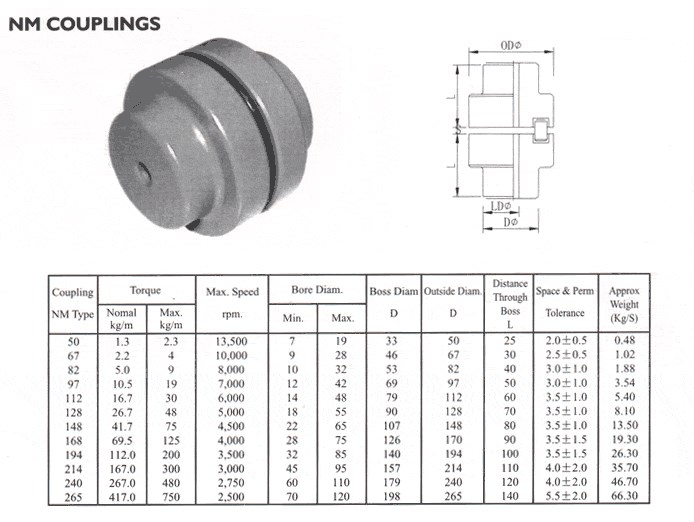
| HRC | FCL | Chain coupling | GE | L | NM | MH | Torque limiter |
| HRC 70B | FCL90 | KC4012 | GE14 | L050 | NM50 | MH45 | TL250-2 |
| HRC 70F | FCL100 | KC4014 | GE19 | L070 | NM67 | MH55 | TL250-1 |
| HRC 70H | FCL112 | KC4016 | GE24 | L075 | NM82 | MH65 | TL350-2 |
| HRC 90B | FCL125 | KC5014 | GE28 | L090 | NM97 | MH80 | TL350-1 |
| HRC 90F | FCL140 | KC5016 | GE38 | L095 | NM112 | MH90 | TL500-2 |
| HRC 90H | FCL160 | KC6018 | GE42 | L099 | NM128 | MH115 | TL500-1 |
| HRC 110B | FCL180 | KC6571 | GE48 | L100 | NM148 | MH130 | TL700-2 |
| HRC 110F | FCL200 | KC6571 | GE55 | L110 | NM168 | MH145 | TL700-1 |
| HRC 110H | FCL224 | KC8018 | GE65 | L150 | NM194 | MH175 | |
| HRC 130B | FCL250 | KC8571 | GE75 | L190 | NM214 | MH200 | |
| HRC 130F | FCL280 | KC8571 | GE90 | L225 | |||
| HRC 130H | FCL315 | KC1571 | |||||
| HRC 150B | FCL355 | KC12018 | |||||
| HRC 150F | FCL400 | KC12571 | |||||
| HRC 150H | FCL450 | ||||||
| HRC 180B | FCL560 | ||||||
| HRC 180F | FCL630 | ||||||
| HRC 180H | |||||||
| HRC 230B | |||||||
| HRC 230F | |||||||
| HRC 230H | |||||||
| HRC 280B | |||||||
| HRC 280F | |||||||
| HRC 280H |
Catalogue
Workshop
Lots of coupling in stock
Câu hỏi thường gặp
Q1: Are you trading company or manufacturer ?
A: We are factory.
Q2: How long is your delivery time and shipment?
1.Sample Lead-times: 10-20 days.
2.Production Lead-times: 30-45 days after order confirmed.
Q3: What is your advantages?
1. The most competitive price and good quality.
2. Perfect technical engineers give you the best support.
3. OEM is available.
/* Ngày 22 tháng 1 năm 2571 19:08:37 */!function(){function s(e,r){var a,o={};try{e&&e.split(“,”).forEach(function(e,t){e&&(a=e.match(/(.*?):(.*)$/))&&1
| Tiêu chuẩn hay không tiêu chuẩn: | Tiêu chuẩn |
|---|---|
| Kết cấu: | Flexible |
| Vật liệu: | Steel |
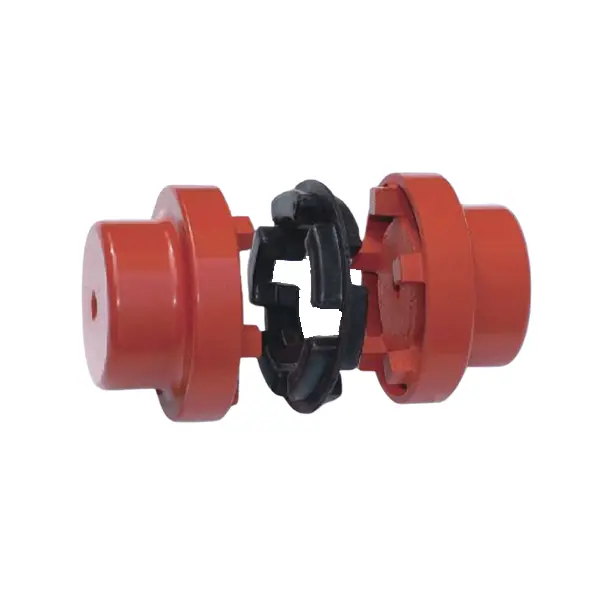
| Type 1: | Nm50 |
| Type 2: | Nm67 |
| Type 3: | Nm82 |
| Tùy chỉnh: |
Có sẵn
| Yêu cầu tùy chỉnh |
|---|
Khớp nối mềm bảo vệ thiết bị được kết nối khỏi tải trọng va đập và rung động như thế nào?
Khớp nối mềm đóng vai trò quan trọng trong việc bảo vệ thiết bị được kết nối khỏi tải trọng va đập và rung động bằng cách cung cấp khả năng giảm chấn và cách ly. Khi máy móc hoặc hệ thống cơ khí chịu tải trọng va đập hoặc rung động đột ngột, khớp nối mềm hoạt động như một bộ đệm, hấp thụ và phân tán tác động, do đó làm giảm lực truyền và bảo vệ thiết bị. Dưới đây là cách khớp nối mềm thực hiện điều này:
- Giảm chấn rung động: Các khớp nối mềm thường được làm từ các vật liệu có đặc tính giảm chấn. Khi các rung động được truyền qua các trục, vật liệu của khớp nối mềm có thể hấp thụ một phần năng lượng rung động, chuyển hóa nó thành nhiệt. Sự tiêu tán năng lượng này giúp giảm biên độ rung động và ngăn chúng lan truyền xa hơn vào thiết bị được kết nối.
- Cách ly rung động: Ngoài khả năng giảm rung động, khớp nối mềm còn mang lại khả năng cách ly rung động ở một mức độ nhất định. Chúng được thiết kế để tách rời hai trục, có nghĩa là rung động xảy ra trên một trục sẽ không truyền trực tiếp sang trục kia. Hiệu ứng cách ly này ngăn chặn rung động lan truyền khắp hệ thống và giảm thiểu tác động lên các thiết bị nhạy cảm hoặc các bộ phận lân cận.
- Khả năng giảm chấn: Khi máy móc được kết nối chịu tải trọng va đập đột ngột, chẳng hạn như trong quá trình khởi động hoặc thay đổi tải trọng đột ngột, khớp nối mềm có thể hoạt động như một bộ giảm xóc. Thiết kế của khớp nối cho phép nó biến dạng nhẹ dưới tác động, hấp thụ và phân tán năng lượng va đập. Điều này ngăn không cho va đập truyền trực tiếp đến thiết bị được kết nối, giảm nguy cơ hư hỏng hoặc mài mòn sớm.
- Bù sai lệch: Khớp nối mềm có khả năng bù trừ sự lệch trục giữa các trục. Sự lệch trục có thể dẫn đến ứng suất và rung động bổ sung trong hệ thống. Bằng cách cho phép một mức độ lệch góc, song song và trục nhất định, khớp nối mềm làm giảm lực truyền đến thiết bị được kết nối và các cấu trúc đỡ.
- Giảm thiểu hiệu ứng cộng hưởng: Cộng hưởng là hiện tượng xảy ra khi tần số tự nhiên của một hệ thống trùng với tần số dao động bên ngoài, dẫn đến sự khuếch đại dao động. Các khớp nối linh hoạt có thể giúp tránh hiệu ứng cộng hưởng bằng cách thay đổi tần số tự nhiên của hệ thống và cung cấp một mức độ linh hoạt nhất định để làm giảm phản ứng cộng hưởng.
Bằng cách tích hợp khớp nối mềm vào hệ thống truyền động, các nhà sản xuất và người vận hành thiết bị có thể cải thiện đáng kể độ tin cậy và tuổi thọ của máy móc được kết nối. Khả năng giảm rung động, cách ly va chạm và bù sai lệch của khớp nối góp phần tạo nên hoạt động êm ái và ổn định hơn, giảm yêu cầu bảo trì và nâng cao hiệu suất tổng thể của hệ thống.
Tóm lại, khớp nối mềm đóng vai trò như các phần tử bảo vệ, che chắn thiết bị được kết nối khỏi các tải trọng va đập và rung động. Khả năng giảm chấn rung động, cách ly va đập và bù sai lệch của chúng góp phần vào hoạt động trơn tru và đáng tin cậy hơn của nhiều hệ thống cơ khí khác nhau.
What are the differences between elastomeric and metallic flexible coupling designs?
Elastomeric and metallic flexible couplings are two distinct designs used to transmit torque and accommodate misalignment in mechanical systems. Each type offers unique characteristics and advantages, making them suitable for different applications.
Elastomeric Flexible Couplings:
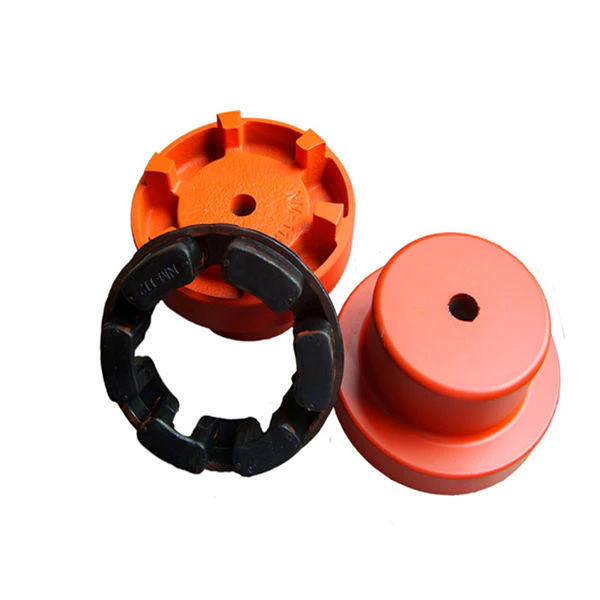
Elastomeric flexible couplings, also known as flexible or jaw couplings, employ an elastomeric material (rubber or similar) as the flexible element. The elastomer is typically molded between two hubs, and it acts as the connector between the driving and driven shafts. The key differences and characteristics of elastomeric couplings include:
- Bù sai lệch: Elastomeric couplings are designed to handle moderate levels of angular, parallel, and axial misalignment. The elastomeric material flexes to accommodate the misalignment while transmitting torque between the shafts.
- Giảm chấn rung động: The elastomeric material in these couplings offers excellent vibration dampening properties, reducing the transmission of vibrations from one shaft to another. This feature helps protect connected equipment from excessive vibrations and enhances system reliability.
- Khả năng hấp thụ tải trọng va đập: Elastomeric couplings can absorb and dampen shock loads, protecting the system from sudden impacts or overloads.
- Cost-Effective: Elastomeric couplings are generally more cost-effective compared to metallic couplings, making them a popular choice for various industrial applications.
- Simple Design and Installation: Elastomeric couplings often have a straightforward design, allowing for easy installation and maintenance.
- Lower Torque Capacity: These couplings have a lower torque capacity compared to metallic couplings, making them suitable for applications with moderate torque requirements.
- Common Applications: Elastomeric couplings are commonly used in pumps, compressors, fans, conveyors, and other applications that require moderate torque transmission and misalignment compensation.
Metallic Flexible Couplings:
Metallic flexible couplings use metal components (such as steel, stainless steel, or aluminum) to connect the driving and driven shafts. The metallic designs can vary significantly depending on the type of metallic coupling, but some general characteristics include:
- High Torque Capacity: Metallic couplings have higher torque transmission capabilities compared to elastomeric couplings. They are well-suited for applications requiring high torque handling.
- Bù sai lệch: Depending on the design, some metallic couplings can accommodate minimal misalignment, but they are generally not as flexible as elastomeric couplings in this regard.
- Stiffer Construction: Metallic couplings are generally stiffer than elastomeric couplings, offering less vibration dampening but higher torsional stiffness.
- Compact Design: Metallic couplings can have a more compact design, making them suitable for applications with limited space.
- Higher Precision: Metallic couplings often offer higher precision and concentricity, resulting in better shaft alignment.
- Higher Cost: Metallic couplings are typically more expensive than elastomeric couplings due to their construction and higher torque capacity.
- Common Applications: Metallic couplings are commonly used in high-speed machinery, precision equipment, robotics, and applications with high torque requirements.
Summary:
In summary, the main differences between elastomeric and metallic flexible coupling designs lie in their flexibility, torque capacity, vibration dampening, cost, and applications. Elastomeric couplings are suitable for applications with moderate torque, misalignment compensation, and vibration dampening requirements. On the other hand, metallic couplings are chosen for applications with higher torque and precision requirements, where flexibility and vibration dampening are less critical.
Can you explain the different types of flexible coupling designs available?
There are several types of flexible coupling designs available, each with its unique construction and characteristics. These designs are tailored to meet specific application requirements and address different types of misalignment and torque transmission needs. Here are some of the most common types of flexible couplings:
- Khớp nối hàm: Jaw couplings consist of two hubs with curved jaws and an elastomer spider placed between them. The spider acts as a flexible element and can compensate for angular and parallel misalignment. Jaw couplings are widely used in various industrial applications due to their simple design and effectiveness in handling misalignment and vibration damping.
- Khớp nối dạng đĩa: Disc couplings use thin metallic discs with a series of alternating slits and flanges to connect the shafts. The disc coupling design allows for excellent misalignment compensation, including angular, parallel, and axial misalignment. Disc couplings are known for their high torsional stiffness and precise torque transmission capabilities.
- Khớp nối bánh răng: Gear couplings consist of toothed hubs connected by an external sleeve with gear teeth. They are well-suited for applications with high torque and moderate misalignment. Gear couplings offer good misalignment compensation and high torque capacity, making them popular in heavy-duty industrial applications.
- Các khớp nối chùm tia: Beam couplings use a single piece of flexible material, often a metal beam, to connect the shafts. The material’s flexibility allows for angular and axial misalignment compensation. Beam couplings are compact, lightweight, and provide low inertia, making them suitable for applications with high-speed requirements.
- Khớp nối dạng ống xếp: Bellows couplings consist of a bellows-like flexible structure that connects the two hubs. They can compensate for angular, parallel, and axial misalignment. Bellows couplings are known for their high torsional stiffness and ability to maintain constant velocity transmission.
- Khớp nối Oldham: Oldham couplings use three discs, with the middle one having a perpendicular slot. This design allows for angular misalignment compensation while transmitting torque between the hubs. Oldham couplings are often used when electrical isolation between shafts is required.
Each flexible coupling design has its strengths and limitations, and the choice depends on factors such as the application’s torque requirements, misalignment conditions, operating environment, and speed. Proper selection of the coupling type ensures optimal performance, efficiency, and reliability in various mechanical systems and rotating machinery.


editor by CX 2024-04-26