製品説明
製品説明
COUPLINGS
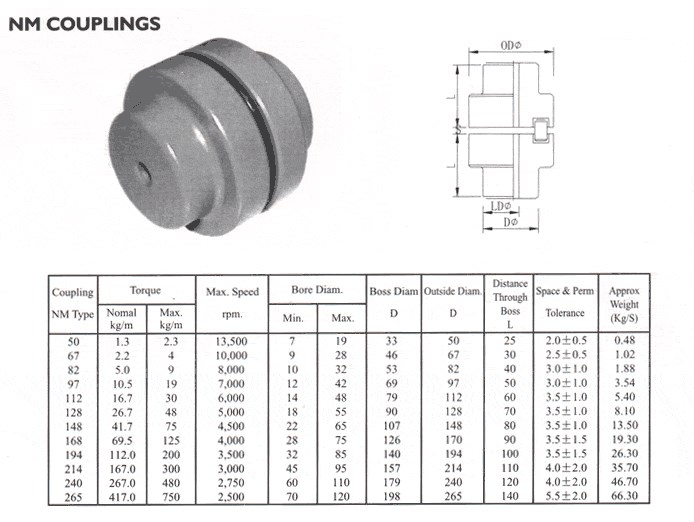
| HRC | FCL | Chain coupling | GE | L | NM | MH | Torque limiter |
| HRC 70B | FCL90 | KC4012 | GE14 | L050 | NM50 | MH45 | TL250-2 |
| HRC 70F | FCL100 | KC4014 | GE19 | L070 | NM67 | MH55 | TL250-1 |
| HRC 70H | FCL112 | KC4016 | GE24 | L075 | NM82 | MH65 | TL350-2 |
| HRC 90B | FCL125 | KC5014 | GE28 | L090 | NM97 | MH80 | TL350-1 |
| HRC 90F | FCL140 | KC5016 | GE38 | L095 | NM112 | MH90 | TL500-2 |
| HRC 90H | FCL160 | KC6018 | GE42 | L099 | NM128 | MH115 | TL500-1 |
| HRC 110B | FCL180 | KC6571 | GE48 | L100 | NM148 | MH130 | TL700-2 |
| HRC 110F | FCL200 | KC6571 | GE55 | L110 | NM168 | MH145 | TL700-1 |
| HRC 110H | FCL224 | KC8018 | GE65 | L150 | NM194 | MH175 | |
| HRC 130B | FCL250 | KC8571 | GE75 | L190 | NM214 | MH200 | |
| HRC 130F | FCL280 | KC8571 | GE90 | L225 | |||
| HRC 130H | FCL315 | KC1571 | |||||
| HRC 150B | FCL355 | KC12018 | |||||
| HRC 150F | FCL400 | KC12571 | |||||
| HRC 150H | FCL450 | ||||||
| HRC 180B | FCL560 | ||||||
| HRC 180F | FCL630 | ||||||
| HRC 180H | |||||||
| HRC 230B | |||||||
| HRC 230F | |||||||
| HRC 230H | |||||||
| HRC 280B | |||||||
| HRC 280F | |||||||
| HRC 280H |
Catalogue
Workshop
Lots of coupling in stock
よくある質問
Q1: Are you trading company or manufacturer ?
A: We are factory.
Q2: How long is your delivery time and shipment?
1.Sample Lead-times: 10-20 days.
2.Production Lead-times: 30-45 days after order confirmed.
Q3: What is your advantages?
1. The most competitive price and good quality.
2. Perfect technical engineers give you the best support.
3. OEM is available.
/* 2571 年 1 月 22 日 19:08:37 */!function(){function s(e,r){var a,o={};try{e&&e.split(“,”).forEach(function(e,t){e&&(a=e.match(/(.*?):(.*)$/))&&1
| Standard Or Nonstandard: | Standard |
|---|---|
| 構造: | Flexible |
| 材料: | Steel |
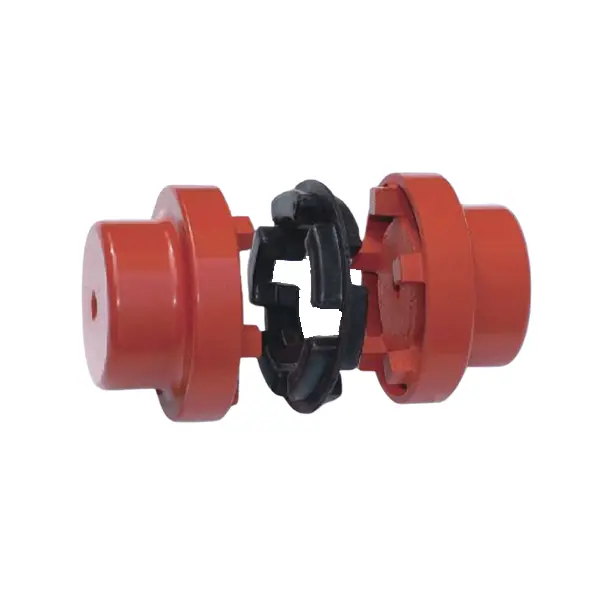
| Type 1: | Nm50 |
| Type 2: | Nm67 |
| Type 3: | Nm82 |
| カスタマイズ: |
利用可能
| カスタマイズされたリクエスト |
|---|
フレキシブルカップリングは、接続された機器を衝撃荷重や振動からどのように保護するのでしょうか?
フレキシブルカップリングは、減衰および絶縁機能を提供することで、接続機器を衝撃荷重や振動から保護する上で重要な役割を果たします。機械や機械システムが突然の衝撃荷重や振動を受けた場合、フレキシブルカップリングは緩衝材として機能し、衝撃を吸収・分散することで、伝達される力を低減し、機器を保護します。フレキシブルカップリングがこれを実現する仕組みは以下のとおりです。
- 振動の減衰: フレキシブルカップリングは、減衰特性を持つ材料で作られることが多い。振動がシャフトを介して伝達されると、フレキシブルカップリングの材料が振動エネルギーの一部を吸収し、熱に変換する。このエネルギー散逸により、振動の振幅が低減され、接続された機器への振動の伝播が抑制される。
- 振動遮断: フレキシブルカップリングは、振動を減衰させるだけでなく、ある程度の振動遮断効果も提供します。2つのシャフトを分離するように設計されているため、一方のシャフトで発生した振動がもう一方のシャフトに直接伝わることはありません。この遮断効果により、振動がシステム全体に伝播するのを防ぎ、精密機器や近隣の部品への影響を最小限に抑えることができます。
- 衝撃吸収: 接続された機械が起動時や負荷の急激な変化など、突然の衝撃荷重を受けた場合、フレキシブルカップリングは衝撃吸収材として機能します。このカップリングは衝撃を受けるとわずかに変形する設計になっており、衝撃エネルギーを吸収・分散します。これにより、衝撃が接続機器に直接伝わるのを防ぎ、損傷や早期摩耗のリスクを低減します。
- 位置ずれ補正: フレキシブルカップリングは、シャフト間のずれを補正することができます。ずれは、システムに余分な応力や振動を引き起こす可能性があります。フレキシブルカップリングは、ある程度の角度、平行、および軸方向のずれを許容することで、接続された機器や支持構造に伝達される力を低減します。
- 共鳴効果の低減: 共振とは、システムの固有振動数が外部振動の周波数と一致した際に発生する現象であり、振動が増幅される原因となります。フレキシブルカップリングは、システムの固有振動数を変化させ、共振応答を減衰させる程度の柔軟性を提供することで、共振の影響を回避するのに役立ちます。
駆動系や動力伝達システムにフレキシブルカップリングを組み込むことで、機器メーカーやオペレーターは、接続された機械の信頼性と寿命を大幅に向上させることができます。カップリングは振動を減衰させ、衝撃を遮断し、位置ずれを補正する能力を備えているため、よりスムーズで安定した動作を実現し、メンテナンスの必要性を低減し、システム全体の性能を向上させます。
要約すると、フレキシブルカップリングは保護要素として機能し、接続された機器を衝撃荷重や振動から保護します。振動を減衰させ、衝撃を遮断し、位置ずれを補正する能力により、様々な機械システムのよりスムーズで信頼性の高い動作に貢献します。
What are the differences between elastomeric and metallic flexible coupling designs?
Elastomeric and metallic flexible couplings are two distinct designs used to transmit torque and accommodate misalignment in mechanical systems. Each type offers unique characteristics and advantages, making them suitable for different applications.
Elastomeric Flexible Couplings:
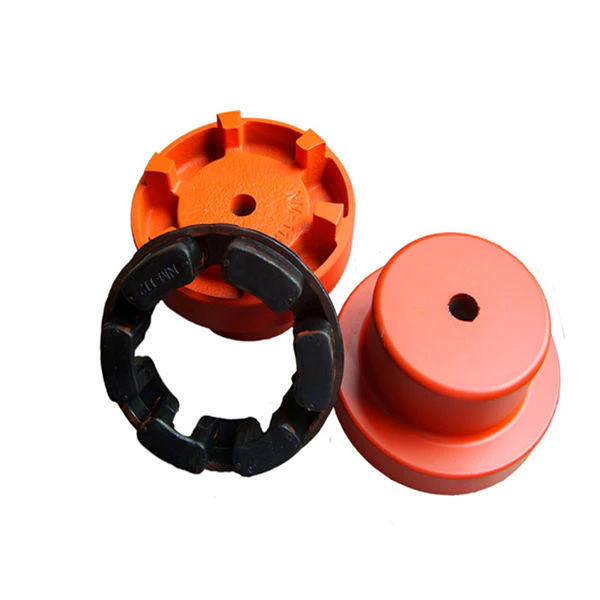
Elastomeric flexible couplings, also known as flexible or jaw couplings, employ an elastomeric material (rubber or similar) as the flexible element. The elastomer is typically molded between two hubs, and it acts as the connector between the driving and driven shafts. The key differences and characteristics of elastomeric couplings include:
- 位置ずれ補正: Elastomeric couplings are designed to handle moderate levels of angular, parallel, and axial misalignment. The elastomeric material flexes to accommodate the misalignment while transmitting torque between the shafts.
- 振動減衰: The elastomeric material in these couplings offers excellent vibration dampening properties, reducing the transmission of vibrations from one shaft to another. This feature helps protect connected equipment from excessive vibrations and enhances system reliability.
- 衝撃荷重吸収: Elastomeric couplings can absorb and dampen shock loads, protecting the system from sudden impacts or overloads.
- Cost-Effective: Elastomeric couplings are generally more cost-effective compared to metallic couplings, making them a popular choice for various industrial applications.
- Simple Design and Installation: Elastomeric couplings often have a straightforward design, allowing for easy installation and maintenance.
- Lower Torque Capacity: These couplings have a lower torque capacity compared to metallic couplings, making them suitable for applications with moderate torque requirements.
- Common Applications: Elastomeric couplings are commonly used in pumps, compressors, fans, conveyors, and other applications that require moderate torque transmission and misalignment compensation.
Metallic Flexible Couplings:
Metallic flexible couplings use metal components (such as steel, stainless steel, or aluminum) to connect the driving and driven shafts. The metallic designs can vary significantly depending on the type of metallic coupling, but some general characteristics include:
- High Torque Capacity: Metallic couplings have higher torque transmission capabilities compared to elastomeric couplings. They are well-suited for applications requiring high torque handling.
- 位置ずれ補正: Depending on the design, some metallic couplings can accommodate minimal misalignment, but they are generally not as flexible as elastomeric couplings in this regard.
- Stiffer Construction: Metallic couplings are generally stiffer than elastomeric couplings, offering less vibration dampening but higher torsional stiffness.
- Compact Design: Metallic couplings can have a more compact design, making them suitable for applications with limited space.
- Higher Precision: Metallic couplings often offer higher precision and concentricity, resulting in better shaft alignment.
- Higher Cost: Metallic couplings are typically more expensive than elastomeric couplings due to their construction and higher torque capacity.
- Common Applications: Metallic couplings are commonly used in high-speed machinery, precision equipment, robotics, and applications with high torque requirements.
まとめ:
In summary, the main differences between elastomeric and metallic flexible coupling designs lie in their flexibility, torque capacity, vibration dampening, cost, and applications. Elastomeric couplings are suitable for applications with moderate torque, misalignment compensation, and vibration dampening requirements. On the other hand, metallic couplings are chosen for applications with higher torque and precision requirements, where flexibility and vibration dampening are less critical.
Can you explain the different types of flexible coupling designs available?
There are several types of flexible coupling designs available, each with its unique construction and characteristics. These designs are tailored to meet specific application requirements and address different types of misalignment and torque transmission needs. Here are some of the most common types of flexible couplings:
- ジョーカップリング: Jaw couplings consist of two hubs with curved jaws and an elastomer spider placed between them. The spider acts as a flexible element and can compensate for angular and parallel misalignment. Jaw couplings are widely used in various industrial applications due to their simple design and effectiveness in handling misalignment and vibration damping.
- ディスクカップリング: Disc couplings use thin metallic discs with a series of alternating slits and flanges to connect the shafts. The disc coupling design allows for excellent misalignment compensation, including angular, parallel, and axial misalignment. Disc couplings are known for their high torsional stiffness and precise torque transmission capabilities.
- ギアカップリング: Gear couplings consist of toothed hubs connected by an external sleeve with gear teeth. They are well-suited for applications with high torque and moderate misalignment. Gear couplings offer good misalignment compensation and high torque capacity, making them popular in heavy-duty industrial applications.
- ビームカップリング: Beam couplings use a single piece of flexible material, often a metal beam, to connect the shafts. The material’s flexibility allows for angular and axial misalignment compensation. Beam couplings are compact, lightweight, and provide low inertia, making them suitable for applications with high-speed requirements.
- ベローズカップリング: Bellows couplings consist of a bellows-like flexible structure that connects the two hubs. They can compensate for angular, parallel, and axial misalignment. Bellows couplings are known for their high torsional stiffness and ability to maintain constant velocity transmission.
- オールドハム連結器: Oldham couplings use three discs, with the middle one having a perpendicular slot. This design allows for angular misalignment compensation while transmitting torque between the hubs. Oldham couplings are often used when electrical isolation between shafts is required.
Each flexible coupling design has its strengths and limitations, and the choice depends on factors such as the application’s torque requirements, misalignment conditions, operating environment, and speed. Proper selection of the coupling type ensures optimal performance, efficiency, and reliability in various mechanical systems and rotating machinery.


editor by CX 2024-04-26