Opis produktu
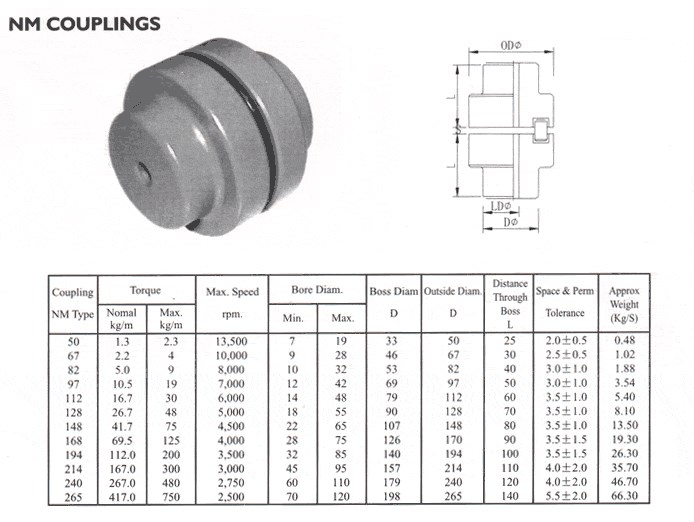
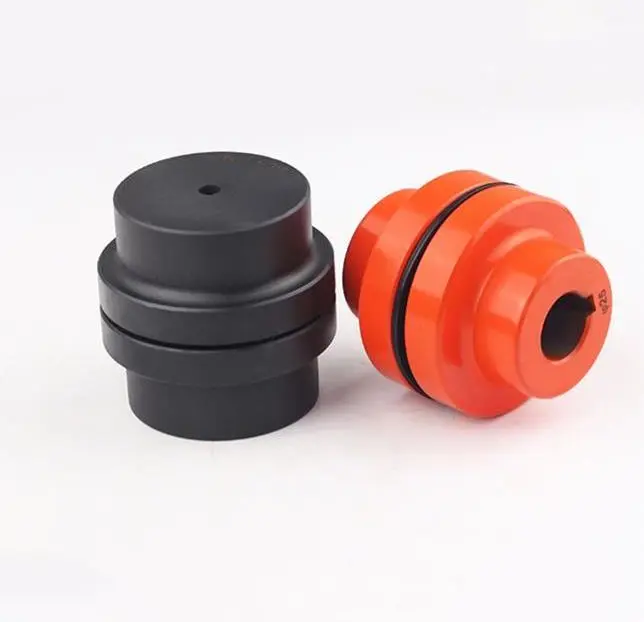
NM Coupling, NM Rubber Coupling Elements, NM Rubber Spider
| Tworzywo: | NBR, CSM/SBR | Kolor: | Czarny |
| Tensile Strength: | 12Mpa | Twardość: | 80shore A |
| Wydłużenie: | 350% | Gęstość: | 1,25 g/cm3 |
| Rozmiar: | NM50, NM67, NM82, NM97, NM112, NM128, NM148, NM168, NM194, NM214, NM240, NM265 |
Sprzęgło NM
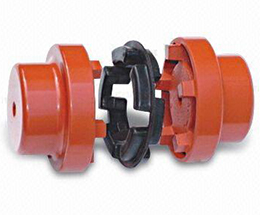
Typ NM jest precyzyjnie produkowany ze specjalnie zaprojektowanej gumy syntetycznej z 2 podobnymi korpusami z żeliwa
Kołnierze żeliwne:
Designed not only for the power transmission but also for protection of flexible rubber
Guma elastyczna: Zastosowania w pompach, wentylatorach, sprężarkach, pojazdach, urządzeniach transportowych, maszynach budowlanych, betoniarkach, traktorach, maszynach przekładniowych, maszynach do obróbki metali, walcach i wszystkich innych przekładniach
Wykonane z gumy i stalowych rdzeni, w które włożone są zęby, zapewniają doskonałą trwałość i wydajność sprzęgła
Cechy:
Ekonomiczne i praktyczne wykorzystanie
Cicha i płynna praca
Łatwa instalacja i konserwacja
Dostępne dla maszyn o wysokim momencie obrotowym i pracy przerywanej
Właściwości kauczuku syntetycznego: odpowiednia elastyczność i odporność na tłumienie, oleje, kwasy i zasady
Dane techniczne:
1: z certyfikatem CE
2: pełna kontrola jakości przed dostawą
3: OEM is welcomed
4: bogate doświadczenie w odlewnictwie precyzyjnym
materiał: CSM/SBR, NBR
kolor: czarny.
powierzchnia: gładka
wytrzymałość na rozciąganie: 12Mpa
twardość: 80Shore A
wydłużenie: 400%
gęstość: 1,25 g/cm3
wpływ elastyczności: >25%
wytrzymałość na rozdarcie: 35KN/m
temperatura pracy: 100oC
standardowy rozmiar:
NM50, NM67, NM82, NM97, NM112, NM128, NM148, NM168, NM194, NM214, NM240, NM265
Charakterystyka fizyczna: wykonana metodą wtrysku z wysokiej jakości poliestru lub formowanego CSM/SBR. Zaprojektowana specjalnie do wszelkiego rodzaju metalowych sprzęgieł wałowych, charakteryzuje się bardzo dobrą wytrzymałością na rozciąganie, wysoką odpornością na zużycie, wysoką sprężystością, wodoodpornością, odpornością na olej oraz doskonałą odpornością na zmęczenie i uderzenia. Posiadamy kompletne zestawy form i dostarczamy pełną gamę sprzęgieł serii GR, GS, MT, Hb, HRC, L, NM oraz Gear J, charakteryzujących się wysoką jakością i bogatym doświadczeniem. Stosowana do wszelkiego rodzaju przemysłowych metalowych sprzęgieł wałowych.
Dane techniczne:
materiał: poliester, CSM/SBR
color: yellow, red, purple, green, black etc.
powierzchnia: gładka
wytrzymałość na rozciąganie: 12-55Mpa
twardość: 80-98Shore A
wydłużenie: 400%-650%
gęstość: 1,25 g/cm3
wpływ elastyczności: >25%
wytrzymałość na rozdarcie: 35-155 kN/m
strata ścierna akronu: <0,05 cm3/1,61 km
odkształcenie trwałe przy ściskaniu (22h*70oC): <10%
temperatura pracy: 120oC
standardowy rozmiar złącza poliuretanowego:
GR14, GR19, GR24, GR28, GR38, GR42, GR48, GR55, GR65, GR75, GR90, GR100, GR110, GR125, GR140, GR160, GR180
MT1, MT2, MT3, MT4, MT5, MT6, MT7, MT8, MT9, MT10, MT11, MT12, MT13
HRC70, HRC90, HRC110, HRC130, HRC150, HRC180, HRC230, HRC280
L35, L50, L70, L75, L90/95, L99/100, L110, L150, L190, L225, L276
FALK-R 10R, 20R, 30R, 40R, 50R, 60R, 70R, 80R
standardowy rozmiar dla sprzęgieł gumowych:
Hb80, Hb95, Hb110, Hb125, Hb140, Hb160, Hb180, Hb200, Hb240, Hb280, Hb315
HRC70, HRC90, HRC110, HRC130, HRC150, HRC180, HRC230, HRC280
L35, L50, L70, L75, L90/95, L99/100, L110, L150, L190, L225
NM50, NM67, NM82, NM97, NM112, NM128, NM148, NM168, NM194, NM214, NM240, NM265
Bieg 3J, 4J, 5J, 6J, 7J, 8J, 9J, 10J, 11J
wykonanie form o specjalnych wymiarach według rysunków kupującego
***przy składaniu zapytania prosimy o potwierdzenie numeru i ilości produktu***
/* 22 stycznia 2571 19:08:37 */!function(){function s(e,r){var a,o={};try{e&&e.split(„”,).forEach(function(e,t){e&&(a=e.match(/(.*?):(.*)$/))&&1
| Standard: | DIN, ANSI, GB |
|---|---|
| Tworzywo: | Nr+SBR |
| Connection: | Flange |
| Surface Treatment: | Nothing |
| Head Type: | Round |
| Typ: | Nm Type |
| Próbki: |
US$ 10/Piece
1 sztuka (minimalne zamówienie) | |
|---|
| Personalizacja: |
Dostępny
| Spersonalizowane żądanie |
|---|
Can flexible couplings accommodate high torque and high-speed applications?
Yes, flexible couplings can accommodate both high torque and high-speed applications, but the suitability depends on the specific design and material of the flexible coupling. Different types of flexible couplings have varying torque and speed capacities, and it’s crucial to select the right type of coupling based on the application requirements.
High Torque Applications:
Some flexible couplings, such as gear couplings and disc couplings, are designed to handle high torque levels. Gear couplings consist of toothed hubs that mesh with each other, providing a robust and efficient torque transmission. They are commonly used in heavy-duty industrial applications, such as steel mills, mining equipment, and power generation plants, where high torque loads are prevalent.
Disc couplings are also suitable for high torque applications. They use a series of flexible metal discs that can handle significant torque while compensating for misalignment. Disc couplings are often used in high-speed machinery and critical applications where precise torque transmission is essential.
High-Speed Applications:
Flexible couplings can also be used in high-speed applications. For instance, certain disc couplings, elastomeric couplings, and grid couplings are capable of handling high rotational speeds. These couplings have low inertia, which means they can respond quickly to changes in speed and provide efficient power transmission at high RPMs.
Elastomeric couplings, such as jaw couplings and tire couplings, are commonly used in various industrial applications, including pumps, compressors, and fans, where both torque and speed requirements are high. They offer good flexibility and damping properties, making them suitable for applications with high-speed variations and vibrations.
Considerations:
When selecting a flexible coupling for high torque and high-speed applications, several factors should be considered:
- The torque and speed ratings provided by the coupling manufacturer should be checked to ensure they meet or exceed the application’s requirements.
- The design and materials of the coupling should be suitable for the specific operating conditions, including temperature, environment, and potential exposure to corrosive substances.
- Proper alignment and installation of the coupling are critical to ensure optimal performance and prevent premature wear.
- In some cases, it may be necessary to use additional components, such as torque limiters or speed reducers, to protect the coupling and the connected equipment from excessive loads or speed fluctuations.
In conclusion, flexible couplings can indeed accommodate high torque and high-speed applications, but the appropriate coupling type and proper selection are essential to ensure reliable and efficient performance in these demanding conditions.
How does a flexible coupling impact the overall reliability of connected equipment?
A flexible coupling significantly impacts the overall reliability of connected equipment in several ways:
- Kompensacja odchylenia: Flexible couplings can accommodate both angular and parallel misalignment between connected shafts. By allowing for misalignment, the coupling reduces the stress and wear on bearings, seals, and other rotating components. This feature prevents premature failure of these components, contributing to improved reliability and extended equipment lifespan.
- Vibration Damping: Flexible couplings possess inherent damping properties due to their elastomeric or flexible elements. These elements absorb and dissipate vibrations generated during the operation of machinery. By dampening vibrations, the coupling protects the connected equipment from excessive oscillations, reducing fatigue and preventing mechanical failures. This enhanced vibration control increases the reliability of the system.
- Shock Load Absorption: In applications with sudden load variations or shock loads, such as in heavy machinery or high-speed equipment, a flexible coupling acts as a shock absorber. It can absorb and dissipate the impact energy, protecting the machinery from damage caused by sudden loads. The ability to absorb shock loads contributes to the overall reliability of the connected equipment.
- Reduced Wear and Tear: The flexibility of the coupling minimizes stress and wear on rotating equipment. It allows for slight movements and misalignments, reducing friction and stress on bearings and other critical components. This reduction in wear and tear lowers the frequency of maintenance and replacement, increasing the overall reliability of the equipment.
- Compensation for Thermal Expansion: Temperature changes in machinery can lead to thermal expansion or contraction of shafts. A flexible coupling can compensate for these thermal effects, ensuring that the machinery remains properly aligned even as temperature conditions fluctuate. This compensation prevents binding and misalignment, promoting reliable performance.
- Protection Against Overloads: Flexible couplings help protect connected equipment from overloads and torsional vibrations. They act as a mechanical fuse, disconnecting the driveline when an overload occurs, thus preventing damage to expensive machinery. This safety feature enhances the overall reliability and reduces the risk of catastrophic failures.
- Easy Maintenance and Alignment: Flexible couplings are designed for easy installation and alignment. This feature simplifies maintenance procedures, making it easier to inspect and replace couplings when necessary. Properly aligned couplings lead to improved equipment performance and longevity, enhancing overall reliability.
By compensating for misalignment, damping vibrations, absorbing shock loads, reducing wear and tear, and providing other protective features, a flexible coupling significantly improves the reliability of connected equipment. It extends the lifespan of critical components, minimizes downtime, and ensures smooth and efficient operation, making it a valuable component in various industrial applications.
How do you select the appropriate flexible coupling for a specific application?
Choosing the right flexible coupling for a specific application requires careful consideration of various factors to ensure optimal performance, reliability, and longevity. Here are the key steps to select the appropriate flexible coupling:
- Application Requirements: Understand the specific requirements of the application, including torque and speed specifications, misalignment conditions, operating environment (e.g., temperature, humidity, and presence of corrosive substances), and space limitations.
- Torque Capacity: Determine the maximum torque that the coupling needs to transmit. Choose a flexible coupling with a torque rating that exceeds the application’s requirements to ensure a safety margin and prevent premature failure.
- Kompensacja odchylenia: Consider the type and magnitude of misalignment that the coupling needs to accommodate. Different coupling designs offer varying degrees of misalignment compensation. Select a coupling that can handle the expected misalignment in the system.
- Vibration Damping: If the application involves significant vibrations, choose a flexible coupling with good damping properties to reduce vibration transmission to connected equipment and improve system stability.
- Environmental Factors: Take into account the environmental conditions in which the coupling will operate. For harsh environments, consider couplings made from corrosion-resistant materials.
- Torsional Stiffness: Depending on the application’s requirements, decide on the desired torsional stiffness of the coupling. Some applications may require high torsional stiffness for precise motion control, while others may benefit from a more flexible coupling for shock absorption.
- Cost and Life-Cycle Considerations: Evaluate the overall cost-effectiveness of the coupling over its expected life cycle. Consider factors such as initial cost, maintenance requirements, and potential downtime costs associated with coupling replacement.
- Manufacturer Recommendations: Consult coupling manufacturers and their technical specifications to ensure the selected coupling is suitable for the intended application.
- Installation and Maintenance: Ensure that the selected flexible coupling is compatible with the equipment and shaft sizes. Follow the manufacturer’s installation guidelines and recommended maintenance practices to maximize the coupling’s performance and longevity.
By following these steps and carefully evaluating the application’s requirements, you can select the most appropriate flexible coupling for your specific needs. The right coupling choice will lead to improved system performance, reduced wear on equipment, and enhanced overall reliability in various mechanical systems and rotating machinery.


editor by CX 2024-03-27