وصف المنتج
NM Coupling, NM Rubber Coupling Elements, NM Rubber Spider
| مادة: | NBR، CSM/SBR | لون: | أسود |
| Tensile Strength: | 12 ميجا باسكال | صلابة: | 80 شور أ |
| استطالة: | 350% | كثافة: | 1.25 جم/سم3 |
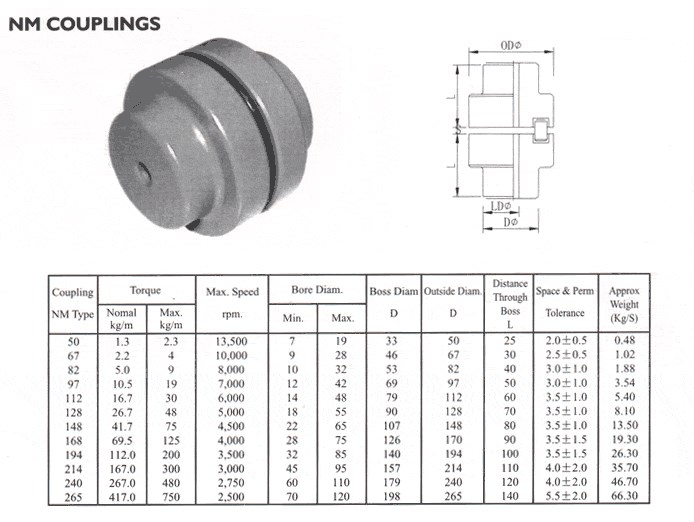
| مقاس: | NM50، NM67، NM82، NM97، NM112، NM128، NM148، NM168، NM194، NM214، NM240، NM265 |
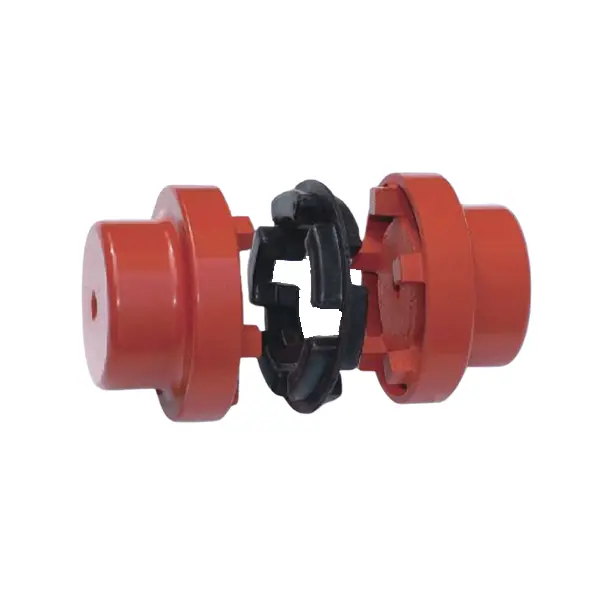
اقتران NM
يتم إنتاج النوع NM بدقة بواسطة مطاط صناعي مصمم خصيصًا مع جسمين متشابهين من الحديد الزهر
حواف من الحديد الزهر:
Designed not only for the power transmission but also for protection of flexible rubber
المطاط المرن: تطبيقات في المضخات، والمراوح، والضواغط، والمركبات، ومعدات النقل، وآلات البناء، وخلاطات الأسمنت، والجرارات، وآلات النقل، وآلات تشغيل المعادن، والبكرات، وجميع أنواع النقل الأخرى.
يتم تصنيعها من المطاط، ويتم إدخال قلب فولاذي في الأسنان لتوفير متانة وأداء ممتازين للوصلة.
سمات:
اقتصادي وعملي الاستخدام
تشغيل هادئ وسلس
سهولة التركيب والصيانة
متوفر للآلات ذات عزم الدوران العالي والتشغيل المتقطع
خصائص المطاط الصناعي: مرونة مناسبة ومقاومة للتخميد والزيوت والأحماض والقلويات
تحديد:
1: حاصل على شهادة CE
2: الكشف الكامل عن الجودة قبل التسليم
3: OEM is welcomed
4: خبرة واسعة في الصب الدقيق
المادة: CSM/SBR، NBR
اللون: أسود.
السطح: أملس
قوة الشد: 12 ميجا باسكال
الصلابة: 80 شور أ
الاستطالة: 400%
الكثافة: 1.25 جم/سم3
تأثير المرونة: >25%
قوة التمزق: 35 كيلو نيوتن/متر
درجة حرارة التشغيل: 100 درجة مئوية
الحجم القياسي:
NM50، NM67، NM82، NM97، NM112، NM128، NM148، NM168، NM194، NM214، NM240، NM265
الخصائص الفيزيائية: مصنوع بالحقن من البوليستر عالي الجودة أو بالقولبة من مادة CSM/SBR. مصمم خصيصًا لجميع أنواع وصلات الأعمدة المعدنية، ويتميز بأداء ممتاز من حيث قوة الشد العالية، ومقاومة التآكل العالية، والمرونة العالية، ومقاومة الماء والزيوت، ومقاومة الإجهاد الممتازة، ومقاومة الصدمات العالية، وغيرها. لدينا قوالب كاملة ونوفر مجموعة شاملة من وصلات GR، GS، MT، Hb، HRC، L، NM، وسلسلة Gear J بجودة عالية وخبرة واسعة. مناسب لجميع أنواع وصلات الأعمدة المعدنية الصناعية.
تحديد:
المادة: بوليستر، CSM/SBR
color: yellow, red, purple, green, black etc.
السطح: أملس
قوة الشد: 12-55 ميجا باسكال
الصلابة: 80-98 شور أ
الاستطالة: 400%-650%
الكثافة: 1.25 جم/سم3
تأثير المرونة: >25%
قوة التمزق: 35-155 كيلو نيوتن/متر
فقدان التآكل في أكرون: أقل من 0.05 سم مكعب/1.61 كم
مجموعة الضغط (22 ساعة * 70 درجة مئوية): <10%
درجة حرارة التشغيل: 120 درجة مئوية
الحجم القياسي لوصلة البولي يوريثان:
GR14، GR19، GR24، GR28، GR38، GR42، GR48، GR55، GR65، GR75، GR90، GR100، GR110، GR125، GR140، GR160، GR180
MT1, MT2, MT3, MT4, MT5, MT6, MT7, MT8, MT9, MT10, MT11, MT12, MT13
HRC70، HRC90، HRC110، HRC130، HRC150، HRC180، HRC230، HRC280
L35، L50، L70، L75، L90/95، L99/100، L110، L150، L190، L225، L276
FALK-R 10R، 20R، 30R، 40R، 50R، 60R، 70R، 80R
المقاس القياسي لوصلة المطاط:
Hb80، Hb95، Hb110، Hb125، Hb140، Hb160، Hb180، Hb200، Hb240، Hb280، Hb315
HRC70، HRC90، HRC110، HRC130، HRC150، HRC180، HRC230، HRC280
L35، L50، L70، L75، L90/95، L99/100، L110، L150، L190، L225
NM50، NM67، NM82، NM97، NM112، NM128، NM148، NM168، NM194، NM214، NM240، NM265
جير 3J، 4J، 5J، 6J، 7J، 8J، 9J، 10J، 11J
تصنيع قوالب بأحجام خاصة وفقًا لرسومات المشتري
***عند الاستفسار، يرجى تأكيد رقم المنتج وكميته***
| Standard: | DIN, ANSI, GB |
|---|---|
| مادة: | Nr+SBR |
| Connection: | Flange |
| Surface Treatment: | Nothing |
| Head Type: | Round |
| Type: | Nm Type |
| أمثلة: |
US$ 10/Piece
قطعة واحدة (الحد الأدنى للطلب) | |
|---|
| التخصيص: |
متاح
| طلب مخصص |
|---|
How does a flexible coupling protect connected equipment from shock loads and vibrations?
Flexible couplings play a crucial role in protecting connected equipment from shock loads and vibrations by providing damping and isolation capabilities. When machines or mechanical systems experience sudden shock loads or vibrations, the flexible coupling acts as a buffer, absorbing and dissipating the impact, thereby reducing the transmitted forces and protecting the equipment. Here’s how flexible couplings achieve this:
- Damping of Vibrations: Flexible couplings are often made from materials that exhibit damping properties. When vibrations are transmitted through the shafts, the flexible coupling’s material can absorb a portion of the vibrational energy, converting it into heat. This dissipation of energy helps reduce the amplitude of the vibrations and prevents them from propagating further into the connected equipment.
- Vibration Isolation: In addition to damping vibrations, flexible couplings also offer a degree of vibration isolation. They are designed to decouple the two shafts, which means that vibrations occurring on one shaft are not directly transmitted to the other shaft. This isolation effect prevents vibrations from propagating across the entire system and minimizes the impact on sensitive equipment or nearby components.
- Shock Absorption: When the connected machinery experiences sudden shock loads, such as during a startup or abrupt changes in load, the flexible coupling can act as a shock absorber. The coupling’s design allows it to deform slightly under the impact, absorbing and distributing the shock energy. This prevents the shock from being directly transferred to the connected equipment, reducing the risk of damage or premature wear.
- Misalignment Compensation: Flexible couplings are capable of compensating for misalignment between the shafts. Misalignment can lead to additional stresses and vibrations in the system. By allowing for some degree of angular, parallel, and axial misalignment, the flexible coupling reduces the forces transmitted to the connected equipment and the supporting structures.
- Reduction of Resonance Effects: Resonance is a phenomenon that occurs when the natural frequency of a system matches the frequency of external vibrations, leading to amplified vibrations. Flexible couplings can help avoid resonance effects by altering the system’s natural frequency and providing some level of flexibility that damps the resonance response.
By incorporating a flexible coupling into the drivetrain or power transmission system, equipment manufacturers and operators can significantly improve the reliability and longevity of connected machinery. The coupling’s ability to dampen vibrations, isolate shocks, and compensate for misalignment contributes to a smoother and more stable operation, reducing maintenance requirements and enhancing overall system performance.
In summary, flexible couplings act as protective elements, shielding connected equipment from shock loads and vibrations. Their ability to dampen vibrations, isolate shocks, and compensate for misalignment contributes to a smoother and more reliable operation of various mechanical systems.
هل يمكن استخدام الوصلات المرنة في البيئات المسببة للتآكل أو البيئات القاسية؟
نعم، يمكن تصميم واختيار الوصلات المرنة لاستخدامها في البيئات المسببة للتآكل أو القاسية. ويلعب اختيار المواد والطلاءات دورًا حاسمًا في ضمان متانة الوصلة وأدائها في ظل الظروف الصعبة.
مواد مقاومة للتآكل:
في البيئات المسببة للتآكل، من الضروري استخدام مواد مقاومة للهجمات الكيميائية والأكسدة. يُعد الفولاذ المقاوم للصدأ، وتحديدًا أنواع مثل 316 أو 17-4 PH، خيارًا شائعًا للوصلات المرنة في مثل هذه الحالات. يتميز الفولاذ المقاوم للصدأ بمقاومته الممتازة للتآكل، مما يجعله مناسبًا للتطبيقات التي قد تتلامس فيها الوصلة مع مواد أكالة أو رطوبة.
الطلاءات الخاصة:
في بعض البيئات القاسية، قد يلجأ مصنّعو الوصلات إلى استخدام طلاءات خاصة لتعزيز مقاومتها للتآكل. ومن أمثلة هذه الطلاءات: طلاء الزنك، وطلاء النيكل، وطلاء الإيبوكسي. توفر هذه الطلاءات طبقة حماية إضافية ضد العوامل المسببة للتآكل، وتساعد على إطالة عمر الوصلة.
تصاميم مختومة:
في البيئات التي تتعرض فيها الوصلة لملوثات مثل الغبار والأوساخ والرطوبة، يُفضل استخدام الوصلات المُحكمة الإغلاق. تمنع هذه الوصلات المرنة دخول هذه المواد إلى مكوناتها الداخلية، مما يقلل من خطر التآكل والتلف. كما يُساعد التصميم المُحكم الإغلاق على الحفاظ على أداء الوصلة مع مرور الوقت في الظروف الصعبة.
تطبيقات درجات الحرارة العالية:
في البيئات القاسية ذات درجات الحرارة العالية، يمكن استخدام وصلات مرنة مصنوعة من مواد مقاومة للحرارة العالية، مثل أنواع معينة من الفولاذ المقاوم للصدأ أو السبائك الفائقة. تحافظ هذه المواد على خصائصها الميكانيكية ومقاومتها للتآكل حتى في درجات الحرارة المرتفعة.
المقاومة الكيميائية:
في التطبيقات التي قد يتعرض فيها الموصل لمواد كيميائية أو مذيبات، من الضروري اختيار مادة موصل مقاومة كيميائياً. هذا يمنع التلف ويضمن سلامة الموصل في مثل هذه البيئات.
تصاميم متخصصة:
في بعض الحالات، حيث تكون البيئة قاسية أو فريدة من نوعها بشكل استثنائي، قد يكون من الضروري استخدام وصلات مرنة مصممة خصيصًا. يضمن تصميم الوصلة لتلبية المتطلبات المحددة للبيئة الأداء الأمثل والموثوقية.
التشاور مع المصنّعين:
عند التفكير في استخدام وصلات مرنة في بيئات قاسية أو مُسببة للتآكل، يُنصح باستشارة مُصنّعي الوصلات أو خبراء الهندسة. إذ يُمكنهم تقديم رؤى قيّمة والتوصية بالمواد والطلاءات والتصاميم المناسبة بناءً على ظروف التشغيل المحددة.
ملخص:
يمكن استخدام الوصلات المرنة في البيئات القاسية أو المسببة للتآكل، شريطة اختيار المواد والطلاءات والتصاميم المناسبة. يُعد الفولاذ المقاوم للصدأ والتصاميم المحكمة الإغلاق والطلاءات الخاصة من الحلول التي تُحسّن مقاومة الوصلة للتآكل وأداءها. من الضروري مراعاة البيئة المحددة ومتطلبات التطبيق عند اختيار الوصلة المرنة لضمان الأداء الأمثل والمتانة في الظروف الصعبة.
How do you select the appropriate flexible coupling for a specific application?
Choosing the right flexible coupling for a specific application requires careful consideration of various factors to ensure optimal performance, reliability, and longevity. Here are the key steps to select the appropriate flexible coupling:
- Application Requirements: Understand the specific requirements of the application, including torque and speed specifications, misalignment conditions, operating environment (e.g., temperature, humidity, and presence of corrosive substances), and space limitations.
- Torque Capacity: Determine the maximum torque that the coupling needs to transmit. Choose a flexible coupling with a torque rating that exceeds the application’s requirements to ensure a safety margin and prevent premature failure.
- Misalignment Compensation: Consider the type and magnitude of misalignment that the coupling needs to accommodate. Different coupling designs offer varying degrees of misalignment compensation. Select a coupling that can handle the expected misalignment in the system.
- تخميد الاهتزازات: If the application involves significant vibrations, choose a flexible coupling with good damping properties to reduce vibration transmission to connected equipment and improve system stability.
- Environmental Factors: Take into account the environmental conditions in which the coupling will operate. For harsh environments, consider couplings made from corrosion-resistant materials.
- Torsional Stiffness: Depending on the application’s requirements, decide on the desired torsional stiffness of the coupling. Some applications may require high torsional stiffness for precise motion control, while others may benefit from a more flexible coupling for shock absorption.
- Cost and Life-Cycle Considerations: Evaluate the overall cost-effectiveness of the coupling over its expected life cycle. Consider factors such as initial cost, maintenance requirements, and potential downtime costs associated with coupling replacement.
- Manufacturer Recommendations: Consult coupling manufacturers and their technical specifications to ensure the selected coupling is suitable for the intended application.
- Installation and Maintenance: Ensure that the selected flexible coupling is compatible with the equipment and shaft sizes. Follow the manufacturer’s installation guidelines and recommended maintenance practices to maximize the coupling’s performance and longevity.
By following these steps and carefully evaluating the application’s requirements, you can select the most appropriate flexible coupling for your specific needs. The right coupling choice will lead to improved system performance, reduced wear on equipment, and enhanced overall reliability in various mechanical systems and rotating machinery.


editor by CX 2023-11-20