Produktbeskrivning
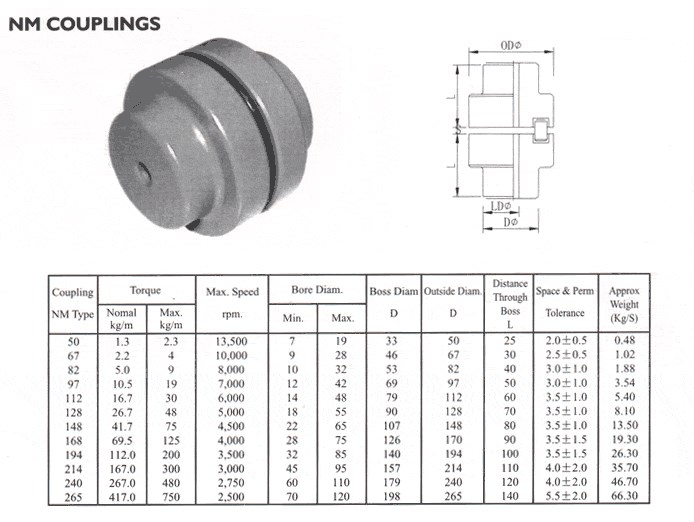
NM Coupling, NM Rubber Coupling Elements, NM Rubber Spider
| Material: | NBR, CSM/SBR | Färg: | Svart |
| Tensile Strength: | 12 MPa | Hårdhet: | 80 shore A |
| Förlängning: | 350% | Densitet: | 1,25 g/cm3 |
| Storlek: | NM50, NM67, NM82, NM97, NM112, NM128, NM148, NM168, NM194, NM214, NM240, NM265 |
NM-koppling
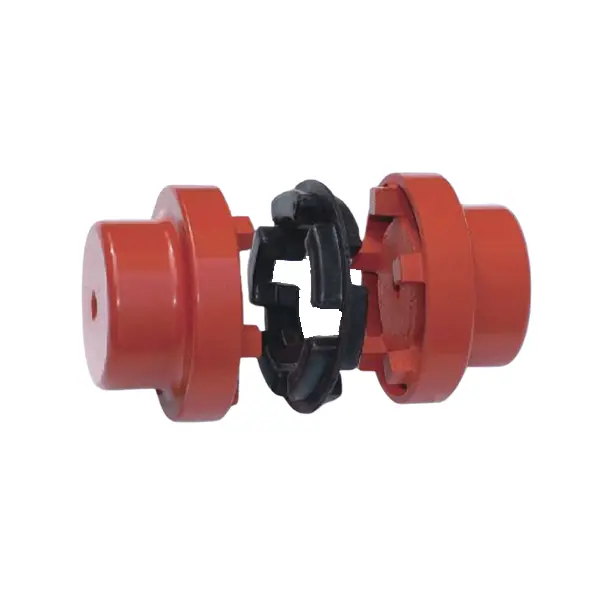
NM-typen är exakt producerad av ett specialdesignat syntetiskt gummi med två liknande gjutjärnskroppar
Gjutjärnsflänsar:
Designed not only for the power transmission but also for protection of flexible rubber
Flexibelt gummi: Används för pumpar, fläktar, kompressorer, fordon, transportutrustning, byggföretag, cementblandare, traktorer, transmissionsmaskiner, metallbearbetningsmaskiner, vältar och alla andra transmissioner.
Tillverkad av gummi och stålkärnor är insatta i tänderna för att ge utmärkt hållbarhet och kopplingsprestanda
Drag:
Ekonomisk och praktisk användning
Tyst och smidig drift
Enkel installation och underhåll
Tillgänglig för maskiner med högt vridmoment och intermittent drift
Egenskaper hos syntetiskt gummi: god elasticitet och motståndskraft mot dämpning, olja, syror och alkalier
Specifikationer:
1: med CE-certifikat
2: fullständig kvalitetskontroll före leverans
3: OEM is welcomed
4: rik erfarenhet av precisionsgjutning
material: CSM/SBR, NBR
färg: svart.
yta: slät
draghållfasthet: 12 MPa
hårdhet: 80 Shore A
förlängning: 400%
densitet: 1,25 g/cm3
elasticitetspåverkan: >25%
rivstyrka: 35 kN/m²
arbetstemperatur: 100°C
standardstorlek:
NM50, NM67, NM82, NM97, NM112, NM128, NM148, NM168, NM194, NM214, NM240, NM265
Fysisk karaktär: Tillverkad genom formsprutning med högkvalitativ polyester eller gjutform CSM/SBR. Den är designad och speciell för alla typer av metallaxelkopplingar med mycket goda prestanda vad gäller hög draghållfasthet, hög slitstyrka, hög elastisk motståndskraft, vattenbeständighet, oljebeständighet och utmärkt utmattningsbeständighet, hög slagtålighet etc. Vi har kompletta formar och levererar ett komplett sortiment av GR-, GS-, MT-, Hb-, HRC-, L-, NM- och Gear J-seriekopplingar med hög kvalitet och utmärkt erfarenhet. Tillämpas på alla typer av industriella metallaxelkopplingar.
Specifikationer:
material: polyester, CSM/SBR
color: yellow, red, purple, green, black etc.
yta: slät
draghållfasthet: 12-55 MPa
hårdhet: 80-98 Shore A
förlängning: 400%-650%
densitet: 1,25 g/cm3
elasticitetspåverkan: >25%
rivstyrka: 35-155 kN/m²
Akron-nötningsförlust: <0,05 cm³/1,61 km
kompressionssättning (22 timmar * 70 °C): <10%
arbetstemperatur: 120°C
Standardstorlek för polyuretankoppling:
GR14, GR19, GR24, GR28, GR38, GR42, GR48, GR55, GR65, GR75, GR90, GR100, GR110, GR125, GR140, GR160, GR180
MT1, MT2, MT3, MT4, MT5, MT6, MT7, MT8, MT9, MT10, MT11, MT12, MT13
HRC70, HRC90, HRC110, HRC130, HRC150, HRC180, HRC230, HRC280
L35, L50, L70, L75, L90/95, L99/100, L110, L150, L190, L225, L276
FALK-R 10R, 20R, 30R, 40R, 50R, 60R, 70R, 80R
Standardstorlek för gummikoppling:
Hb80, Hb95, Hb110, Hb125, Hb140, Hb160, Hb180, Hb200, Hb240, Hb280, Hb315
HRC70, HRC90, HRC110, HRC130, HRC150, HRC180, HRC230, HRC280
L35, L50, L70, L75, L90/95, L99/100, L110, L150, L190, L225
NM50, NM67, NM82, NM97, NM112, NM128, NM148, NM168, NM194, NM214, NM240, NM265
Växel 3J, 4J, 5J, 6J, 7J, 8J, 9J, 10J, 11J
specialdimensionerad bygggjutning enligt köparens ritningar
***När du gör en förfrågan, vänligen bekräfta produktens nummer och kvantitet***
| Standard: | DIN, ANSI, GB |
|---|---|
| Material: | Nr+SBR |
| Connection: | Flange |
| Surface Treatment: | Nothing |
| Head Type: | Round |
| Typ: | Nm Type |
| Prover: |
US$ 10/Piece
1 styck (minsta beställning) | |
|---|
| Anpassning: |
Tillgänglig
| Anpassad förfrågan |
|---|
Hur skyddar en flexibel koppling ansluten utrustning från stötar och vibrationer?
Flexibla kopplingar spelar en avgörande roll för att skydda ansluten utrustning från stötar och vibrationer genom att tillhandahålla dämpning och isolering. När maskiner eller mekaniska system upplever plötsliga stötar eller vibrationer fungerar den flexibla kopplingen som en buffert, absorberar och avleder stöten, vilket minskar de överförda krafterna och skyddar utrustningen. Så här uppnår flexibla kopplingar detta:
- Dämpning av vibrationer: Flexibla kopplingar tillverkas ofta av material som uppvisar dämpande egenskaper. När vibrationer överförs genom axlarna kan den flexibla kopplingens material absorbera en del av vibrationsenergin och omvandla den till värme. Denna energiavledning hjälper till att minska vibrationernas amplitud och förhindrar att de sprider sig vidare till den anslutna utrustningen.
- Vibrationsisolering: Förutom att dämpa vibrationer erbjuder flexibla kopplingar även en viss grad av vibrationsisolering. De är utformade för att frikoppla de två axlarna, vilket innebär att vibrationer som uppstår på den ena axeln inte överförs direkt till den andra axeln. Denna isoleringseffekt förhindrar att vibrationer sprider sig över hela systemet och minimerar påverkan på känslig utrustning eller närliggande komponenter.
- Stötdämpning: När den anslutna maskinen utsätts för plötsliga stötbelastningar, till exempel vid uppstart eller plötsliga belastningsförändringar, kan den flexibla kopplingen fungera som en stötdämpare. Kopplingens design gör att den deformeras något under stöten, vilket absorberar och fördelar stötenergin. Detta förhindrar att stöten överförs direkt till den anslutna utrustningen, vilket minskar risken för skador eller för tidigt slitage.
- Feljusteringskompensation: Flexibla kopplingar kan kompensera för feljustering mellan axlarna. Feljustering kan leda till ytterligare spänningar och vibrationer i systemet. Genom att tillåta en viss grad av vinkel-, parallell- och axiell feljustering minskar den flexibla kopplingen de krafter som överförs till den anslutna utrustningen och de stödjande strukturerna.
- Minskning av resonanseffekter: Resonans är ett fenomen som uppstår när ett systems naturliga frekvens matchar frekvensen av externa vibrationer, vilket leder till förstärkta vibrationer. Flexibla kopplingar kan bidra till att undvika resonanseffekter genom att ändra systemets naturliga frekvens och ge en viss flexibilitet som dämpar resonansresponsen.
Genom att integrera en flexibel koppling i drivlinan eller kraftöverföringssystemet kan utrustningstillverkare och operatörer avsevärt förbättra tillförlitligheten och livslängden hos anslutna maskiner. Kopplingens förmåga att dämpa vibrationer, isolera stötar och kompensera för feljustering bidrar till en smidigare och stabilare drift, vilket minskar underhållsbehovet och förbättrar systemets totala prestanda.
Sammanfattningsvis fungerar flexibla kopplingar som skyddande element som skyddar ansluten utrustning från stötar och vibrationer. Deras förmåga att dämpa vibrationer, isolera stötar och kompensera för feljustering bidrar till en smidigare och mer tillförlitlig drift av olika mekaniska system.
Can flexible couplings be used in corrosive or harsh environments?
Yes, flexible couplings can be designed and selected to be used in corrosive or harsh environments. The choice of materials and coatings plays a crucial role in ensuring the coupling’s durability and performance under challenging conditions.
Corrosion-Resistant Materials:
In corrosive environments, it is essential to use materials that can withstand chemical attacks and oxidation. Stainless steel, specifically grades like 316 or 17-4 PH, is commonly chosen for flexible couplings in such situations. Stainless steel offers excellent corrosion resistance, making it suitable for applications where the coupling may come into contact with corrosive substances or moisture.
Special Coatings:
For certain harsh environments, coupling manufacturers may apply special coatings to enhance the coupling’s corrosion resistance. Examples of coatings include zinc plating, nickel plating, or epoxy coatings. These coatings provide an additional layer of protection against corrosive agents and help extend the coupling’s lifespan.
Sealed Designs:
In environments where the coupling is exposed to contaminants like dust, dirt, or moisture, sealed designs are preferred. Sealed flexible couplings prevent these substances from entering the coupling’s internal components, thus reducing the risk of corrosion and wear. The sealed design also helps to maintain the coupling’s performance over time in challenging conditions.
High-Temperature Applications:
For harsh environments with high temperatures, flexible couplings made from high-temperature resistant materials, such as certain heat-resistant stainless steels or superalloys, can be used. These materials retain their mechanical properties and corrosion resistance even at elevated temperatures.
Chemical Resistance:
For applications where the coupling might encounter chemicals or solvents, it is essential to select a coupling material that is chemically resistant. This prevents degradation and ensures the coupling’s integrity in such environments.
Specialized Designs:
In some cases, where the environment is exceptionally harsh or unique, custom-designed flexible couplings may be necessary. Engineering a coupling to meet the specific demands of the environment ensures optimal performance and reliability.
Consultation with Manufacturers:
When considering flexible couplings for corrosive or harsh environments, it is advisable to consult with coupling manufacturers or engineering experts. They can provide valuable insights and recommend suitable materials, coatings, and designs based on the specific operating conditions.
Sammanfattning:
Flexible couplings can indeed be used in corrosive or harsh environments, provided the appropriate materials, coatings, and designs are chosen. Stainless steel, sealed designs, and special coatings are some of the solutions that enhance the coupling’s corrosion resistance and performance. It is essential to consider the specific environment and application requirements when selecting a flexible coupling to ensure optimal functionality and durability in challenging conditions.
How do you select the appropriate flexible coupling for a specific application?
Choosing the right flexible coupling for a specific application requires careful consideration of various factors to ensure optimal performance, reliability, and longevity. Here are the key steps to select the appropriate flexible coupling:
- Application Requirements: Understand the specific requirements of the application, including torque and speed specifications, misalignment conditions, operating environment (e.g., temperature, humidity, and presence of corrosive substances), and space limitations.
- Torque Capacity: Determine the maximum torque that the coupling needs to transmit. Choose a flexible coupling with a torque rating that exceeds the application’s requirements to ensure a safety margin and prevent premature failure.
- Feljusteringskompensation: Consider the type and magnitude of misalignment that the coupling needs to accommodate. Different coupling designs offer varying degrees of misalignment compensation. Select a coupling that can handle the expected misalignment in the system.
- Vibrationsdämpning: If the application involves significant vibrations, choose a flexible coupling with good damping properties to reduce vibration transmission to connected equipment and improve system stability.
- Environmental Factors: Take into account the environmental conditions in which the coupling will operate. For harsh environments, consider couplings made from corrosion-resistant materials.
- Torsional Stiffness: Depending on the application’s requirements, decide on the desired torsional stiffness of the coupling. Some applications may require high torsional stiffness for precise motion control, while others may benefit from a more flexible coupling for shock absorption.
- Cost and Life-Cycle Considerations: Evaluate the overall cost-effectiveness of the coupling over its expected life cycle. Consider factors such as initial cost, maintenance requirements, and potential downtime costs associated with coupling replacement.
- Manufacturer Recommendations: Consult coupling manufacturers and their technical specifications to ensure the selected coupling is suitable for the intended application.
- Installation and Maintenance: Ensure that the selected flexible coupling is compatible with the equipment and shaft sizes. Follow the manufacturer’s installation guidelines and recommended maintenance practices to maximize the coupling’s performance and longevity.
By following these steps and carefully evaluating the application’s requirements, you can select the most appropriate flexible coupling for your specific needs. The right coupling choice will lead to improved system performance, reduced wear on equipment, and enhanced overall reliability in various mechanical systems and rotating machinery.


editor by CX 2023-11-20