Productbeschrijving
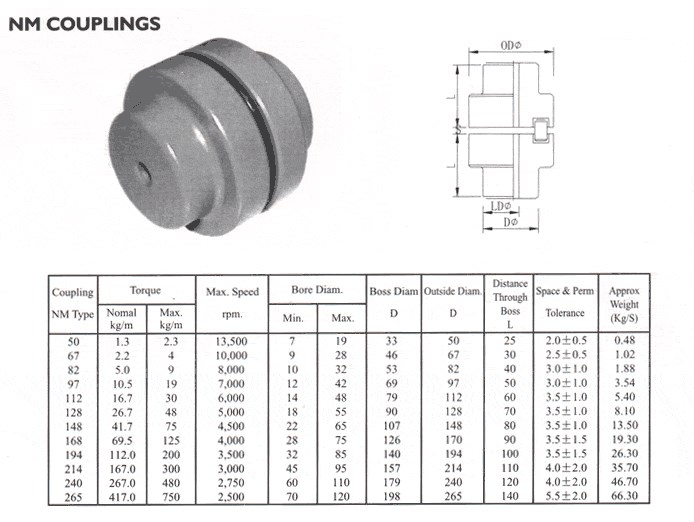
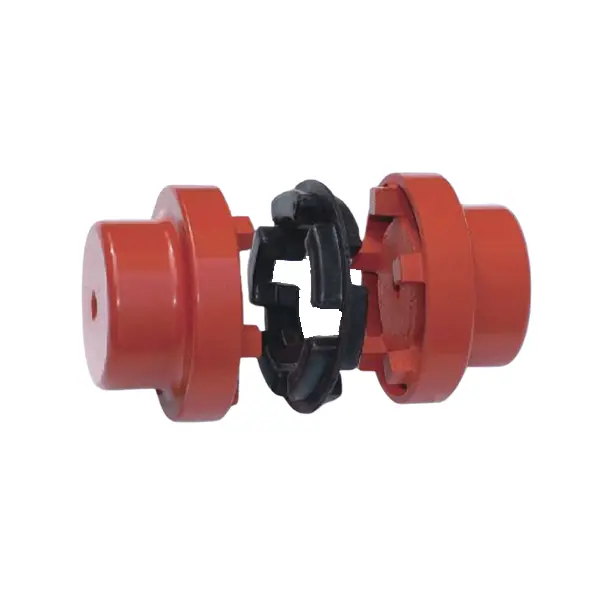
NM Coupling, NM Rubber Coupling Elements, NM Rubber Spider
| Materiaal: | NBR, CSM/SBR | Kleur: | Zwart |
| Tensile Strength: | 12 MPa | Hardheid: | 80shore A |
| Verlenging: | 350% | Dikte: | 1,25 g/cm³ |
| Maat: | NM50, NM67, NM82, NM97, NM112, NM128, NM148, NM168, NM194, NM214, NM240, NM265 |
NM-koppeling
Het NM-type wordt nauwkeurig vervaardigd uit speciaal ontworpen synthetisch rubber met 2 identieke gietijzeren lichamen.
Gietijzeren flenzen:
Designed not only for the power transmission but also for protection of flexible rubber
Flexibel rubber: Toepassingen voor pompen, ventilatoren, compressoren, voertuigen, transportmiddelen, bouwmachines, betonmixers, tractoren, transmissiemachines, metaalbewerkingsmachines, rollen en alle andere transmissies.
De tanden zijn gemaakt van rubber en staal, wat zorgt voor een uitstekende duurzaamheid en prestatie van de koppeling.
Functies:
Economisch en praktisch in gebruik
Stille en soepele werking
Eenvoudige installatie en onderhoud
Beschikbaar voor machines met een hoog koppel en intermitterende werking.
Eigenschappen van synthetisch rubber: goede elasticiteit en weerstand tegen vocht, olie, zuren en basen.
Specificaties:
1: met CE-certificaat
2: volledige kwaliteitscontrole vóór levering
3: OEM is welcomed
4: ruime ervaring in precisiegieten
materiaal: CSM/SBR, NBR
kleur: zwart.
oppervlak: glad
treksterkte: 12 MPa
Hardheid: 80 Shore A
elongatie: 400%
dichtheid: 1,25 g/cm³
impact van elasticiteit: >25%
scheursterkte: 35 kN/m
Bedrijfstemperatuur: 100°C
standaardformaat:
NM50, NM67, NM82, NM97, NM112, NM128, NM148, NM168, NM194, NM214, NM240, NM265
Fysieke eigenschappen: vervaardigd door middel van spuitgieten met hoogwaardig polyester of gegoten CSM/SBR. Het is speciaal ontworpen voor alle soorten metalen askoppelingen en biedt uitstekende eigenschappen zoals hoge treksterkte, hoge slijtvastheid, hoge elasticiteit, waterbestendigheid, oliebestendigheid, uitstekende vermoeiingsweerstand en hoge slagvastheid. We beschikken over complete matrijzensets en leveren een volledig assortiment GR-, GS-, MT-, Hb-, HRC-, L-, NM- en Gear J-serie koppelingen van hoge kwaliteit en met ruime ervaring. Geschikt voor alle soorten industriële metalen askoppelingen.
Specificaties:
materiaal: polyester, CSM/SBR
color: yellow, red, purple, green, black etc.
oppervlak: glad
treksterkte: 12-55 MPa
Hardheid: 80-98 Shore A
elongatie: 400%-650%
dichtheid: 1,25 g/cm³
impact van elasticiteit: >25%
scheursterkte: 35-155 kN/m
Akron-slijtageverlies: <0,05 cm³/1,61 km
compressie-instelling (22 uur * 70 °C): <10%
Bedrijfstemperatuur: 120°C
standaardmaat voor polyurethaankoppeling:
GR14, GR19, GR24, GR28, GR38, GR42, GR48, GR55, GR65, GR75, GR90, GR100, GR110, GR125, GR140, GR160, GR180
MT1, MT2, MT3, MT4, MT5, MT6, MT7, MT8, MT9, MT10, MT11, MT12, MT13
HRC70, HRC90, HRC110, HRC130, HRC150, HRC180, HRC230, HRC280
L35, L50, L70, L75, L90/95, L99/100, L110, L150, L190, L225, L276
FALK-R 10R, 20R, 30R, 40R, 50R, 60R, 70R, 80R
standaardmaat voor rubberen koppelingen:
Hb80, Hb95, Hb110, Hb125, Hb140, Hb160, Hb180, Hb200, Hb240, Hb280, Hb315
HRC70, HRC90, HRC110, HRC130, HRC150, HRC180, HRC230, HRC280
L35, L50, L70, L75, L90/95, L99/100, L110, L150, L190, L225
NM50, NM67, NM82, NM97, NM112, NM128, NM148, NM168, NM194, NM214, NM240, NM265
Tandwiel 3J, 4J, 5J, 6J, 7J, 8J, 9J, 10J, 11J
Op maat gemaakte mallen volgens de tekeningen van de koper.
***Vermeld bij uw aanvraag het productnummer en de hoeveelheid***
| Standard: | DIN, ANSI, GB |
|---|---|
| Materiaal: | Nr+SBR |
| Connection: | Flange |
| Surface Treatment: | Nothing |
| Head Type: | Round |
| Type: | Nm Type |
| Voorbeelden: |
US$ 10/stuk
1 stuk (minimale bestelling) | |
|---|
| Aanpassing: |
Beschikbaar
| Aanvraag op maat |
|---|
Hoe beschermt een flexibele koppeling aangesloten apparatuur tegen schokbelastingen en trillingen?
Flexibele koppelingen spelen een cruciale rol bij de bescherming van aangesloten apparatuur tegen schokbelastingen en trillingen door demping en isolatie te bieden. Wanneer machines of mechanische systemen plotselinge schokbelastingen of trillingen ondervinden, fungeert de flexibele koppeling als buffer, absorbeert en verspreidt de impact, waardoor de overgedragen krachten worden verminderd en de apparatuur wordt beschermd. Hieronder leggen we uit hoe flexibele koppelingen dit bereiken:
- Demping van trillingen: Flexibele koppelingen worden vaak gemaakt van materialen met dempende eigenschappen. Wanneer trillingen via de assen worden overgebracht, kan het materiaal van de flexibele koppeling een deel van de trillingsenergie absorberen en omzetten in warmte. Deze energieafvoer helpt de amplitude van de trillingen te verminderen en voorkomt dat ze zich verder verspreiden naar de aangesloten apparatuur.
- Trillingsisolatie: Naast het dempen van trillingen bieden flexibele koppelingen ook een zekere mate van trillingsisolatie. Ze zijn ontworpen om de twee assen te ontkoppelen, wat betekent dat trillingen op de ene as niet direct worden doorgegeven aan de andere as. Dit isolerende effect voorkomt dat trillingen zich door het hele systeem verspreiden en minimaliseert de impact op gevoelige apparatuur of nabijgelegen componenten.
- Schokdemping: Wanneer de aangesloten machine plotselinge schokbelastingen ondervindt, bijvoorbeeld tijdens het opstarten of bij abrupte veranderingen in de belasting, kan de flexibele koppeling als schokdemper fungeren. Dankzij het ontwerp van de koppeling vervormt deze lichtjes onder de impact, waardoor de schokenergie wordt geabsorbeerd en verdeeld. Dit voorkomt dat de schok direct wordt overgedragen op de aangesloten apparatuur, waardoor het risico op schade of voortijdige slijtage wordt verminderd.
- Compensatie voor verkeerde uitlijning: Flexibele koppelingen kunnen uitlijningsfouten tussen de assen compenseren. Uitlijningsfouten kunnen leiden tot extra spanningen en trillingen in het systeem. Door een zekere mate van hoek-, parallelle en axiale uitlijningsfout toe te staan, vermindert de flexibele koppeling de krachten die worden overgebracht op de aangesloten apparatuur en de ondersteunende constructies.
- Vermindering van resonantie-effecten: Resonantie is een fenomeen dat optreedt wanneer de eigenfrequentie van een systeem overeenkomt met de frequentie van externe trillingen, wat leidt tot versterkte trillingen. Flexibele koppelingen kunnen resonantie-effecten helpen voorkomen door de eigenfrequentie van het systeem te veranderen en een zekere mate van flexibiliteit te bieden die de resonantierespons dempt.
Door een flexibele koppeling in de aandrijflijn of het krachtoverbrengingssysteem te integreren, kunnen fabrikanten en gebruikers van machines de betrouwbaarheid en levensduur van de aangesloten apparatuur aanzienlijk verbeteren. Het vermogen van de koppeling om trillingen te dempen, schokken te isoleren en uitlijningsfouten te compenseren, draagt bij aan een soepelere en stabielere werking, waardoor de onderhoudsbehoefte afneemt en de algehele systeemprestaties verbeteren.
Samenvattend fungeren flexibele koppelingen als beschermende elementen die aangesloten apparatuur afschermen tegen schokbelastingen en trillingen. Hun vermogen om trillingen te dempen, schokken te isoleren en uitlijningsfouten te compenseren, draagt bij aan een soepelere en betrouwbaardere werking van diverse mechanische systemen.
Can flexible couplings be used in corrosive or harsh environments?
Yes, flexible couplings can be designed and selected to be used in corrosive or harsh environments. The choice of materials and coatings plays a crucial role in ensuring the coupling’s durability and performance under challenging conditions.
Corrosion-Resistant Materials:
In corrosive environments, it is essential to use materials that can withstand chemical attacks and oxidation. Stainless steel, specifically grades like 316 or 17-4 PH, is commonly chosen for flexible couplings in such situations. Stainless steel offers excellent corrosion resistance, making it suitable for applications where the coupling may come into contact with corrosive substances or moisture.
Special Coatings:
For certain harsh environments, coupling manufacturers may apply special coatings to enhance the coupling’s corrosion resistance. Examples of coatings include zinc plating, nickel plating, or epoxy coatings. These coatings provide an additional layer of protection against corrosive agents and help extend the coupling’s lifespan.
Sealed Designs:
In environments where the coupling is exposed to contaminants like dust, dirt, or moisture, sealed designs are preferred. Sealed flexible couplings prevent these substances from entering the coupling’s internal components, thus reducing the risk of corrosion and wear. The sealed design also helps to maintain the coupling’s performance over time in challenging conditions.
High-Temperature Applications:
For harsh environments with high temperatures, flexible couplings made from high-temperature resistant materials, such as certain heat-resistant stainless steels or superalloys, can be used. These materials retain their mechanical properties and corrosion resistance even at elevated temperatures.
Chemical Resistance:
For applications where the coupling might encounter chemicals or solvents, it is essential to select a coupling material that is chemically resistant. This prevents degradation and ensures the coupling’s integrity in such environments.
Specialized Designs:
In some cases, where the environment is exceptionally harsh or unique, custom-designed flexible couplings may be necessary. Engineering a coupling to meet the specific demands of the environment ensures optimal performance and reliability.
Consultation with Manufacturers:
When considering flexible couplings for corrosive or harsh environments, it is advisable to consult with coupling manufacturers or engineering experts. They can provide valuable insights and recommend suitable materials, coatings, and designs based on the specific operating conditions.
Samenvatting:
Flexible couplings can indeed be used in corrosive or harsh environments, provided the appropriate materials, coatings, and designs are chosen. Stainless steel, sealed designs, and special coatings are some of the solutions that enhance the coupling’s corrosion resistance and performance. It is essential to consider the specific environment and application requirements when selecting a flexible coupling to ensure optimal functionality and durability in challenging conditions.
How do you select the appropriate flexible coupling for a specific application?
Choosing the right flexible coupling for a specific application requires careful consideration of various factors to ensure optimal performance, reliability, and longevity. Here are the key steps to select the appropriate flexible coupling:
- Application Requirements: Understand the specific requirements of the application, including torque and speed specifications, misalignment conditions, operating environment (e.g., temperature, humidity, and presence of corrosive substances), and space limitations.
- Torque Capacity: Determine the maximum torque that the coupling needs to transmit. Choose a flexible coupling with a torque rating that exceeds the application’s requirements to ensure a safety margin and prevent premature failure.
- Compensatie voor verkeerde uitlijning: Consider the type and magnitude of misalignment that the coupling needs to accommodate. Different coupling designs offer varying degrees of misalignment compensation. Select a coupling that can handle the expected misalignment in the system.
- Trillingsdemping: If the application involves significant vibrations, choose a flexible coupling with good damping properties to reduce vibration transmission to connected equipment and improve system stability.
- Environmental Factors: Take into account the environmental conditions in which the coupling will operate. For harsh environments, consider couplings made from corrosion-resistant materials.
- Torsional Stiffness: Depending on the application’s requirements, decide on the desired torsional stiffness of the coupling. Some applications may require high torsional stiffness for precise motion control, while others may benefit from a more flexible coupling for shock absorption.
- Cost and Life-Cycle Considerations: Evaluate the overall cost-effectiveness of the coupling over its expected life cycle. Consider factors such as initial cost, maintenance requirements, and potential downtime costs associated with coupling replacement.
- Manufacturer Recommendations: Consult coupling manufacturers and their technical specifications to ensure the selected coupling is suitable for the intended application.
- Installation and Maintenance: Ensure that the selected flexible coupling is compatible with the equipment and shaft sizes. Follow the manufacturer’s installation guidelines and recommended maintenance practices to maximize the coupling’s performance and longevity.
By following these steps and carefully evaluating the application’s requirements, you can select the most appropriate flexible coupling for your specific needs. The right coupling choice will lead to improved system performance, reduced wear on equipment, and enhanced overall reliability in various mechanical systems and rotating machinery.


editor by CX 2023-11-20