Opis produktu
Opis produktu
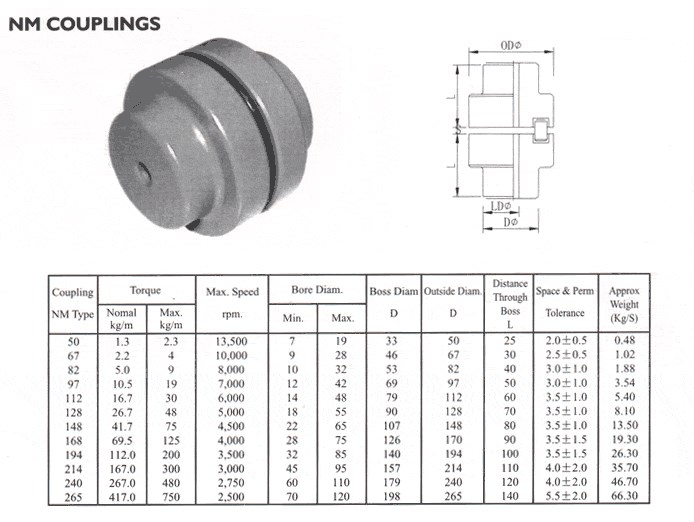
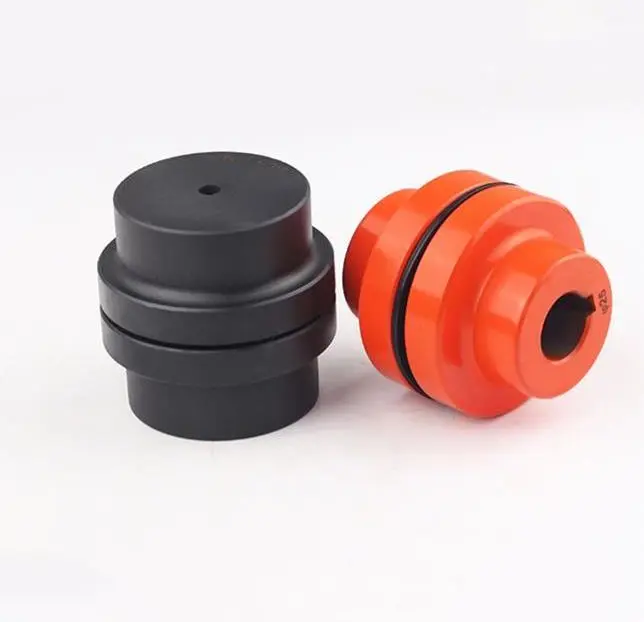
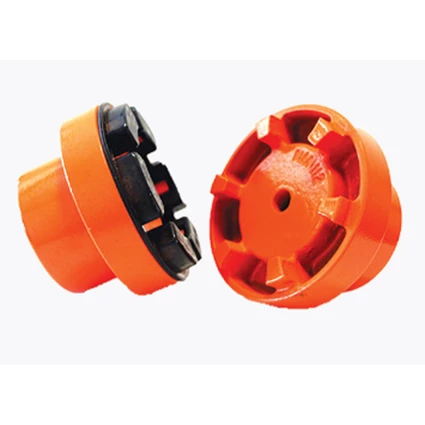
NM Flexible Rubber Shaft Coupling and normex shaft coupling
NM flexible shaft coupling is a cylindrical pin made of some non-metallic materials, which is placed between the 2 sides of the coupling and the inner surface of the outer ring, and a device to transfer the torque through the column pin to realize the connection between 2 half couplings. NM flexible shaft coupling between the slider made of bakelite cloth or polyurethane, suitable for high speed, large torque, no sharp impact of the 2 connections.
SPECIFICATIONS:
1:with CE certificate
2:full detection of quality before delivery
3:OEM is welcomed
4:rich experience in precision casting
Parametry produktu
| material | steel or iron as your requirement |
| Process | CNC and Powder metallurgy as your choice |
| surface treatment | Dacromet, SECC,anodizing, zinc plate, and electroplating,etc. |
| Maszyna | CNC machine,lathe, mill and grinding machine, planing, drilling toll |
| tolerance | CT8 |
Opakowanie i wysyłka
Packaging:
Chain+Plastic Bag+ Carton+Wooden case ( If you have other requirements, we can customized according to customer requirements packaging.)
Shipping :
1.Most of the standard ones are in stock which we can send in 3-10 days after inspection and package.
2. Customized products delivery time should be determined according to the number.
Profil firmy
Często zadawane pytania
1. Sample – Q: Do you provide samples?
A: Yes. Sample will be provided according to drawing for non standard parts.
2. Minimalne zamówienie – Q: What is your MOQ?
A: Large parts 10 pcs, small parts 200 pcs.
3. Port – Q: Which port you usually use?
A: ZheJiang , HangZhou, HangZhou
4. Payment-Q: What is your payment terms?
A: small order: 100% in advance by credit card,T/T
large order: 30% T/T in advance, 70% against copy of B/L
Differnt countries may different.
5. Delievery-Q: How long is your delivery time?
A: Stock products: 3 business days
Made-to-order: Generally 15-25 business days after payment received
6. Jakość– Q: How about your quality or main customers?
A: Top quality which is verified by ISO 9001: 2008.
| Standardowe czy niestandardowe: | Standard |
|---|---|
| Otwór wału: | 7-952mm |
| Prędkość: | 1000-4000r/Min |
| Struktura: | Jaw / Spider |
| Tworzywo: | Cast Iron |
| Typ: | Elastyczny |
| Próbki: |
US$ 25.6/Piece
1 sztuka (minimalne zamówienie) | |
|---|
| Personalizacja: |
Dostępny
| Spersonalizowane żądanie |
|---|
Can flexible couplings accommodate high torque and high-speed applications?
Yes, flexible couplings can accommodate both high torque and high-speed applications, but the suitability depends on the specific design and material of the flexible coupling. Different types of flexible couplings have varying torque and speed capacities, and it’s crucial to select the right type of coupling based on the application requirements.
High Torque Applications:
Some flexible couplings, such as gear couplings and disc couplings, are designed to handle high torque levels. Gear couplings consist of toothed hubs that mesh with each other, providing a robust and efficient torque transmission. They are commonly used in heavy-duty industrial applications, such as steel mills, mining equipment, and power generation plants, where high torque loads are prevalent.
Disc couplings are also suitable for high torque applications. They use a series of flexible metal discs that can handle significant torque while compensating for misalignment. Disc couplings are often used in high-speed machinery and critical applications where precise torque transmission is essential.
High-Speed Applications:
Flexible couplings can also be used in high-speed applications. For instance, certain disc couplings, elastomeric couplings, and grid couplings are capable of handling high rotational speeds. These couplings have low inertia, which means they can respond quickly to changes in speed and provide efficient power transmission at high RPMs.
Elastomeric couplings, such as jaw couplings and tire couplings, are commonly used in various industrial applications, including pumps, compressors, and fans, where both torque and speed requirements are high. They offer good flexibility and damping properties, making them suitable for applications with high-speed variations and vibrations.
Considerations:
When selecting a flexible coupling for high torque and high-speed applications, several factors should be considered:
- The torque and speed ratings provided by the coupling manufacturer should be checked to ensure they meet or exceed the application’s requirements.
- The design and materials of the coupling should be suitable for the specific operating conditions, including temperature, environment, and potential exposure to corrosive substances.
- Proper alignment and installation of the coupling are critical to ensure optimal performance and prevent premature wear.
- In some cases, it may be necessary to use additional components, such as torque limiters or speed reducers, to protect the coupling and the connected equipment from excessive loads or speed fluctuations.
In conclusion, flexible couplings can indeed accommodate high torque and high-speed applications, but the appropriate coupling type and proper selection are essential to ensure reliable and efficient performance in these demanding conditions.
Jakie czynniki należy wziąć pod uwagę przy wyborze elastycznego sprzęgła dla konkretnego systemu?
Wybór odpowiedniego sprzęgła elastycznego do konkretnego systemu wymaga starannego rozważenia kilku czynników. Oto najważniejsze czynniki, które należy wziąć pod uwagę:
- 1. Wymagania dotyczące rozbieżności: Oceń rodzaj i skalę oczekiwanej niewspółosiowości w układzie. Różne sprzęgła są zaprojektowane do radzenia sobie z określonymi typami niewspółosiowości, takimi jak niewspółosiowość kątowa, równoległa lub osiowa. Wybierz sprzęgło, które może kompensować oczekiwaną niewspółosiowość, aby zapobiec przedwczesnemu zużyciu i awarii.
- 2. Moment obrotowy: Określ wymagany moment obrotowy sprzęgła, aby zapewnić jego przenoszenie niezbędnej mocy między wałami. Weź pod uwagę zarówno ciągłe, jak i szczytowe obciążenia momentem obrotowym, na jakie może być narażony układ.
- 3. Prędkość robocza: Należy wziąć pod uwagę prędkość obrotową układu. Zastosowania wysokoobrotowe mogą wymagać sprzęgieł, które poradzą sobie z dodatkowymi siłami odśrodkowymi i zapewnią równowagę.
- 4. Zakres temperatur: Weź pod uwagę zakres temperatur pracy układu. Wybierz materiał sprzęgła, który wytrzyma występujące temperatury bez utraty właściwości mechanicznych.
- 5. Środowisko i warunki: Oceń warunki środowiskowe, w których będzie używane sprzęgło, takie jak narażenie na wilgoć, chemikalia, kurz lub substancje żrące. Wybierz materiał sprzęgu, który będzie odpowiedni do środowiska pracy.
- 6. Ograniczenia przestrzenne: Oceń dostępną przestrzeń do montażu sprzęgła. Niektóre sprzęgła mają kompaktową konstrukcję, odpowiednią do zastosowań w ograniczonej przestrzeni.
- 7. Instalacja i konserwacja: Weź pod uwagę łatwość montażu i konserwacji. Niektóre złącza mogą wymagać specjalnych narzędzi lub demontażu w celu konserwacji, podczas gdy inne oferują szybką i prostą instalację.
- 8. Sztywność skrętna: Oceń sztywność skrętną sprzęgła. Równowaga między elastycznością a sztywnością jest niezbędna, aby zapobiec nadmiernym drganiom skrętnym, a jednocześnie zniwelować niewspółosiowość.
- 9. Tłumienie wstrząsów i wibracji: W przypadku zastosowań, w których występują duże obciążenia udarowe lub wibracje, należy wybrać sprzęgło o doskonałych właściwościach tłumiących, aby chronić układ przed nadmiernymi siłami.
- 10. Koszt i budżet: Porównaj koszt sprzęgła z całkowitym budżetem systemu. Weź pod uwagę długoterminowe koszty, w tym koszty konserwacji i wymiany.
Ostatecznie wybór sprzęgła elastycznego powinien być dostosowany do konkretnych wymagań i warunków pracy systemu. Konsultacje z producentami sprzęgieł lub ekspertami inżynieryjnymi mogą dostarczyć cennych informacji, które pozwolą na optymalny dobór sprzęgła, zwiększając wydajność, niezawodność i efektywność systemu.
Are there any limitations or disadvantages of using flexible couplings?
While flexible couplings offer numerous advantages, they do come with some limitations and disadvantages that should be considered when selecting them for specific applications. Here are some of the common limitations and disadvantages of using flexible couplings:
- Torsional Stiffness: Flexible couplings provide some level of torsional flexibility, which is advantageous in many applications. However, in systems that require high precision and minimal angular deflection, the inherent flexibility of the coupling may not be suitable. In such cases, a rigid coupling may be more appropriate.
- Limitation in High-Torque Applications: While some flexible couplings can handle moderate to high torque levels, they may not be as well-suited for extremely high-torque applications. In such cases, specialized couplings, such as gear couplings, may be required to handle the high torque demands.
- Temperature Limitations: The performance of certain flexible coupling materials, especially elastomers and plastics, may be affected by extreme temperature conditions. High temperatures can lead to premature wear and reduced lifespan of the coupling, while low temperatures may result in reduced flexibility and potential brittleness.
- Chemical Compatibility: Certain flexible coupling materials may not be compatible with certain chemicals or substances present in the application’s environment. Exposure to chemicals can cause degradation or corrosion of the coupling material, affecting its performance and lifespan.
- Installation and Alignment: Flexible couplings require proper installation and alignment to function effectively. If not installed correctly, misalignment issues may persist, leading to premature wear and reduced performance. Aligning the shafts accurately can be time-consuming and may require specialized equipment and expertise.
- Cost: In some cases, flexible couplings may be more expensive than rigid couplings due to their more complex design and use of specialized materials. However, the cost difference is often justified by the benefits they offer in terms of misalignment compensation and vibration damping.
- Service Life: The service life of a flexible coupling can vary depending on the application’s conditions and the quality of the coupling. Regular maintenance and timely replacement of worn or damaged parts are essential to ensure the coupling’s longevity and prevent unexpected failures.
Despite these limitations, flexible couplings remain highly valuable components in a wide range of applications, providing efficient torque transmission and compensating for misalignment. Proper selection, installation, and maintenance can help mitigate many of the disadvantages associated with flexible couplings, ensuring their reliable and long-lasting performance in various mechanical systems.


editor by CX 2023-10-20