Opis produktu
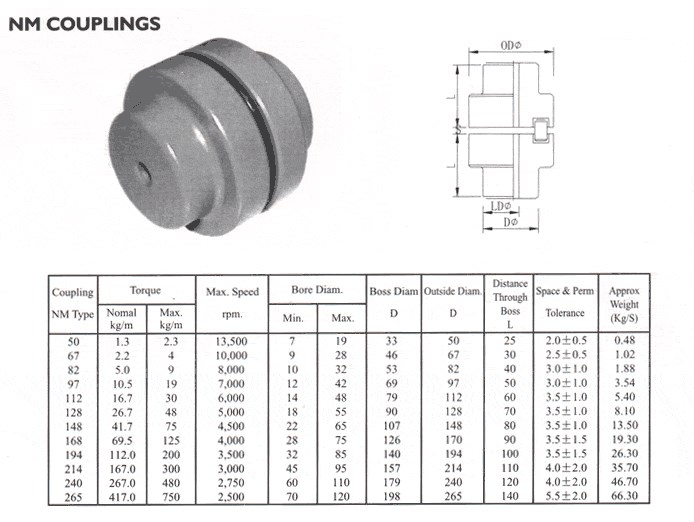
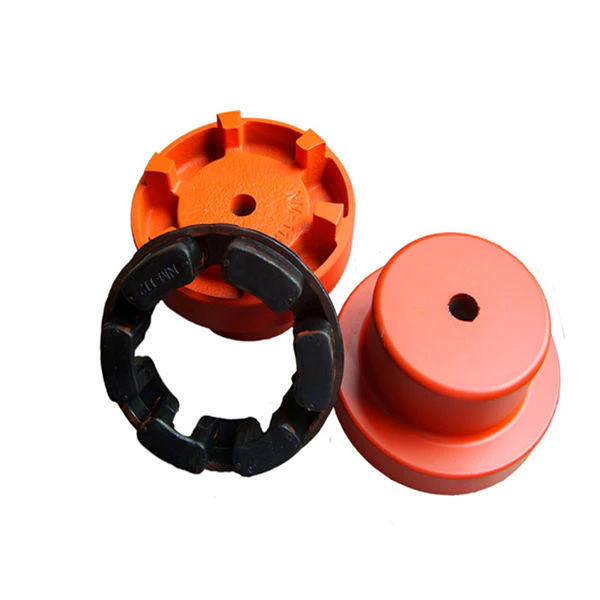
Cast Iron Normex Coupling NM Coupling
| Product Name | GE / GR Flexible Shaft Coupling |
| Tworzywo | Steel ( stainless steel , alumimun also available ) |
| Elastomer Material | Rubber (TPU) |
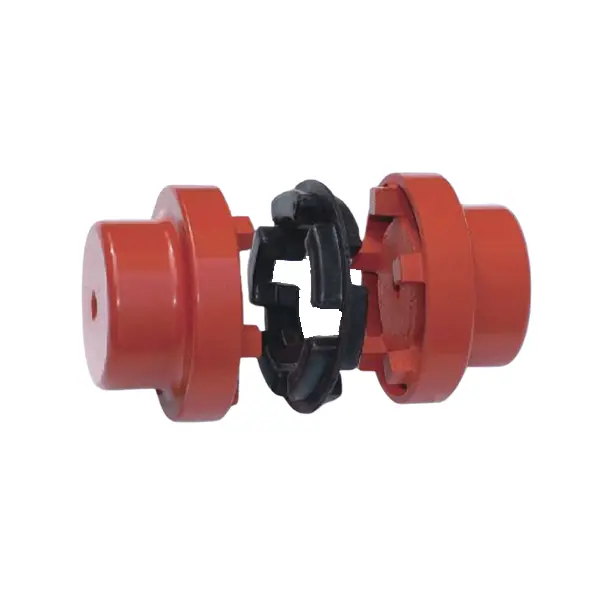
| Structure | 2 shaft ( 1 / 1a / 1b )+ flexible spider |
| Bore size | 0~40mm |
| Weight | About 3.3kg / pcs |
| packing | plastic bag +paper box +wooden box +wooden pallet |
Główne produkty:
1. Timing Belt Pulley (Synchronous Pulley), Timing Bar, Clamping Plate;
2. Forging, Casting, Stampling Part;
3. V Belt Pulley and Taper Lock Bush; Sprocket, Idler and Plate Wheel;Spur Gear, Bevel Gear, Rack;
4. Shaft Locking Device: could be alternative for Ringfeder, Sati, Chiaravalli, Tollok, etc.;
5. Shaft Coupling: including Miniature couplings, Curved tooth coupling, Chain coupling, HRC coupling,
Normex coupling, Type coupling, GE Coupling, torque limiter, Universal Joint;
6. Shaft Collars: including Setscrew Type, Single Split and Double Splits;
7. Gear & Rack: Spur gear/rack, bevel gear, helical gear/rack.
8. Other customized Machining Parts according to drawings (OEM) Forging, Casting, Stamping Parts.
Packaging & Shipping:
All the products can be packed in cartons,or,you can choose the pallet packing.
MADE IN CHINA can be pressed on wooden cases.Land,air,sea transportation are available.UPS,DHL,TNT,
FedEx and EMS are all supported.
Company Introduction:
Factory View:
Exhibition:
Najczęściej zadawane pytania:
1. Minimalne zamówienie
A: Generally, 1 pc for standard parts; contact for nonstandard parts.
2. Delivery Time
A: In stock: within 5 working days. Out of stock: depends on your order quantity.
3. Jak wybrać
A: part number or drawing, catalogue. If no, you can send us your sample, so we can make the drawing and sample accordingly.
4: What is the Warranty for your products?
A:Normally our warranty is 1 year.
Contacts:
| Standardowe czy niestandardowe: | Standard |
|---|---|
| Otwór wału: | 19-32 |
| Moment obrotowy: | >80NM |
| Średnica otworu: | 19 mm |
| Prędkość: | 4000 obr./min |
| Struktura: | Metal Bellows |
| Próbki: |
US$ 0.1/Piece
1 sztuka (minimalne zamówienie) | |
|---|
| Personalizacja: |
Dostępny
| Spersonalizowane żądanie |
|---|
How does a flexible coupling handle angular, parallel, and axial misalignment?
A flexible coupling is designed to accommodate various types of misalignment between two rotating shafts: angular misalignment, parallel misalignment, and axial misalignment. The flexibility of the coupling allows it to maintain a connection between the shafts while compensating for these misalignment types. Here’s how a flexible coupling handles each type of misalignment:
- Angular Misalignment: Angular misalignment occurs when the axes of the two shafts are not collinear and form an angle with each other. Flexible couplings can handle angular misalignment by incorporating an element that can flex and bend. One common design is the “spider” or “jaw” element, which consists of elastomeric materials. As the shafts are misaligned, the elastomeric element can deform slightly, allowing the coupling to accommodate the angular offset between the shafts while still transmitting torque.
- Parallel Misalignment: Parallel misalignment, also known as offset misalignment, occurs when the axes of the two shafts are parallel but not perfectly aligned with each other. Flexible couplings can handle parallel misalignment through the same elastomeric element. The flexible nature of the element enables it to shift and adjust to the offset between the shafts, ensuring continuous power transmission while minimizing additional stresses on the machinery.
- Axial Misalignment: Axial misalignment, also called end-play misalignment, occurs when the two shafts move closer together or farther apart along their common axis. Flexible couplings can handle axial misalignment through specific designs that allow limited axial movement. For instance, some couplings use slotted holes or a floating member that permits axial displacement while maintaining the connection between the shafts.
By providing the capability to handle angular, parallel, and axial misalignment, flexible couplings offer several advantages for power transmission systems:
- They help to prevent premature wear and damage to the connected equipment, reducing maintenance and replacement costs.
- They minimize vibration and shock loads, enhancing the overall smoothness and reliability of the machinery.
- They reduce the risk of equipment failure due to misalignment-induced stresses, improving the system’s operational life.
- They allow for easier installation and alignment adjustments, saving time and effort during setup and maintenance.
Overall, flexible couplings play a crucial role in handling misalignment and ensuring efficient power transmission in various industrial applications.
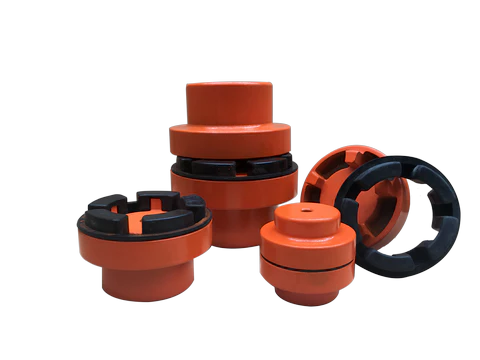
Can flexible couplings be used for both motor-to-shaft and shaft-to-shaft connections?
Yes, flexible couplings can be used for both motor-to-shaft and shaft-to-shaft connections in various applications. The versatility of flexible couplings allows them to adapt to different types of connections and meet the specific requirements of the system.
Motor-to-Shaft Connections:
When connecting a motor to a shaft, a flexible coupling serves as an intermediary component that joins the motor shaft and the driven shaft. Flexible couplings are commonly used in motor-driven systems to accommodate misalignment between the motor and the driven load. In motor applications, flexible couplings help reduce stress and wear on the motor bearings, thus extending the motor’s life and enhancing overall system reliability. They also act as vibration dampeners, minimizing vibrations transmitted from the motor to the driven shaft, and subsequently to connected equipment, ensuring smoother operation.
Shaft-to-Shaft Connections:
In many mechanical systems, such as those in the manufacturing, automation, and power transmission industries, shaft-to-shaft connections are required. A flexible coupling can bridge the gap between two shafts and transmit torque while accommodating misalignment. This type of coupling is commonly used to connect shafts that are not perfectly aligned due to factors like manufacturing tolerances, thermal expansion, or foundation settling. By allowing for misalignment, the flexible coupling protects the connected components from excessive stresses and ensures efficient power transmission.
Versatility and Advantages:
The ability of flexible couplings to handle both motor-to-shaft and shaft-to-shaft connections makes them versatile solutions for a wide range of industrial applications. Some of the advantages of using flexible couplings in these connections include:
- Minimizing stress and wear on connected components, such as bearings and seals.
- Compensating for misalignment, ensuring smooth power transmission.
- Damping vibrations and shock loads, reducing the risk of mechanical failures.
- Protecting equipment from excessive forces, enhancing system reliability.
- Simplifying installation and alignment procedures, reducing downtime.
- Improving overall system performance and operational efficiency.
Zastosowania:
Flexible couplings find applications in a wide range of industries, including manufacturing, material handling, automotive, aerospace, robotics, and more. Whether connecting a motor to a shaft or joining two shafts directly, flexible couplings play a crucial role in enhancing the reliability and efficiency of rotating machinery and mechanical systems.
In conclusion, flexible couplings can effectively serve as connectors for both motor-to-shaft and shaft-to-shaft connections, providing essential misalignment compensation and protection for connected equipment in various industrial applications.
Jakie materiały są powszechnie stosowane do produkcji sprzęgieł elastycznych?
Sprzęgła elastyczne są produkowane z różnorodnych materiałów, z których każdy oferuje inne właściwości i charakterystyki, dostosowane do konkretnych zastosowań. Wybór materiału zależy od takich czynników, jak wymagania danego zastosowania, warunki środowiskowe, moment obrotowy i pożądana elastyczność. Oto niektóre z materiałów powszechnie stosowanych w produkcji sprzęgieł elastycznych:
- Stal: Stal jest powszechnie stosowanym materiałem w sprzęgłach elastycznych ze względu na swoją wytrzymałość, trwałość i doskonałe właściwości przenoszenia momentu obrotowego. Sprzęgła stalowe nadają się do ciężkich zastosowań przemysłowych, wymagających wysokiego momentu obrotowego i trudnych warunków pracy.
- Stal nierdzewna: Stal nierdzewna jest często używana do produkcji elastycznych złączy w środowiskach o wysokim potencjale korozyjnym. Złącza ze stali nierdzewnej charakteryzują się doskonałą odpornością na rdzę i inne czynniki korozyjne, dzięki czemu idealnie nadają się do zastosowań w przemyśle morskim, spożywczym i chemicznym.
- Aluminium: Sprzęgła aluminiowe są lekkie, charakteryzują się niską bezwładnością i zapewniają doskonałą równowagę. Są powszechnie stosowane w zastosowaniach, w których redukcja masy ma kluczowe znaczenie, takich jak przemysł lotniczy i robotyka.
- Mosiądz: Złączki mosiężne znane są ze swojej przewodności elektrycznej i są używane w zastosowaniach, w których wymagane jest uziemienie lub izolacja elektryczna, np. w niektórych maszynach przemysłowych lub sprzęcie elektronicznym.
- Lane żelazo: Sprzęgła żeliwne charakteryzują się dobrą wytrzymałością i trwałością, dlatego też są często wykorzystywane w przemyśle, gdzie wymagana jest odporność na obciążenia udarowe i wibracje.
- Plastik/Polimer: Niektóre elastyczne sprzęgła wykorzystują wysokowydajne polimery lub tworzywa sztuczne, takie jak poliuretan czy nylon. Materiały te zapewniają dobrą elastyczność, niskie tarcie i odporność na działanie chemikaliów. Złącza plastikowe nadają się do zastosowań, w których odporność na korozję i niska masa są kluczowe.
- Elastomery: Elastomery są stosowane jako elementy elastyczne w wielu złączach elastycznych. Materiały takie jak kauczuk naturalny, neopren lub uretan są powszechnie stosowane jako elementy elastomerowe, zapewniające elastyczność i właściwości tłumiące drgania.
Wybór materiału sprzęgła zależy od specyficznych potrzeb danego zastosowania. Na przykład, w zastosowaniach o wysokiej wydajności i dużej wytrzymałości, ze względu na ich wytrzymałość, wymagane mogą być sprzęgła stalowe lub ze stali nierdzewnej, natomiast w zastosowaniach, w których redukcja masy ma kluczowe znaczenie, korzystne mogą okazać się sprzęgła aluminiowe lub polimerowe. Ponadto, na wybór materiału wpływają takie czynniki, jak zakres temperatur, narażenie na działanie substancji chemicznych oraz wymagania elektryczne w środowisku pracy danego zastosowania.
Producenci zazwyczaj podają specyfikacje materiałowe swoich sprzęgieł, pomagając użytkownikom podejmować świadome decyzje w oparciu o konkretne wymagania ich zastosowań.


editor by CX 2023-10-19