Opis produktu
Opis produktu
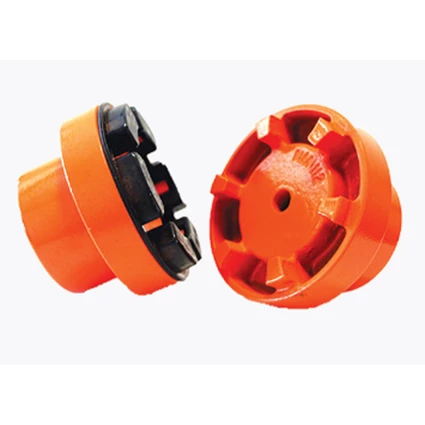
Cast Iron Spider Rubber Flexible NM 128 water pump Shaft coupling
Cast iron NM flexible shaft coupling is a cylindrical pin made of some non-metallic materials, which is placed between the 2 sides of the coupling and the inner surface of the outer ring, and a device to transfer the torque through the column pin to realize the connection between 2 half couplings.
Cast iron NM flexible shaft coupling between the slider made of bakelite cloth or polyurethane, suitable for high speed, large torque, no sharp impact of the 2 connections. The standard code of the pump industry is Bl104. The maximum allowable torque is 850N m, and the maximum shaft diameter is 50mm.
The characteristics of the China Manufactory NM Spider Coupling:
1. It is small in size, light in quality, simple in structure, convenient in installation and low in price. It is often used in small power occasions.
2, the transmission torque is large, and in the same torque, most of the rotary diameter is smaller than the tooth coupling, and it can partly replace the tooth coupling.
3, the inertia force is small, it is suitable for 2 axis connection with little torque, high speed and no sharp impact. The transmission torque of nylon slider is small, but it is more suitable for high-speed operation without lubrication.
Parametry produktu
Opakowanie i wysyłka
All the products can be packed in cartons,or,you can choose the pallet packing.
MADE IN CHINA can be pressed on wooden cases.Land,air,sea transportation are available.UPS,DHL,TNT,
FedEx and EMS are all supported.
Profil firmy
About Mighty Machinery
ZheJiang Mighty Machinery Co., Ltd., specializes in manufacturing Mechanical Power Transmission Products. After over 13 years hard work, MIGHTY have already get the certificate of ISO9001:2000 and become a holding company for 3 manufacturing factories.
MIGHTY advantage
1, Abundant experience in the mechanical processing industries.
2,Large quality of various material purchase and stock in warhouse which ensure the low cost for the material and production in time.
3,Now have 5 technical staff, we have strong capacity for design and process design, and more than 70 worker now work in our FTY and double shift eveyday.
4,Strick quality control are apply in the whole prodution. we have incoming inspection,process inspection and final production inspection which can ensure the perfect of the goods quality.
5,Long time cooperate with the Global Buyer, make us easy to understand the csutomer and handle the export.
Często zadawane pytania
Q1: Are you trading company or manufacturer ?
A: Jesteśmy fabryką.
Q2:Do you provide samples ? is it free or extra ?
A: : Yes, we could offer the sample but not for free.Actually we have a very good price principle, when you make the bulk order then cost of sample will be return to you.
Q3: How long is your delivery time?
A: Generally it is 10-15 days if the goods are in stock. Or it is 7-25 days if the goods are not in stock, it is according to quantity.
Q4:How long is your warranty?
A: Our Warranty is 12 month.
Q5 :Do you have inspection procedures for coupling ?
A:100% self-inspection before packing
Q6. What’s your payment?
A:1) 100% T/T. 2) 30% in advance, others before shipment. 3) L/C Q7:Can I have a visit to your factory before the order? A: Sure,welcome to visit our factory.
/* March 10, 2571 17:59:20 */!function(){function s(e,r){var a,o={};try{e&&e.split(“,”).forEach(function(e,t){e&&(a=e.match(/(.*?):(.*)$/))&&1
| Standardowe czy niestandardowe: | Standard |
|---|---|
| Moment obrotowy: | 25-12500(N.M) |
| Prędkość: | 1500-8500(R/M) |
| Struktura: | Jaw / Spider |
| Tworzywo: | Cast Iron |
| Typ: | Flexible Coupling |
| Próbki: |
US$ 15.9/Piece
1 sztuka (minimalne zamówienie) | |
|---|
| Personalizacja: |
Dostępny
| Spersonalizowane żądanie |
|---|

Are there any safety considerations when using flexible couplings in rotating machinery?
Yes, there are several safety considerations to keep in mind when using flexible couplings in rotating machinery. While flexible couplings offer numerous benefits in terms of misalignment compensation, vibration isolation, and shock absorption, improper use or maintenance can lead to safety hazards. Here are some important safety considerations:
- Proper Installation: Ensure that the flexible coupling is installed correctly and securely following the manufacturer’s guidelines. Improper installation can lead to coupling failure, unexpected disconnection, or ejection of coupling components, which may result in equipment damage or injury to personnel.
- Alignment: Proper shaft alignment is essential for the reliable and safe operation of flexible couplings. Misaligned shafts can cause excessive stress on the coupling and connected components, leading to premature wear and possible failure. Regularly check and maintain proper shaft alignment to prevent safety risks.
- Operating Conditions: Consider the environmental and operating conditions of the machinery when selecting a flexible coupling. Some couplings are designed for specific temperature ranges, hazardous environments, or corrosive atmospheres. Using a coupling that is not suitable for the operating conditions can compromise safety and performance.
- Torque and Speed Limits: Always operate the flexible coupling within its specified torque and speed limits. Exceeding these limits can cause coupling failure, leading to unexpected downtime, equipment damage, and potential safety hazards.
- Maintenance: Regularly inspect and maintain the flexible coupling to ensure its continued safe operation. Check for signs of wear, damage, or corrosion, and promptly replace any worn or damaged components with genuine parts from the manufacturer.
- Emergency Stop Mechanism: In applications where safety is critical, consider implementing an emergency stop mechanism to quickly halt machinery operation in case of coupling failure or other emergencies.
- Personal Protective Equipment (PPE): When working with rotating machinery or during maintenance tasks involving couplings, personnel should wear appropriate PPE, such as gloves, eye protection, and clothing that can resist entanglement hazards.
- Training and Awareness: Ensure that personnel working with the machinery understand the potential hazards associated with flexible couplings and receive proper training on safe handling, installation, and maintenance procedures.
By adhering to these safety considerations, operators and maintenance personnel can mitigate potential risks and ensure the safe and reliable operation of rotating machinery with flexible couplings. Additionally, it is essential to comply with relevant safety standards and regulations specific to the industry and application to ensure a safe working environment.
Jakie czynniki należy wziąć pod uwagę przy wyborze elastycznego sprzęgła dla konkretnego systemu?
Wybór odpowiedniego sprzęgła elastycznego do konkretnego systemu wymaga starannego rozważenia kilku czynników. Oto najważniejsze czynniki, które należy wziąć pod uwagę:
- 1. Wymagania dotyczące rozbieżności: Oceń rodzaj i skalę oczekiwanej niewspółosiowości w układzie. Różne sprzęgła są zaprojektowane do radzenia sobie z określonymi typami niewspółosiowości, takimi jak niewspółosiowość kątowa, równoległa lub osiowa. Wybierz sprzęgło, które może kompensować oczekiwaną niewspółosiowość, aby zapobiec przedwczesnemu zużyciu i awarii.
- 2. Moment obrotowy: Określ wymagany moment obrotowy sprzęgła, aby zapewnić jego przenoszenie niezbędnej mocy między wałami. Weź pod uwagę zarówno ciągłe, jak i szczytowe obciążenia momentem obrotowym, na jakie może być narażony układ.
- 3. Prędkość robocza: Należy wziąć pod uwagę prędkość obrotową układu. Zastosowania wysokoobrotowe mogą wymagać sprzęgieł, które poradzą sobie z dodatkowymi siłami odśrodkowymi i zapewnią równowagę.
- 4. Zakres temperatur: Weź pod uwagę zakres temperatur pracy układu. Wybierz materiał sprzęgła, który wytrzyma występujące temperatury bez utraty właściwości mechanicznych.
- 5. Środowisko i warunki: Oceń warunki środowiskowe, w których będzie używane sprzęgło, takie jak narażenie na wilgoć, chemikalia, kurz lub substancje żrące. Wybierz materiał sprzęgu, który będzie odpowiedni do środowiska pracy.
- 6. Ograniczenia przestrzenne: Oceń dostępną przestrzeń do montażu sprzęgła. Niektóre sprzęgła mają kompaktową konstrukcję, odpowiednią do zastosowań w ograniczonej przestrzeni.
- 7. Instalacja i konserwacja: Weź pod uwagę łatwość montażu i konserwacji. Niektóre złącza mogą wymagać specjalnych narzędzi lub demontażu w celu konserwacji, podczas gdy inne oferują szybką i prostą instalację.
- 8. Sztywność skrętna: Oceń sztywność skrętną sprzęgła. Równowaga między elastycznością a sztywnością jest niezbędna, aby zapobiec nadmiernym drganiom skrętnym, a jednocześnie zniwelować niewspółosiowość.
- 9. Tłumienie wstrząsów i wibracji: W przypadku zastosowań, w których występują duże obciążenia udarowe lub wibracje, należy wybrać sprzęgło o doskonałych właściwościach tłumiących, aby chronić układ przed nadmiernymi siłami.
- 10. Koszt i budżet: Porównaj koszt sprzęgła z całkowitym budżetem systemu. Weź pod uwagę długoterminowe koszty, w tym koszty konserwacji i wymiany.
Ostatecznie wybór sprzęgła elastycznego powinien być dostosowany do konkretnych wymagań i warunków pracy systemu. Konsultacje z producentami sprzęgieł lub ekspertami inżynieryjnymi mogą dostarczyć cennych informacji, które pozwolą na optymalny dobór sprzęgła, zwiększając wydajność, niezawodność i efektywność systemu.
Are there any limitations or disadvantages of using flexible couplings?
While flexible couplings offer numerous advantages, they do come with some limitations and disadvantages that should be considered when selecting them for specific applications. Here are some of the common limitations and disadvantages of using flexible couplings:
- Torsional Stiffness: Flexible couplings provide some level of torsional flexibility, which is advantageous in many applications. However, in systems that require high precision and minimal angular deflection, the inherent flexibility of the coupling may not be suitable. In such cases, a rigid coupling may be more appropriate.
- Limitation in High-Torque Applications: While some flexible couplings can handle moderate to high torque levels, they may not be as well-suited for extremely high-torque applications. In such cases, specialized couplings, such as gear couplings, may be required to handle the high torque demands.
- Temperature Limitations: The performance of certain flexible coupling materials, especially elastomers and plastics, may be affected by extreme temperature conditions. High temperatures can lead to premature wear and reduced lifespan of the coupling, while low temperatures may result in reduced flexibility and potential brittleness.
- Chemical Compatibility: Certain flexible coupling materials may not be compatible with certain chemicals or substances present in the application’s environment. Exposure to chemicals can cause degradation or corrosion of the coupling material, affecting its performance and lifespan.
- Installation and Alignment: Flexible couplings require proper installation and alignment to function effectively. If not installed correctly, misalignment issues may persist, leading to premature wear and reduced performance. Aligning the shafts accurately can be time-consuming and may require specialized equipment and expertise.
- Cost: In some cases, flexible couplings may be more expensive than rigid couplings due to their more complex design and use of specialized materials. However, the cost difference is often justified by the benefits they offer in terms of misalignment compensation and vibration damping.
- Service Life: The service life of a flexible coupling can vary depending on the application’s conditions and the quality of the coupling. Regular maintenance and timely replacement of worn or damaged parts are essential to ensure the coupling’s longevity and prevent unexpected failures.
Despite these limitations, flexible couplings remain highly valuable components in a wide range of applications, providing efficient torque transmission and compensating for misalignment. Proper selection, installation, and maintenance can help mitigate many of the disadvantages associated with flexible couplings, ensuring their reliable and long-lasting performance in various mechanical systems.


editor by CX 2024-02-07