Mô tả sản phẩm
Type NM Rubber Coupling Made with Black CSM + SBR Rubber (3A2006)
| Vật liệu: | NBR, CSM/SBR | Màu sắc: | Đen |
| Tensile Strength: | 12Mpa | Độ cứng: | 80 bờ biển A |
| Sự kéo dài: | 350% | Tỉ trọng: | 1,25g/cm3 |
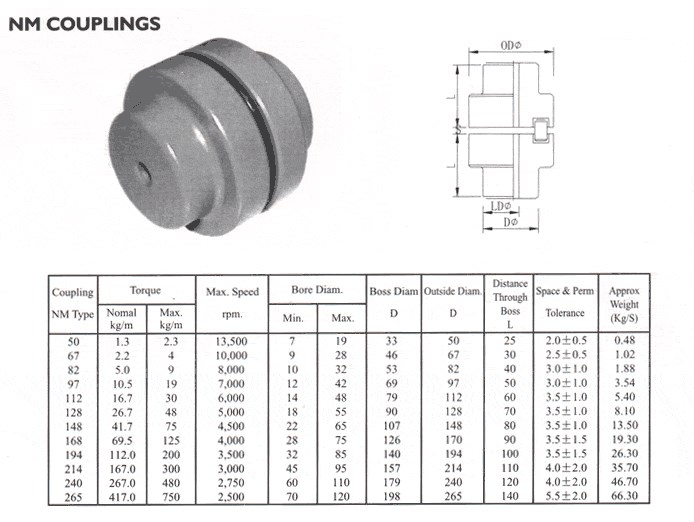
| Kích cỡ: | NM50, NM67, NM82, NM97, NM112, NM128, NM148, NM168, NM194, NM214, NM240, NM265 |
NM50-265 coupling , rubber coupling , polyurethane coupling for pumps, fans, compressors, vehicles, transporting equipme
Ghép nối NM
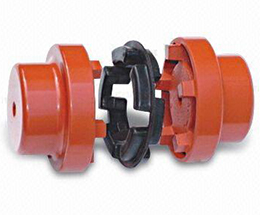
Loại NM được sản xuất chính xác từ cao su tổng hợp được thiết kế đặc biệt với 2 thân bằng gang có cấu tạo tương tự nhau.
Mặt bích gang:
Designed not only for the power transmission but also for protection of flexible rubber
Cao su mềm dẻo: Ứng dụng trong máy bơm, quạt, máy nén khí, xe cộ, thiết bị vận chuyển, máy xây dựng, máy trộn xi măng, máy kéo, máy truyền động, máy gia công kim loại, con lăn và tất cả các hệ thống truyền động khác.
Được làm bằng cao su và lõi thép được chèn vào các răng để mang lại độ bền và hiệu suất khớp nối tuyệt vời.
Đặc trưng:
Sử dụng tiết kiệm và thiết thực
Hoạt động êm ái và trơn tru
Dễ dàng lắp đặt và bảo trì
Thích hợp cho các máy có mô-men xoắn cao và hoạt động gián đoạn.
Đặc tính của cao su tổng hợp: độ đàn hồi và khả năng chống chịu tốt với ma sát, dầu, axit và kiềm.
Thông số kỹ thuật:
1: Có chứng nhận CE
2: Kiểm tra chất lượng toàn diện trước khi giao hàng
3: OEM is welcomed
4: Kinh nghiệm phong phú trong lĩnh vực đúc chính xác
Vật liệu: CSM/SBR, NBR
Màu sắc: đen.
bề mặt: nhẵn
Độ bền kéo: 12 MPa
Độ cứng: 80 Shore A
Độ giãn dài: 400%
Mật độ: 1,25 g/cm³
Tác động đàn hồi: >25%
Độ bền xé: 35KN/m
Nhiệt độ hoạt động: 100oC
kích thước tiêu chuẩn:
NM50, NM67, NM82, NM97, NM112, NM128, NM148, NM168, NM194, NM214, NM240, NM265
Đặc điểm vật lý: được sản xuất bằng phương pháp ép phun với nhựa polyester chất lượng cao hoặc nhựa CSM/SBR. Sản phẩm được thiết kế đặc biệt cho tất cả các loại khớp nối trục kim loại với hiệu suất rất tốt về độ bền kéo cao, khả năng chống mài mòn cao, độ đàn hồi cao, khả năng chống nước, chống dầu và khả năng chống mỏi tuyệt vời, khả năng chống va đập cao, v.v. Chúng tôi có đầy đủ bộ khuôn và cung cấp đầy đủ các loại khớp nối GR, GS, MT, Hb, HRC, L, NM và Gear J với chất lượng cao và kinh nghiệm tuyệt vời. Áp dụng cho tất cả các loại khớp nối trục kim loại công nghiệp.
Thông số kỹ thuật:
Chất liệu: polyester, CSM/SBR
color: yellow, red, purple, green, black etc.
bề mặt: nhẵn
Độ bền kéo: 12-55 MPa
Độ cứng: 80-98 Shore A
Độ giãn dài: 400%-650%
Mật độ: 1,25 g/cm³
Tác động đàn hồi: >25%
Độ bền xé: 35-155KN/m
Mức hao mòn Akron: <0,05 cm³/1,61 km
Độ biến dạng nén (22 giờ * 70°C): <10%
Nhiệt độ hoạt động: 120oC
Kích thước tiêu chuẩn cho khớp nối polyurethane:
GR14, GR19, GR24, GR28, GR38, GR42, GR48, GR55, GR65, GR75, GR90, GR100, GR110, GR125, GR140, GR160, GR180
MT1, MT2, MT3, MT4, MT5, MT6, MT7, MT8, MT9, MT10, MT11, MT12, MT13
HRC70, HRC90, HRC110, HRC130, HRC150, HRC180, HRC230, HRC280
L35, L50, L70, L75, L90/95, L99/100, L110, L150, L190, L225, L276
FALK-R 10R, 20R, 30R, 40R, 50R, 60R, 70R, 80R
Kích thước tiêu chuẩn cho khớp nối cao su:
Hb80, Hb95, Hb110, Hb125, Hb140, Hb160, Hb180, Hb200, Hb240, Hb280, Hb315
HRC70, HRC90, HRC110, HRC130, HRC150, HRC180, HRC230, HRC280
L35, L50, L70, L75, L90/95, L99/100, L110, L150, L190, L225
NM50, NM67, NM82, NM97, NM112, NM128, NM148, NM168, NM194, NM214, NM240, NM265
Bánh răng 3J, 4J, 5J, 6J, 7J, 8J, 9J, 10J, 11J
Khuôn đúc kích thước đặc biệt được chế tạo theo bản vẽ của người mua.
***Khi hỏi hàng, vui lòng xác nhận mã số sản phẩm và số lượng***
| Standard: | DIN, ANSI, GB |
|---|---|
| Vật liệu: | Csm+SBR |
| Sự liên quan: | Flange |
| Surface Treatment: | Nothing |
| Head Type: | Round |
| Kiểu: | Nm Type |
| Mẫu: |
US$ 10/Piece
1 chiếc (Số lượng đặt tối thiểu) | |
|---|
| Tùy chỉnh: |
Có sẵn
| Yêu cầu tùy chỉnh |
|---|
Can flexible couplings be used in both horizontal and vertical shaft arrangements?
Yes, flexible couplings can be used in both horizontal and vertical shaft arrangements. The design of flexible couplings allows them to accommodate misalignment and compensate for angular, parallel, and axial displacements between the shafts, making them suitable for various shaft orientations.
Horizontal Shaft Arrangements:
In horizontal shaft arrangements, where the shafts are parallel to the ground or horizontal plane, flexible couplings are commonly used to connect two rotating shafts. These couplings help transmit torque from one shaft to another while accommodating any misalignment that may occur during operation. Horizontal shaft arrangements are common in applications such as pumps, compressors, conveyors, and industrial machinery.
Vertical Shaft Arrangements:
In vertical shaft arrangements, where the shafts are perpendicular to the ground or vertical plane, flexible couplings are also applicable. Vertical shafts often require couplings that can handle the additional weight and forces resulting from gravity. Flexible couplings designed for vertical applications can support the weight of the rotating equipment while allowing for some axial movement to accommodate thermal expansion or other displacements. Vertical shaft arrangements are commonly found in applications such as pumps, gearboxes, turbines, and some marine propulsion systems.
Considerations for Vertical Shaft Arrangements:
When using flexible couplings in vertical shaft arrangements, there are a few additional considerations to keep in mind:
- Thrust Load: Vertical shafts can generate thrust loads, especially in upward or downward direction. The flexible coupling should be selected based on its capacity to handle both radial and axial loads to accommodate these forces.
- Lubrication: Some vertical couplings may require additional lubrication to ensure smooth operation and reduce wear, particularly if they are exposed to high axial loads or extended vertical shafts.
- Support and Bearing: Proper support and bearing arrangements for the vertical shaft are essential to prevent excessive shaft deflection and ensure the flexible coupling functions correctly.
Overall, flexible couplings are versatile and adaptable to various shaft orientations, providing efficient power transmission and misalignment compensation. Whether in horizontal or vertical arrangements, using the appropriate flexible coupling design and considering the specific application requirements will help ensure reliable and efficient operation.
Can flexible couplings be used for both motor-to-shaft and shaft-to-shaft connections?
Yes, flexible couplings can be used for both motor-to-shaft and shaft-to-shaft connections in various applications. The versatility of flexible couplings allows them to adapt to different types of connections and meet the specific requirements of the system.
Motor-to-Shaft Connections:
When connecting a motor to a shaft, a flexible coupling serves as an intermediary component that joins the motor shaft and the driven shaft. Flexible couplings are commonly used in motor-driven systems to accommodate misalignment between the motor and the driven load. In motor applications, flexible couplings help reduce stress and wear on the motor bearings, thus extending the motor’s life and enhancing overall system reliability. They also act as vibration dampeners, minimizing vibrations transmitted from the motor to the driven shaft, and subsequently to connected equipment, ensuring smoother operation.
Shaft-to-Shaft Connections:
In many mechanical systems, such as those in the manufacturing, automation, and power transmission industries, shaft-to-shaft connections are required. A flexible coupling can bridge the gap between two shafts and transmit torque while accommodating misalignment. This type of coupling is commonly used to connect shafts that are not perfectly aligned due to factors like manufacturing tolerances, thermal expansion, or foundation settling. By allowing for misalignment, the flexible coupling protects the connected components from excessive stresses and ensures efficient power transmission.
Versatility and Advantages:
The ability of flexible couplings to handle both motor-to-shaft and shaft-to-shaft connections makes them versatile solutions for a wide range of industrial applications. Some of the advantages of using flexible couplings in these connections include:
- Minimizing stress and wear on connected components, such as bearings and seals.
- Compensating for misalignment, ensuring smooth power transmission.
- Damping vibrations and shock loads, reducing the risk of mechanical failures.
- Protecting equipment from excessive forces, enhancing system reliability.
- Simplifying installation and alignment procedures, reducing downtime.
- Improving overall system performance and operational efficiency.
Ứng dụng:
Flexible couplings find applications in a wide range of industries, including manufacturing, material handling, automotive, aerospace, robotics, and more. Whether connecting a motor to a shaft or joining two shafts directly, flexible couplings play a crucial role in enhancing the reliability and efficiency of rotating machinery and mechanical systems.
In conclusion, flexible couplings can effectively serve as connectors for both motor-to-shaft and shaft-to-shaft connections, providing essential misalignment compensation and protection for connected equipment in various industrial applications.
How do you select the appropriate flexible coupling for a specific application?
Choosing the right flexible coupling for a specific application requires careful consideration of various factors to ensure optimal performance, reliability, and longevity. Here are the key steps to select the appropriate flexible coupling:
- Application Requirements: Understand the specific requirements of the application, including torque and speed specifications, misalignment conditions, operating environment (e.g., temperature, humidity, and presence of corrosive substances), and space limitations.
- Torque Capacity: Determine the maximum torque that the coupling needs to transmit. Choose a flexible coupling with a torque rating that exceeds the application’s requirements to ensure a safety margin and prevent premature failure.
- Bù sai lệch: Consider the type and magnitude of misalignment that the coupling needs to accommodate. Different coupling designs offer varying degrees of misalignment compensation. Select a coupling that can handle the expected misalignment in the system.
- Giảm chấn rung động: If the application involves significant vibrations, choose a flexible coupling with good damping properties to reduce vibration transmission to connected equipment and improve system stability.
- Environmental Factors: Take into account the environmental conditions in which the coupling will operate. For harsh environments, consider couplings made from corrosion-resistant materials.
- Torsional Stiffness: Depending on the application’s requirements, decide on the desired torsional stiffness of the coupling. Some applications may require high torsional stiffness for precise motion control, while others may benefit from a more flexible coupling for shock absorption.
- Cost and Life-Cycle Considerations: Evaluate the overall cost-effectiveness of the coupling over its expected life cycle. Consider factors such as initial cost, maintenance requirements, and potential downtime costs associated with coupling replacement.
- Manufacturer Recommendations: Consult coupling manufacturers and their technical specifications to ensure the selected coupling is suitable for the intended application.
- Installation and Maintenance: Ensure that the selected flexible coupling is compatible with the equipment and shaft sizes. Follow the manufacturer’s installation guidelines and recommended maintenance practices to maximize the coupling’s performance and longevity.
By following these steps and carefully evaluating the application’s requirements, you can select the most appropriate flexible coupling for your specific needs. The right coupling choice will lead to improved system performance, reduced wear on equipment, and enhanced overall reliability in various mechanical systems and rotating machinery.


editor by CX 2023-12-04