Penerangan Produk
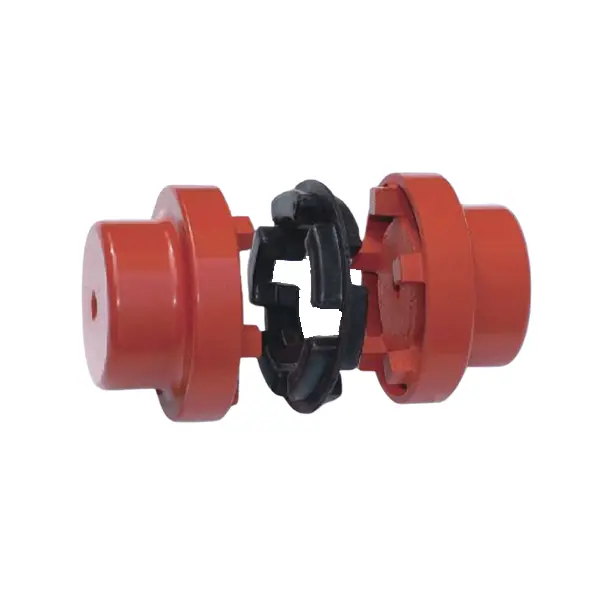
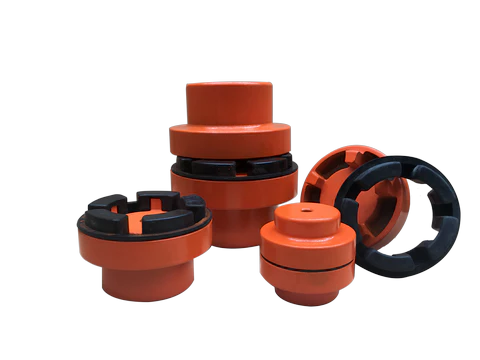
NM COUPLING COMPLETE SET WITH RUBBER SPIDER NM50
Description
NM couplings are offered in the industry’s largest variety of stock bore/keyway combinations. These couplings require no lubrication and provide highly reliable service for light, medium, and heavy duty electrical motor and internal combustion power transmission applications. Applications include power transmission to industrial equipment such as pumps, gear boxes, compressors, blowers, mixers, and conveyors.
Operating Conditions
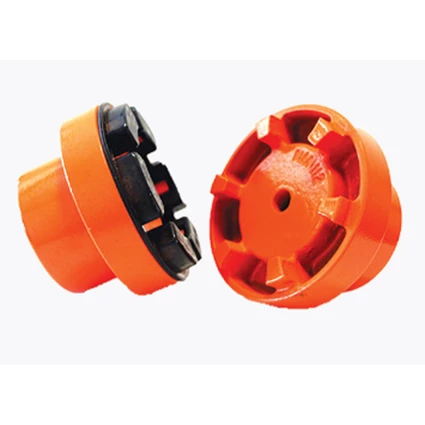
NM coupling consists of 2 hubs and flexible ring able to compensate all types of shaft misalignments. The flexible rings are made of Nitile rubber (NBR) which have a high internal damping characteristic which enable to absorb and dampen torsional vibrations, operate effectively in temperature range of -40 °C to +100 °C. The NBR material also resists to oil, dirt, grease, moisture, CHINAMFG and many chemical solvents.
Feartures:
TYPE – NM
| Standard Atau Tidak Standard: | Piawai |
|---|---|
| Lubang Aci: | 19-32 |
| Tork: | >80N.M |
| Diameter Lubang: | 19mm |
| Kelajuan: | 4000r/M |
| Struktur: | Fleksibel |
| Sampel: |
US$ 20/Piece
1 Keping (Pesanan Minimum) | |
|---|
| Penyesuaian: |
Tersedia
| Permintaan Tersuai |
|---|

Bagaimanakah gandingan fleksibel melindungi peralatan yang disambungkan daripada beban kejutan dan getaran?
Gandingan fleksibel memainkan peranan penting dalam melindungi peralatan yang disambungkan daripada beban kejutan dan getaran dengan menyediakan keupayaan redaman dan pengasingan. Apabila mesin atau sistem mekanikal mengalami beban kejutan atau getaran secara tiba-tiba, gandingan fleksibel bertindak sebagai penimbal, menyerap dan menghilangkan hentaman, sekali gus mengurangkan daya yang dipancarkan dan melindungi peralatan. Beginilah cara gandingan fleksibel mencapai matlamat ini:
- Redaman Getaran: Gandingan fleksibel selalunya diperbuat daripada bahan yang mempamerkan sifat redaman. Apabila getaran dipancarkan melalui aci, bahan gandingan fleksibel boleh menyerap sebahagian daripada tenaga getaran, menukarkannya kepada haba. Pelesapan tenaga ini membantu mengurangkan amplitud getaran dan menghalangnya daripada merebak lebih jauh ke dalam peralatan yang disambungkan.
- Pengasingan Getaran: Selain getaran redaman, gandingan fleksibel juga menawarkan tahap pengasingan getaran. Ia direka bentuk untuk memisahkan kedua-dua aci, yang bermaksud getaran yang berlaku pada satu aci tidak dihantar secara langsung ke aci yang lain. Kesan pengasingan ini menghalang getaran daripada merebak ke seluruh sistem dan meminimumkan kesan pada peralatan sensitif atau komponen berdekatan.
- Penyerapan Kejutan: Apabila jentera yang disambungkan mengalami beban kejutan secara tiba-tiba, seperti semasa permulaan atau perubahan beban yang mendadak, gandingan fleksibel boleh bertindak sebagai penyerap kejutan. Reka bentuk gandingan membolehkannya berubah bentuk sedikit di bawah impak, menyerap dan mengagihkan tenaga kejutan. Ini menghalang kejutan daripada dipindahkan terus ke peralatan yang disambungkan, sekali gus mengurangkan risiko kerosakan atau haus pramatang.
- Pampasan Salah Jajaran: Gandingan fleksibel mampu mengimbangi ketidaksejajaran antara aci. Ketidaksejajaran boleh menyebabkan tekanan dan getaran tambahan dalam sistem. Dengan membenarkan beberapa tahap ketidaksejajaran sudut, selari dan paksi, gandingan fleksibel mengurangkan daya yang dihantar ke peralatan yang disambungkan dan struktur sokongan.
- Pengurangan Kesan Resonans: Resonans ialah fenomena yang berlaku apabila frekuensi semula jadi sesuatu sistem sepadan dengan frekuensi getaran luaran, yang membawa kepada getaran yang diperkuat. Gandingan fleksibel boleh membantu mengelakkan kesan resonans dengan mengubah frekuensi semula jadi sistem dan memberikan beberapa tahap fleksibiliti yang meredam tindak balas resonans.
Dengan menggabungkan gandingan fleksibel ke dalam sistem pemacu atau penghantaran kuasa, pengeluar dan pengendali peralatan boleh meningkatkan kebolehpercayaan dan jangka hayat jentera yang disambungkan dengan ketara. Keupayaan gandingan untuk meredam getaran, mengasingkan hentakan dan mengimbangi ketidaksejajaran menyumbang kepada operasi yang lebih lancar dan stabil, mengurangkan keperluan penyelenggaraan dan meningkatkan prestasi sistem keseluruhan.
Secara ringkasnya, gandingan fleksibel bertindak sebagai elemen pelindung, melindungi peralatan yang disambungkan daripada beban kejutan dan getaran. Keupayaannya untuk meredam getaran, mengasingkan kejutan dan mengimbangi ketidaksejajaran menyumbang kepada operasi pelbagai sistem mekanikal yang lebih lancar dan lebih andal.
Can flexible couplings be used for both motor-to-shaft and shaft-to-shaft connections?
Yes, flexible couplings can be used for both motor-to-shaft and shaft-to-shaft connections in various applications. The versatility of flexible couplings allows them to adapt to different types of connections and meet the specific requirements of the system.
Motor-to-Shaft Connections:
When connecting a motor to a shaft, a flexible coupling serves as an intermediary component that joins the motor shaft and the driven shaft. Flexible couplings are commonly used in motor-driven systems to accommodate misalignment between the motor and the driven load. In motor applications, flexible couplings help reduce stress and wear on the motor bearings, thus extending the motor’s life and enhancing overall system reliability. They also act as vibration dampeners, minimizing vibrations transmitted from the motor to the driven shaft, and subsequently to connected equipment, ensuring smoother operation.
Shaft-to-Shaft Connections:
In many mechanical systems, such as those in the manufacturing, automation, and power transmission industries, shaft-to-shaft connections are required. A flexible coupling can bridge the gap between two shafts and transmit torque while accommodating misalignment. This type of coupling is commonly used to connect shafts that are not perfectly aligned due to factors like manufacturing tolerances, thermal expansion, or foundation settling. By allowing for misalignment, the flexible coupling protects the connected components from excessive stresses and ensures efficient power transmission.
Versatility and Advantages:
The ability of flexible couplings to handle both motor-to-shaft and shaft-to-shaft connections makes them versatile solutions for a wide range of industrial applications. Some of the advantages of using flexible couplings in these connections include:
- Minimizing stress and wear on connected components, such as bearings and seals.
- Compensating for misalignment, ensuring smooth power transmission.
- Damping vibrations and shock loads, reducing the risk of mechanical failures.
- Protecting equipment from excessive forces, enhancing system reliability.
- Simplifying installation and alignment procedures, reducing downtime.
- Improving overall system performance and operational efficiency.
Aplikasi:
Flexible couplings find applications in a wide range of industries, including manufacturing, material handling, automotive, aerospace, robotics, and more. Whether connecting a motor to a shaft or joining two shafts directly, flexible couplings play a crucial role in enhancing the reliability and efficiency of rotating machinery and mechanical systems.
In conclusion, flexible couplings can effectively serve as connectors for both motor-to-shaft and shaft-to-shaft connections, providing essential misalignment compensation and protection for connected equipment in various industrial applications.
Are there any limitations or disadvantages of using flexible couplings?
While flexible couplings offer numerous advantages, they do come with some limitations and disadvantages that should be considered when selecting them for specific applications. Here are some of the common limitations and disadvantages of using flexible couplings:
- Torsional Stiffness: Flexible couplings provide some level of torsional flexibility, which is advantageous in many applications. However, in systems that require high precision and minimal angular deflection, the inherent flexibility of the coupling may not be suitable. In such cases, a rigid coupling may be more appropriate.
- Limitation in High-Torque Applications: While some flexible couplings can handle moderate to high torque levels, they may not be as well-suited for extremely high-torque applications. In such cases, specialized couplings, such as gear couplings, may be required to handle the high torque demands.
- Temperature Limitations: The performance of certain flexible coupling materials, especially elastomers and plastics, may be affected by extreme temperature conditions. High temperatures can lead to premature wear and reduced lifespan of the coupling, while low temperatures may result in reduced flexibility and potential brittleness.
- Chemical Compatibility: Certain flexible coupling materials may not be compatible with certain chemicals or substances present in the application’s environment. Exposure to chemicals can cause degradation or corrosion of the coupling material, affecting its performance and lifespan.
- Installation and Alignment: Flexible couplings require proper installation and alignment to function effectively. If not installed correctly, misalignment issues may persist, leading to premature wear and reduced performance. Aligning the shafts accurately can be time-consuming and may require specialized equipment and expertise.
- Cost: In some cases, flexible couplings may be more expensive than rigid couplings due to their more complex design and use of specialized materials. However, the cost difference is often justified by the benefits they offer in terms of misalignment compensation and vibration damping.
- Service Life: The service life of a flexible coupling can vary depending on the application’s conditions and the quality of the coupling. Regular maintenance and timely replacement of worn or damaged parts are essential to ensure the coupling’s longevity and prevent unexpected failures.
Despite these limitations, flexible couplings remain highly valuable components in a wide range of applications, providing efficient torque transmission and compensating for misalignment. Proper selection, installation, and maintenance can help mitigate many of the disadvantages associated with flexible couplings, ensuring their reliable and long-lasting performance in various mechanical systems.


editor by CX 2023-11-30