توضیحات محصول
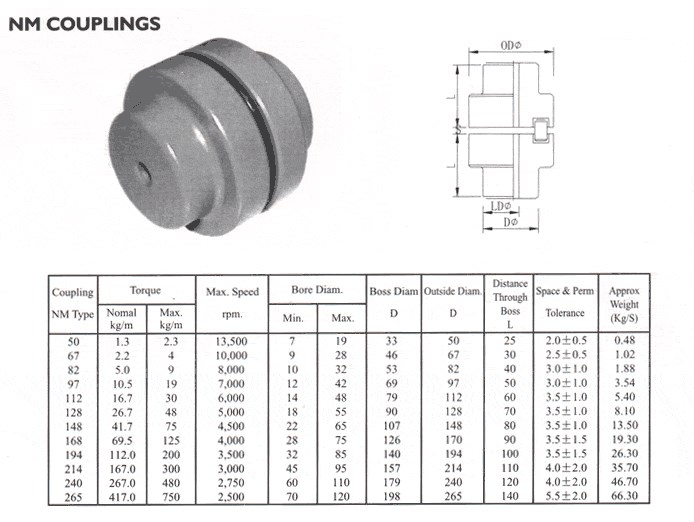
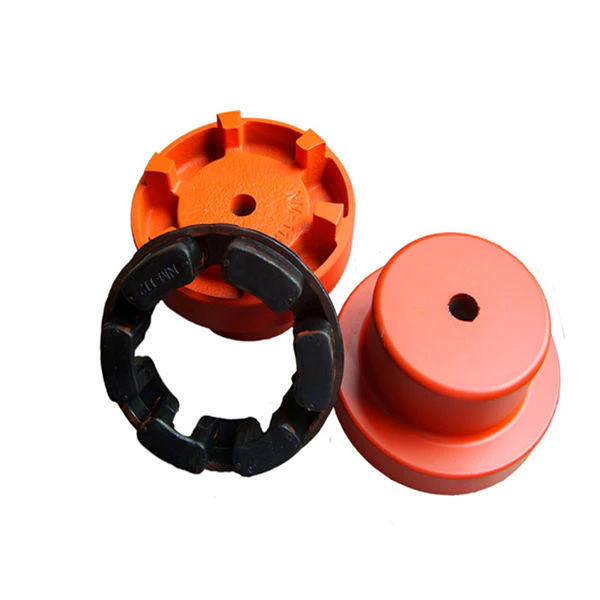
Ductile Iron Nor-Mex Couplings Size 50/67/82/97/112/128/148/168/194/214/240/265/295/330/370/415/480/575
توضیحات محصول
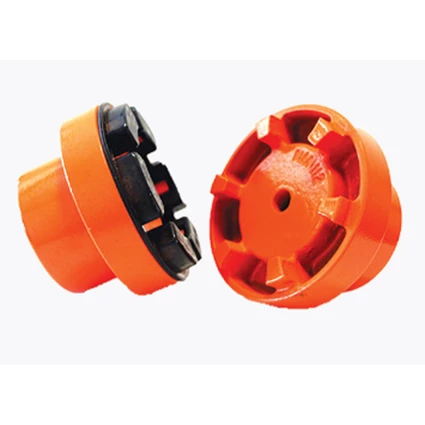
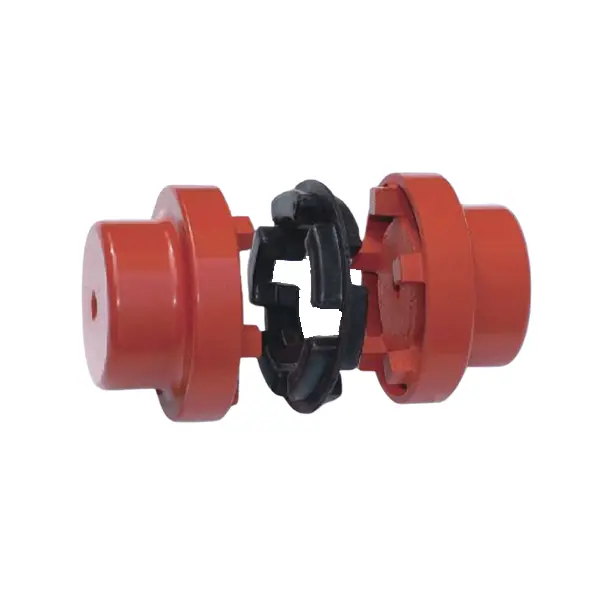
NM flexible shaft coupling is a cylindrical pin made of some non-metallic materials, which is placed between the 2 sides of the coupling and the inner surface of the outer ring, and a device to transfer the torque through the column pin to realize the connection between 2 half couplings.
NM flexible shaft coupling between the slider made of bakelite cloth or polyurethane, suitable for high speed, large torque, no sharp impact of the 2 connections. The maximum allowable torque is 850N m, and the maximum shaft diameter is 50mm.
پارامتر
| Name of transmission part | water pump coupling |
| Series of Normex couplings | NM 50, NM 67, NM 82, NM 97, NM 112, NM 128, NM 148, NM 168, NM 194, NM 214, NM 240, NM 265, NM 295, NM 330, NM 370, NM 415, NM 480, NM 575. |
| مواد | cast iron GG25 |
| Bore type | pilot bore, finished bore |
| Surface finish | phosphate coated. |
| Product structure |
it is composed of 2 cast iron claws and a natural rubber inner ring |
| Suitable shaft diameter | 7mm-75mm |
| Suitable motor power | within 60hp / 45KW |
Product features:
1. The maximum torque is 125kgm
2. Stable operation and low noise
3. The product is made of cast iron and cast by precision die casting, so it is not easy to cause fracture during operation
Other Couplings:
OUR COMPANY
ZheJiang Mighty Machinery Co., Ltd. specializes in offering best service and the most competitive price for our customer.
After over 10 years’ hard work, MIGHTY’s business has grown rapidly and become an important partner for oversea clients in the industrial field and become a holding company for 3 manufacturing factories.
MIGHTY’s products have obtained reputation of domestic and oversea customers with taking advantage of technology, management, quality and very competitive price.
Your satisfaction is the biggest motivation for our work, choose us to get high quality products and best service.
OUR FACTORY
محصولات اصلی:
Timing belt pulleys, timing bars, timing belt clamping plates.
Locking elements and shrink discs: could be alternative for Ringfeder, Sati, Chiaravalli, BEA, KBK, Tollok, etc.
V belt pulleys and taper lock bush.
Sprockets, idler, and plate wheels.
Gears and racks: spur gear, helical gear, bevel gear, worm gear, gear rack.
Shaft couplings: miniature coupling, curved tooth coupling, chain coupling, HRC coupling, normex coupling, FCL coupling, GE coupling, rigid and flexible coupling, jaw coupling, disc coupling, multi-beam coupling, universal joint, torque limiter, shaft collars.
Forging, Casting, Stamping Parts.
Other customized power transmission products and Machining Parts (OEM).
کاربرد
1. Engineering: machine tools, foundry equipments, conveyors, compressors, painting systems, etc.
2. Pharmaceuticals& Food Processing: pulp mill blowers, conveyor in warehouse, agitators, grain, boiler, bakery machine, labeling machine, robots, etc.
3. Agriculture Industries: cultivator, rice winnower tractor, harvester, rice planter, farm equipment, etc.
4. Texitile Mills: looms, spinning, wrappers, high-speed auto looms, processing machine, twister, carding machine, ruler calendar machine, high speed winder, etc.
5. Printing Machinery: newspaper press, rotary machine, screen printer machine, linotype machine offset printer, etc.
6. Paper Industries: chipper roll grinder, cut off saw, edgers, flotation cell and chips saws, etc.
7. Building Construction Machinery: buffers, elevator floor polisher mixing machine, vibrator, hoists, crusher, etc.
8. Office Equipments: typewriter, plotters, camera, money drive, money sorting machine, data storage equipment, etc.
9. Glass and Plastic Industries: conveyor, carton sealers, grinders, creeper paper manufacturing machine, lintec backing, etc.
10. Home Appliances: vacuum cleaner, laundry machine, icecream machine, sewing machine, kitchen equipments, etc.
سوالات متداول
Q: Are you trading company or manufacturer ?
A: We are factory.
Q: How long is your delivery time?
A: Generally it is 5-10 days if the goods are in stock. or it is 15-20 days if the goods are not in stock, it is according to quantity.
Q: Do you provide samples ? is it free or extra ?
A: Yes, we could offer the sample for free charge but do not pay the cost of freight.
Q: What is your terms of payment ?
A: Payment=1000USD, 30% T/T in advance ,balance before shippment.
If you have another question, pls feel free to contact us as below:
Contacts
We warmly welcome friends from domestic and abroad come to us for business negotiation and cooperation for mutual benefit. To supply customers excellent quality products with good price and punctual delivery time is our responsibility.
Any question or inquiry, pls contact us without hesitate, we assure any of your inquiry will get our prompt attention and reply!
Tina Shaw
/* March 10, 2571 17:59:20 */!function(){function s(e,r){var a,o={};try{e&&e.split(“,”).forEach(function(e,t){e&&(a=e.match(/(.*?):(.*)$/))&&1
| استاندارد یا غیر استاندارد: | استاندارد |
|---|---|
| سوراخ شفت: | 50-218 mm |
| گشتاور: | 2.7-300 N.M |
| قطر سوراخ: | 7-95 mm |
| سرعت: | 3000-12500 Rpm |
| ساختار: | Jaw / Spider |
| نمونهها: |
US$ 0.1/Piece
۱ قطعه (حداقل سفارش) | |
|---|
| سفارشی سازی: |
موجود است
| درخواست سفارشی |
|---|
How does a flexible coupling handle angular, parallel, and axial misalignment?
A flexible coupling is designed to accommodate various types of misalignment between two rotating shafts: angular misalignment, parallel misalignment, and axial misalignment. The flexibility of the coupling allows it to maintain a connection between the shafts while compensating for these misalignment types. Here’s how a flexible coupling handles each type of misalignment:
- Angular Misalignment: Angular misalignment occurs when the axes of the two shafts are not collinear and form an angle with each other. Flexible couplings can handle angular misalignment by incorporating an element that can flex and bend. One common design is the “spider” or “jaw” element, which consists of elastomeric materials. As the shafts are misaligned, the elastomeric element can deform slightly, allowing the coupling to accommodate the angular offset between the shafts while still transmitting torque.
- Parallel Misalignment: Parallel misalignment, also known as offset misalignment, occurs when the axes of the two shafts are parallel but not perfectly aligned with each other. Flexible couplings can handle parallel misalignment through the same elastomeric element. The flexible nature of the element enables it to shift and adjust to the offset between the shafts, ensuring continuous power transmission while minimizing additional stresses on the machinery.
- Axial Misalignment: Axial misalignment, also called end-play misalignment, occurs when the two shafts move closer together or farther apart along their common axis. Flexible couplings can handle axial misalignment through specific designs that allow limited axial movement. For instance, some couplings use slotted holes or a floating member that permits axial displacement while maintaining the connection between the shafts.
By providing the capability to handle angular, parallel, and axial misalignment, flexible couplings offer several advantages for power transmission systems:
- They help to prevent premature wear and damage to the connected equipment, reducing maintenance and replacement costs.
- They minimize vibration and shock loads, enhancing the overall smoothness and reliability of the machinery.
- They reduce the risk of equipment failure due to misalignment-induced stresses, improving the system’s operational life.
- They allow for easier installation and alignment adjustments, saving time and effort during setup and maintenance.
Overall, flexible couplings play a crucial role in handling misalignment and ensuring efficient power transmission in various industrial applications.
What are the factors to consider when choosing a flexible coupling for a specific system?
Choosing the right flexible coupling for a specific system requires careful consideration of several factors. The following are the key factors that should be taken into account:
- 1. Misalignment Requirements: Assess the type and magnitude of misalignment expected in the system. Different couplings are designed to handle specific types of misalignment, such as angular, parallel, or axial misalignment. Choose a coupling that can accommodate the expected misalignment to prevent premature wear and failure.
- 2. Torque Capacity: Determine the required torque capacity of the coupling to ensure it can transmit the necessary power between the shafts. Consider both the continuous and peak torque loads that the system may experience.
- 3. Operating Speed: Take into account the rotational speed of the system. High-speed applications may require couplings that can handle the additional centrifugal forces and balance requirements.
- 4. Temperature Range: Consider the operating temperature range of the system. Select a coupling material that can withstand the temperatures encountered without losing its mechanical properties.
- 5. Environment and Conditions: Evaluate the environmental conditions where the coupling will be used, such as exposure to moisture, chemicals, dust, or corrosive substances. Choose a coupling material that is compatible with the operating environment.
- 6. Space Constraints: Assess the available space for the coupling installation. Some couplings have compact designs suitable for applications with limited space.
- 7. Installation and Maintenance: Consider the ease of installation and maintenance. Some couplings may require special tools or disassembly for maintenance, while others offer quick and simple installation.
- 8. Torsional Stiffness: Evaluate the torsional stiffness of the coupling. A balance between flexibility and stiffness is essential to prevent excessive torsional vibrations while accommodating misalignment.
- 9. Shock and Vibration Damping: For applications with high shock loads or vibration, select a coupling with excellent damping characteristics to protect the system from excessive forces.
- 10. Cost and Budget: Compare the cost of the coupling with the overall budget for the system. Consider the long-term cost implications, including maintenance and replacement expenses.
Ultimately, the choice of a flexible coupling should align with the specific requirements and operating conditions of the system. Consulting with coupling manufacturers or engineering experts can provide valuable insights to ensure the optimal selection of a coupling that enhances system performance, reliability, and efficiency.
چه موادی معمولاً در ساخت کوپلینگهای انعطافپذیر استفاده میشوند؟
کوپلینگهای انعطافپذیر با استفاده از مواد متنوعی ساخته میشوند که هر کدام خواص و ویژگیهای متفاوتی را برای کاربردهای خاص ارائه میدهند. انتخاب ماده به عواملی مانند الزامات کاربرد، شرایط محیطی، ظرفیت گشتاور و انعطافپذیری مورد نظر بستگی دارد. در اینجا برخی از مواد رایج در ساخت کوپلینگهای انعطافپذیر آورده شده است:
- فولاد: فولاد به دلیل استحکام، دوام و قابلیتهای عالی انتقال گشتاور، مادهای پرکاربرد در کوپلینگهای انعطافپذیر است. کوپلینگهای فولادی برای کاربردهای صنعتی سنگین با نیاز به گشتاور بالا و شرایط عملیاتی سخت مناسب هستند.
- فولاد ضد زنگ: فولاد ضد زنگ اغلب برای ساخت کوپلینگهای انعطافپذیر در محیطهایی با پتانسیل خوردگی بالا استفاده میشود. کوپلینگهای فولاد ضد زنگ مقاومت بسیار خوبی در برابر زنگزدگی و سایر عناصر خورنده دارند و آنها را برای کاربردهای دریایی، فرآوری مواد غذایی و صنایع شیمیایی ایدهآل میکنند.
- آلومینیوم: کوپلینگهای آلومینیومی سبک هستند، اینرسی کمی دارند و تعادل بسیار خوبی را فراهم میکنند. آنها معمولاً در کاربردهایی که کاهش وزن بسیار مهم است، مانند هوافضا و رباتیک، استفاده میشوند.
- برنج: کوپلینگهای برنجی به دلیل رسانایی الکتریکی خود شناخته شدهاند و در کاربردهایی که اتصال زمین الکتریکی یا ایزولاسیون الکتریکی مورد نیاز است، مانند برخی ماشینآلات صنعتی یا تجهیزات الکترونیکی، مورد استفاده قرار میگیرند.
- چدن: کوپلینگهای چدنی استحکام و دوام خوبی دارند و اغلب در کاربردهای صنعتی که مقاومت در برابر بارهای ضربهای و ارتعاشات ضروری است، مورد استفاده قرار میگیرند.
- پلاستیک/پلیمر: برخی از کوپلینگهای انعطافپذیر از پلیمرها یا پلاستیکهای با کارایی بالا مانند پلی اورتان یا نایلون استفاده میکنند. این مواد انعطافپذیری خوب، اصطکاک کم و مقاومت در برابر مواد شیمیایی را فراهم میکنند. کوپلینگهای پلاستیکی برای کاربردهایی مناسب هستند که مقاومت در برابر خوردگی و سبک بودن ضروری است.
- الاستومرها: الاستومرها به عنوان عناصر انعطافپذیر در بسیاری از کوپلینگهای انعطافپذیر استفاده میشوند. موادی مانند لاستیک طبیعی، نئوپرن یا اورتان معمولاً به عنوان عناصر عنکبوتی الاستومری استفاده میشوند که انعطافپذیری و خواص میرایی ارتعاش را فراهم میکنند.
انتخاب جنس کوپلینگ به نیازهای خاص کاربرد بستگی دارد. به عنوان مثال، کاربردهای با کارایی بالا و سنگین ممکن است برای استحکام خود به کوپلینگهای فولادی یا فولاد ضد زنگ نیاز داشته باشند، در حالی که کاربردهایی که کاهش وزن بسیار مهم است ممکن است از کوپلینگهای آلومینیومی یا پلیمری بهره ببرند. علاوه بر این، انتخاب جنس تحت تأثیر عواملی مانند محدوده دما، قرار گرفتن در معرض مواد شیمیایی و الزامات الکتریکی در محیط عملیاتی کاربرد قرار میگیرد.
تولیدکنندگان معمولاً مشخصات مواد کوپلینگهای خود را ارائه میدهند و به کاربران کمک میکنند تا بر اساس نیازهای خاص کاربردهای خود، تصمیمات آگاهانهای بگیرند.


editor by CX 2024-01-12