คำอธิบายผลิตภัณฑ์
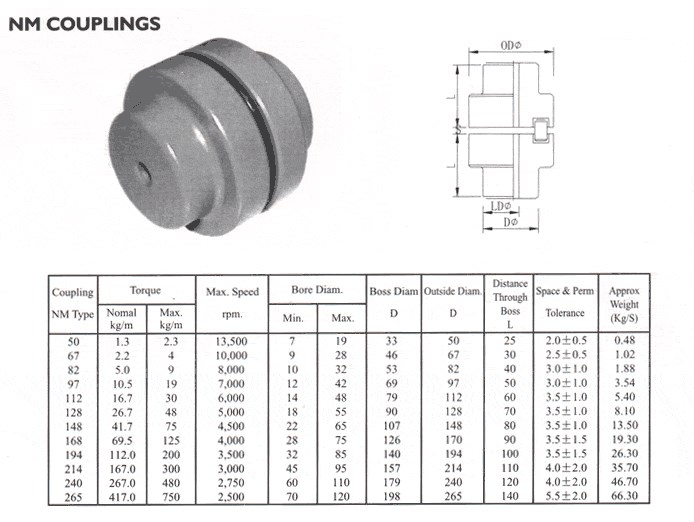
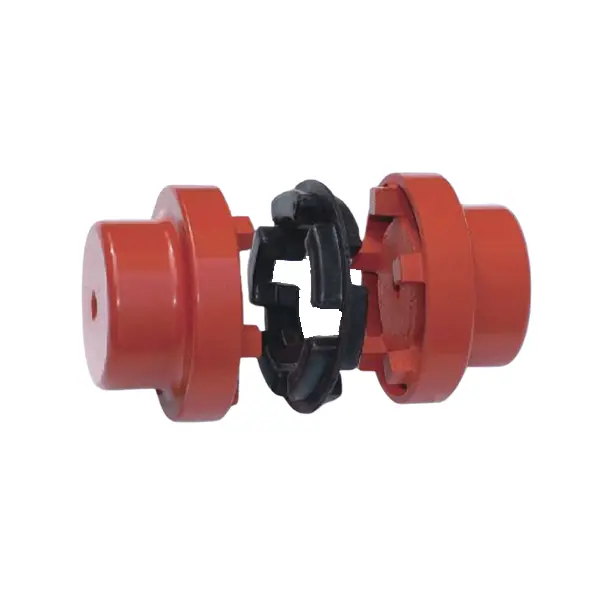
NM Coupling, NM Rubber Coupling Elements, NM Rubber Spider
| วัสดุ: | NBR, CSM/SBR | Color: | Black |
| Tensile Strength: | 12Mpa | Hardness: | 80shore A |
| Elongation: | 350% | Density: | 1.25g/cm3 |
| Size: | NM50, NM67, NM82, NM97, NM112, NM128, NM148, NM168, NM194, NM214, NM240, NM265 |
การเชื่อมต่อ NM
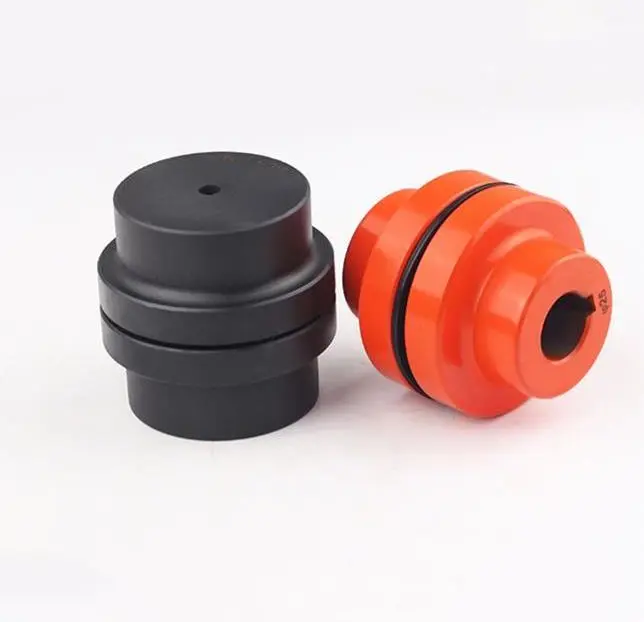
NM type is precisely produced by a special designed synthetic rubber with 2 similar bodies of cast iron
Cast iron flanges:
Designed not only for the power transmission but also for protection of flexible rubber
Flexible rubber:Applications for pumps, fans, compressors, vehicles, transporting equipments, constructors, cement mixers, tractors, transmission machines, metal working machines, rollers and all other transmissions
Made of rubber and steel cores are inserted in the teeth so as to provide excellent durability and performance of coupling
Features:
Economical and practical using
การทำงานเงียบและราบรื่น
Easy installation and maintenance
Available to machines with high torque and intermittent operation
Characteristics of the synthetic rubber: proper elasticity and resistance to damping, oil, acids and alkalie
Specifications:
1: with CE certificate
2: full detection of quality before delivery
3: OEM is welcomed
4: rich experience in precision casting
material: CSM/SBR, NBR
color: black.
surface: smooth
tensile strength: 12Mpa
hardness: 80Shore A
elongation: 400%
density: 1.25g/cm3
elasticity impact: >25%
tear strength: 35KN/m
working temperature: 100oC
standard size:
NM50, NM67, NM82, NM97, NM112, NM128, NM148, NM168, NM194, NM214, NM240, NM265
Physical character: made by injection with high quality polyester or mould CSM/SBR. It is designing and special for all kinds of metal shaft coupling with very good performance of high tensile strength, high wear resistant, high elastic resilience, water resistant, oil resistant and excellent fatigue resilience, high impact resistant etc. We have full sets moulds and supply full range of GR, GS, MT, Hb, HRC, L, NM and Gear J series couplings with high quality and excellent experience. Apply to all kinds of industrial metal shaft coupling.
Specifications:
material: polyester, CSM/SBR
color: yellow, red, purple, green, black etc.
surface: smooth
tensile strength: 12-55Mpa
hardness: 80-98Shore A
elongation: 400%-650%
density: 1.25g/cm3
elasticity impact: >25%
tear strength: 35-155KN/m
CHINAMFG abrasion loss: <0.05cm3/1.61km
compression set (22h*70oC): <10%
working temperature: 120oC
standard size for polyurethane coupling:
GR14, GR19, GR24, GR28, GR38, GR42, GR48, GR55, GR65, GR75, GR90, GR100, GR110, GR125, GR140, GR160, GR180
MT1, MT2, MT3, MT4, MT5, MT6, MT7, MT8, MT9, MT10, MT11, MT12, MT13
HRC70, HRC90, HRC110, HRC130, HRC150, HRC180, HRC230, HRC280
L35, L50, L70, L75, L90/95, L99/100, L110, L150, L190, L225, L276
FALK-R 10R, 20R, 30R, 40R, 50R, 60R, 70R, 80R
standard size for rubber coupling:
Hb80, Hb95, Hb110, Hb125, Hb140, Hb160, Hb180, Hb200, Hb240, Hb280, Hb315
HRC70, HRC90, HRC110, HRC130, HRC150, HRC180, HRC230, HRC280
L35, L50, L70, L75, L90/95, L99/100, L110, L150, L190, L225
NM50, NM67, NM82, NM97, NM112, NM128, NM148, NM168, NM194, NM214, NM240, NM265
Gear 3J, 4J, 5J, 6J, 7J, 8J, 9J, 10J, 11J
special size build molding according to the buyer’s drawings
***when you enquiry, pls confirm product’s number and quantity***
/* 22 มกราคม 2571 19:08:37 */!function(){function s(e,r){var a,o={};try{e&&e.split(“,”).forEach(function(e,t){e&&(a=e.match(/(.*?):(.*)$/))&&1
| มาตรฐาน: | DIN, ANSI, GB |
|---|---|
| วัสดุ: | Nr+SBR |
| Connection: | Flange |
| Surface Treatment: | Nothing |
| Head Type: | Round |
| พิมพ์: | Nm Type |
| ตัวอย่าง: |
US$ 10/Piece
1 ชิ้น (สั่งขั้นต่ำ) | |
|---|
| การปรับแต่ง: |
มีอยู่
| คำขอที่กำหนดเอง |
|---|
ข้อต่อแบบยืดหยุ่นสามารถรองรับแรงบิดสูงและความเร็วสูงได้หรือไม่?
ใช่แล้ว ข้อต่อแบบยืดหยุ่นสามารถรองรับทั้งแรงบิดสูงและความเร็วสูงได้ แต่ความเหมาะสมนั้นขึ้นอยู่กับการออกแบบและวัสดุของข้อต่อแบบยืดหยุ่นนั้นๆ ข้อต่อแบบยืดหยุ่นแต่ละประเภทมีความสามารถในการรับแรงบิดและความเร็วที่แตกต่างกัน และการเลือกประเภทของข้อต่อที่เหมาะสมตามความต้องการใช้งานนั้นเป็นสิ่งสำคัญ
การใช้งานที่ต้องการแรงบิดสูง:
ข้อต่อแบบยืดหยุ่นบางชนิด เช่น ข้อต่อเฟืองและข้อต่อจาน ถูกออกแบบมาเพื่อรองรับแรงบิดสูง ข้อต่อเฟืองประกอบด้วยดุมที่มีฟันซึ่งขบกัน ทำให้เกิดการส่งแรงบิดที่แข็งแรงและมีประสิทธิภาพ มักใช้ในงานอุตสาหกรรมหนัก เช่น โรงงานเหล็ก อุปกรณ์เหมืองแร่ และโรงไฟฟ้า ซึ่งมีแรงบิดสูงเกิดขึ้นบ่อยครั้ง
ข้อต่อแบบจานยังเหมาะสำหรับงานที่ต้องการแรงบิดสูงอีกด้วย โดยใช้แผ่นโลหะยืดหยุ่นหลายแผ่นที่สามารถรับแรงบิดได้มากพร้อมทั้งชดเชยการเยื้องศูนย์ ข้อต่อแบบจานมักใช้ในเครื่องจักรความเร็วสูงและงานที่สำคัญซึ่งการส่งแรงบิดที่แม่นยำเป็นสิ่งจำเป็น
แอปพลิเคชันความเร็วสูง:
ข้อต่อแบบยืดหยุ่นยังสามารถใช้ในงานที่มีความเร็วสูงได้อีกด้วย ตัวอย่างเช่น ข้อต่อแบบจาน ข้อต่อแบบยางยืด และข้อต่อแบบตะแกรงบางชนิด สามารถรองรับความเร็วในการหมุนสูงได้ ข้อต่อเหล่านี้มีแรงเฉื่อยต่ำ ซึ่งหมายความว่าสามารถตอบสนองต่อการเปลี่ยนแปลงความเร็วได้อย่างรวดเร็ว และส่งกำลังได้อย่างมีประสิทธิภาพที่ความเร็วรอบสูง
ข้อต่อยางยืด เช่น ข้อต่อแบบก้ามปูและข้อต่อแบบยาง มักใช้ในงานอุตสาหกรรมต่างๆ รวมถึงปั๊ม คอมเพรสเซอร์ และพัดลม ซึ่งต้องการแรงบิดและความเร็วสูง ข้อต่อเหล่านี้มีความยืดหยุ่นและคุณสมบัติการลดแรงสั่นสะเทือนที่ดี ทำให้เหมาะสำหรับงานที่มีการเปลี่ยนแปลงความเร็วและแรงสั่นสะเทือนสูง
ข้อควรพิจารณา:
ในการเลือกข้อต่อแบบยืดหยุ่นสำหรับงานที่ต้องการแรงบิดสูงและความเร็วสูง ควรพิจารณาปัจจัยหลายประการ:
- ควรตรวจสอบค่าแรงบิดและความเร็วที่ผู้ผลิตข้อต่อระบุไว้ เพื่อให้แน่ใจว่าตรงตามหรือเกินกว่าข้อกำหนดของงานนั้นๆ
- การออกแบบและวัสดุของข้อต่อควรเหมาะสมกับสภาวะการใช้งานเฉพาะ รวมถึงอุณหภูมิ สภาพแวดล้อม และการสัมผัสกับสารกัดกร่อนที่อาจเกิดขึ้นได้
- การจัดวางและการติดตั้งข้อต่ออย่างถูกต้องนั้นมีความสำคัญอย่างยิ่งต่อการรับประกันประสิทธิภาพสูงสุดและป้องกันการสึกหรอก่อนกำหนด
- ในบางกรณี อาจจำเป็นต้องใช้อุปกรณ์เสริมเพิ่มเติม เช่น ตัวจำกัดแรงบิดหรือตัวลดความเร็ว เพื่อป้องกันข้อต่อและอุปกรณ์ที่เชื่อมต่อจากการรับน้ำหนักมากเกินไปหรือความผันผวนของความเร็ว
โดยสรุปแล้ว ข้อต่อแบบยืดหยุ่นสามารถรองรับแรงบิดสูงและความเร็วสูงได้จริง แต่การเลือกประเภทข้อต่อที่เหมาะสมและการใช้งานที่ถูกต้องเป็นสิ่งสำคัญเพื่อให้มั่นใจได้ถึงประสิทธิภาพที่เชื่อถือได้และมีประสิทธิผลในสภาวะที่ต้องการความแม่นยำสูงเหล่านี้
ข้อต่อแบบยืดหยุ่นสามารถใช้งานในสภาพแวดล้อมที่มีฤทธิ์กัดกร่อนหรือรุนแรงได้หรือไม่?
ใช่แล้ว ข้อต่อแบบยืดหยุ่นสามารถออกแบบและเลือกใช้ให้ใช้งานในสภาพแวดล้อมที่มีฤทธิ์กัดกร่อนหรือรุนแรงได้ การเลือกใช้วัสดุและการเคลือบผิวมีบทบาทสำคัญในการรับประกันความทนทานและประสิทธิภาพของข้อต่อภายใต้สภาวะที่ท้าทาย
วัสดุที่ทนต่อการกัดกร่อน:
ในสภาพแวดล้อมที่มีฤทธิ์กัดกร่อน จำเป็นต้องใช้วัสดุที่ทนต่อการกัดกร่อนทางเคมีและการออกซิเดชัน เหล็กกล้าไร้สนิม โดยเฉพาะเกรดเช่น 316 หรือ 17-4 PH มักถูกเลือกใช้สำหรับข้อต่อแบบยืดหยุ่นในสถานการณ์ดังกล่าว เหล็กกล้าไร้สนิมมีความทนทานต่อการกัดกร่อนได้ดีเยี่ยม ทำให้เหมาะสำหรับงานที่ข้อต่ออาจสัมผัสกับสารกัดกร่อนหรือความชื้น
สารเคลือบพิเศษ:
สำหรับสภาพแวดล้อมที่รุนแรงบางแห่ง ผู้ผลิตข้อต่ออาจใช้สารเคลือบพิเศษเพื่อเพิ่มความต้านทานการกัดกร่อนของข้อต่อ ตัวอย่างของสารเคลือบ ได้แก่ การชุบสังกะสี การชุบนิกเกิล หรือการเคลือบอีพ็อกซี สารเคลือบเหล่านี้จะให้การป้องกันเพิ่มเติมจากสารกัดกร่อนและช่วยยืดอายุการใช้งานของข้อต่อ
ซีลด์ ดีไซน์:
ในสภาพแวดล้อมที่ข้อต่อสัมผัสกับสิ่งปนเปื้อน เช่น ฝุ่นละออง สิ่งสกปรก หรือความชื้น ควรเลือกใช้ข้อต่อแบบปิดผนึก ข้อต่อแบบยืดหยุ่นที่ปิดผนึกจะป้องกันไม่ให้สารเหล่านี้เข้าไปในส่วนประกอบภายในของข้อต่อ จึงช่วยลดความเสี่ยงต่อการกัดกร่อนและการสึกหรอ นอกจากนี้ การออกแบบแบบปิดผนึกยังช่วยรักษาประสิทธิภาพของข้อต่อให้คงที่ในระยะยาวภายใต้สภาวะที่ท้าทาย
การใช้งานในอุณหภูมิสูง:
สำหรับสภาพแวดล้อมที่รุนแรงซึ่งมีอุณหภูมิสูง สามารถใช้ข้อต่อแบบยืดหยุ่นที่ทำจากวัสดุทนความร้อนสูง เช่น เหล็กกล้าไร้สนิมทนความร้อนบางชนิด หรือโลหะผสมพิเศษ วัสดุเหล่านี้ยังคงรักษาคุณสมบัติทางกลและความต้านทานการกัดกร่อนไว้ได้แม้ในอุณหภูมิสูง
ความทนทานต่อสารเคมี:
สำหรับงานที่อาจต้องสัมผัสกับสารเคมีหรือตัวทำละลาย จำเป็นอย่างยิ่งที่จะต้องเลือกวัสดุข้อต่อที่มีความทนทานต่อสารเคมี เพื่อป้องกันการเสื่อมสภาพและรักษาความสมบูรณ์ของข้อต่อในสภาพแวดล้อมดังกล่าว
การออกแบบเฉพาะทาง:
ในบางกรณีที่สภาพแวดล้อมรุนแรงเป็นพิเศษหรือมีลักษณะเฉพาะ อาจจำเป็นต้องใช้ข้อต่อแบบยืดหยุ่นที่ออกแบบมาเป็นพิเศษ การออกแบบข้อต่อให้ตรงตามความต้องการเฉพาะของสภาพแวดล้อมจะช่วยให้มั่นใจได้ถึงประสิทธิภาพและความน่าเชื่อถือสูงสุด
การปรึกษาหารือกับผู้ผลิต:
เมื่อพิจารณาเลือกใช้ข้อต่อแบบยืดหยุ่นสำหรับสภาพแวดล้อมที่มีฤทธิ์กัดกร่อนหรือรุนแรง ควรปรึกษาผู้ผลิตข้อต่อหรือผู้เชี่ยวชาญด้านวิศวกรรม พวกเขาสามารถให้ข้อมูลเชิงลึกที่มีค่าและแนะนำวัสดุ การเคลือบผิว และการออกแบบที่เหมาะสมตามสภาพการใช้งานเฉพาะได้
สรุป:
ข้อต่อแบบยืดหยุ่นสามารถใช้งานได้ในสภาพแวดล้อมที่มีการกัดกร่อนหรือรุนแรงได้จริง หากเลือกใช้วัสดุ การเคลือบ และการออกแบบที่เหมาะสม เหล็กกล้าไร้สนิม การออกแบบแบบปิดผนึก และการเคลือบพิเศษ เป็นหนึ่งในวิธีที่ช่วยเพิ่มความต้านทานการกัดกร่อนและประสิทธิภาพของข้อต่อ สิ่งสำคัญคือต้องพิจารณาสภาพแวดล้อมเฉพาะและข้อกำหนดการใช้งานเมื่อเลือกข้อต่อแบบยืดหยุ่น เพื่อให้มั่นใจถึงการทำงานและความทนทานที่ดีที่สุดในสภาวะที่ท้าทาย
What materials are commonly used in manufacturing flexible couplings?
Flexible couplings are manufactured using a variety of materials, each offering different properties and characteristics suited for specific applications. The choice of material depends on factors such as the application’s requirements, environmental conditions, torque capacity, and desired flexibility. Here are some of the commonly used materials in manufacturing flexible couplings:
- Steel: Steel is a widely used material in flexible couplings due to its strength, durability, and excellent torque transmission capabilities. Steel couplings are suitable for heavy-duty industrial applications with high torque requirements and harsh operating conditions.
- Stainless Steel: Stainless steel is often used to manufacture flexible couplings in environments with high corrosion potential. Stainless steel couplings offer excellent resistance to rust and other corrosive elements, making them ideal for marine, food processing, and chemical industry applications.
- Aluminum: Aluminum couplings are lightweight, have low inertia, and provide excellent balance. They are commonly used in applications where reducing weight is critical, such as aerospace and robotics.
- Brass: Brass couplings are known for their electrical conductivity and are used in applications where electrical grounding or electrical isolation is required, such as in certain industrial machinery or electronics equipment.
- Cast Iron: Cast iron couplings offer good strength and durability and are often used in industrial applications where resistance to shock loads and vibrations is necessary.
- Plastic/Polymer: Some flexible couplings use high-performance polymers or plastics, such as polyurethane or nylon. These materials provide good flexibility, low friction, and resistance to chemicals. Plastic couplings are suitable for applications where corrosion resistance and lightweight are essential.
- Elastomers: Elastomers are used as the flexible elements in many flexible couplings. Materials like natural rubber, neoprene, or urethane are commonly used as elastomer spider elements, providing flexibility and vibration damping properties.
The selection of the coupling material depends on the specific needs of the application. For instance, high-performance and heavy-duty applications may require steel or stainless steel couplings for their robustness, while applications where weight reduction is crucial may benefit from aluminum or polymer couplings. Additionally, the choice of material is influenced by factors such as temperature range, chemical exposure, and electrical requirements in the application’s operating environment.
Manufacturers typically provide material specifications for their couplings, helping users make informed decisions based on the specific demands of their applications.


editor by CX 2024-05-09