Produktbeskrivning
Produktbeskrivning
COUPLINGS
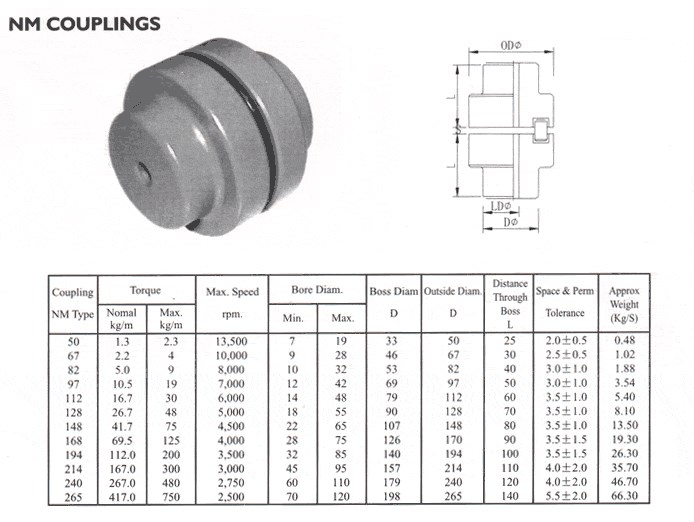
| HRC | FCL | Chain coupling | GE | L | NM | MH | Torque limiter |
| HRC 70B | FCL90 | KC4012 | GE14 | L050 | NM50 | MH45 | TL250-2 |
| HRC 70F | FCL100 | KC4014 | GE19 | L070 | NM67 | MH55 | TL250-1 |
| HRC 70H | FCL112 | KC4016 | GE24 | L075 | NM82 | MH65 | TL350-2 |
| HRC 90B | FCL125 | KC5014 | GE28 | L090 | NM97 | MH80 | TL350-1 |
| HRC 90F | FCL140 | KC5016 | GE38 | L095 | NM112 | MH90 | TL500-2 |
| HRC 90H | FCL160 | KC6018 | GE42 | L099 | NM128 | MH115 | TL500-1 |
| HRC 110B | FCL180 | KC6571 | GE48 | L100 | NM148 | MH130 | TL700-2 |
| HRC 110F | FCL200 | KC6571 | GE55 | L110 | NM168 | MH145 | TL700-1 |
| HRC 110H | FCL224 | KC8018 | GE65 | L150 | NM194 | MH175 | |
| HRC 130B | FCL250 | KC8571 | GE75 | L190 | NM214 | MH200 | |
| HRC 130F | FCL280 | KC8571 | GE90 | L225 | |||
| HRC 130H | FCL315 | KC1571 | |||||
| HRC 150B | FCL355 | KC12018 | |||||
| HRC 150F | FCL400 | KC12571 | |||||
| HRC 150H | FCL450 | ||||||
| HRC 180B | FCL560 | ||||||
| HRC 180F | FCL630 | ||||||
| HRC 180H | |||||||
| HRC 230B | |||||||
| HRC 230F | |||||||
| HRC 230H | |||||||
| HRC 280B | |||||||
| HRC 280F | |||||||
| HRC 280H |
Catalogue
Workshop
Lots of coupling in stock
Vanliga frågor
Q1: Are you trading company or manufacturer ?
A: Vi är fabrik.
Q2: How long is your delivery time and shipment?
1.Sample Lead-times: 10-20 days.
2.Production Lead-times: 30-45 days after order confirmed.
Q3: What is your advantages?
1. The most competitive price and good quality.
2. Perfect technical engineers give you the best support.
3. OEM is available.
/* March 10, 2571 17:59:20 */!function(){function s(e,r){var a,o={};try{e&&e.split(“,”).forEach(function(e,t){e&&(a=e.match(/(.*?):(.*)$/))&&1
| Standard eller icke-standard: | Standard |
|---|---|
| Strukturera: | Flexibel |
| Material: | Steel |
| Type 1: | Nm50 |
| Type 2: | Nm67 |
| Type 3: | Nm82 |
| Anpassning: |
Tillgänglig
| Anpassad förfrågan |
|---|
What are the maintenance requirements for flexible couplings?
Maintenance of flexible couplings is essential to ensure their reliable and efficient performance over their service life. Proper maintenance helps prevent premature wear, reduces the risk of unexpected failures, and extends the lifespan of the couplings. Here are some key maintenance requirements for flexible couplings:
- Regular Inspection: Perform regular visual inspections of the flexible couplings to check for signs of wear, damage, or misalignment. Look for cracks, tears, or any other visible issues in the coupling components.
- Lubrication: Some flexible couplings, especially those with moving parts or sliding surfaces, may require periodic lubrication. Follow the manufacturer’s recommendations regarding the type and frequency of lubrication to ensure smooth operation.
- Alignment Checks: Misalignment is a common cause of coupling failure. Regularly check the alignment of the connected shafts and adjust as necessary. Proper alignment reduces stress on the coupling and improves power transmission efficiency.
- Torque Monitoring: Monitoring the torque transmitted through the coupling can help detect any abnormal or excessive loads. If the coupling is subjected to loads beyond its rated capacity, it may lead to premature failure.
- Environmental Protection: If the couplings are exposed to harsh environmental conditions, take measures to protect them from dust, dirt, moisture, and corrosive substances. Consider using protective covers or seals to shield the couplings from potential contaminants.
- Temperature Considerations: Ensure that the operating temperature of the flexible coupling is within its designed range. Excessive heat can accelerate wear, while extremely low temperatures may affect the flexibility of certain coupling materials.
- Replace Worn or Damaged Parts: If any components of the flexible coupling show signs of wear or damage, replace them promptly with genuine replacement parts from the manufacturer.
- Manufacturer’s Guidelines: Follow the maintenance guidelines provided by the coupling manufacturer. They often include specific maintenance intervals and procedures tailored to the coupling’s design and materials.
- Training and Expertise: Ensure that maintenance personnel have the necessary training and expertise to inspect and maintain the flexible couplings properly. Improper maintenance practices can lead to further issues and compromise the coupling’s performance.
By adhering to these maintenance requirements, you can maximize the service life of the flexible couplings and minimize the risk of unexpected downtime or costly repairs. Regular maintenance helps maintain the efficiency and reliability of the coupling in various industrial, automotive, and machinery applications.
What are the differences between elastomeric and metallic flexible coupling designs?
Elastomeric and metallic flexible couplings are two distinct designs used to transmit torque and accommodate misalignment in mechanical systems. Each type offers unique characteristics and advantages, making them suitable for different applications.
Elastomeric Flexible Couplings:
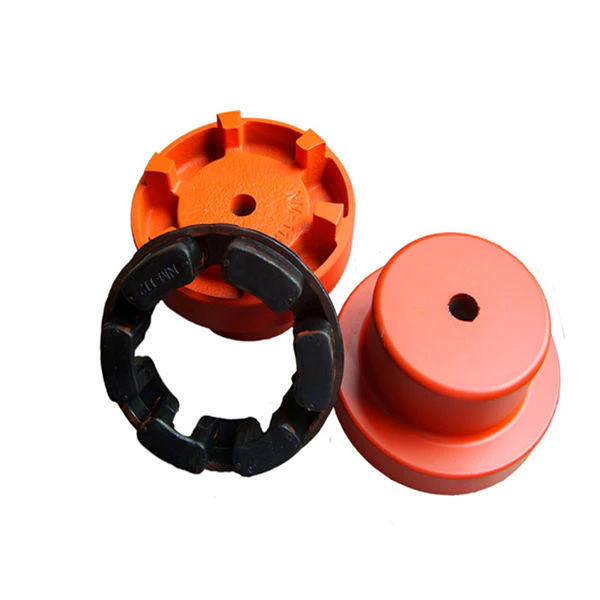
Elastomeric flexible couplings, also known as flexible or jaw couplings, employ an elastomeric material (rubber or similar) as the flexible element. The elastomer is typically molded between two hubs, and it acts as the connector between the driving and driven shafts. The key differences and characteristics of elastomeric couplings include:
- Feljusteringskompensation: Elastomeric couplings are designed to handle moderate levels of angular, parallel, and axial misalignment. The elastomeric material flexes to accommodate the misalignment while transmitting torque between the shafts.
- Vibrationsdämpning: The elastomeric material in these couplings offers excellent vibration dampening properties, reducing the transmission of vibrations from one shaft to another. This feature helps protect connected equipment from excessive vibrations and enhances system reliability.
- Shock Load Absorption: Elastomeric couplings can absorb and dampen shock loads, protecting the system from sudden impacts or overloads.
- Cost-Effective: Elastomeric couplings are generally more cost-effective compared to metallic couplings, making them a popular choice for various industrial applications.
- Simple Design and Installation: Elastomeric couplings often have a straightforward design, allowing for easy installation and maintenance.
- Lower Torque Capacity: These couplings have a lower torque capacity compared to metallic couplings, making them suitable for applications with moderate torque requirements.
- Common Applications: Elastomeric couplings are commonly used in pumps, compressors, fans, conveyors, and other applications that require moderate torque transmission and misalignment compensation.
Metallic Flexible Couplings:
Metallic flexible couplings use metal components (such as steel, stainless steel, or aluminum) to connect the driving and driven shafts. The metallic designs can vary significantly depending on the type of metallic coupling, but some general characteristics include:
- High Torque Capacity: Metallic couplings have higher torque transmission capabilities compared to elastomeric couplings. They are well-suited for applications requiring high torque handling.
- Feljusteringskompensation: Depending on the design, some metallic couplings can accommodate minimal misalignment, but they are generally not as flexible as elastomeric couplings in this regard.
- Stiffer Construction: Metallic couplings are generally stiffer than elastomeric couplings, offering less vibration dampening but higher torsional stiffness.
- Compact Design: Metallic couplings can have a more compact design, making them suitable for applications with limited space.
- Higher Precision: Metallic couplings often offer higher precision and concentricity, resulting in better shaft alignment.
- Higher Cost: Metallic couplings are typically more expensive than elastomeric couplings due to their construction and higher torque capacity.
- Common Applications: Metallic couplings are commonly used in high-speed machinery, precision equipment, robotics, and applications with high torque requirements.
Sammanfattning:
In summary, the main differences between elastomeric and metallic flexible coupling designs lie in their flexibility, torque capacity, vibration dampening, cost, and applications. Elastomeric couplings are suitable for applications with moderate torque, misalignment compensation, and vibration dampening requirements. On the other hand, metallic couplings are chosen for applications with higher torque and precision requirements, where flexibility and vibration dampening are less critical.
Vad är en flexibel koppling och hur fungerar den?
En flexibel koppling är en mekanisk anordning som används för att koppla samman två axlar samtidigt som den möjliggör relativ rörelse mellan dem. Den är utformad för att överföra vridmoment från en axel till en annan samtidigt som den kompenserar för feljustering, vibrationer och stötar. Flexibla kopplingar är viktiga komponenter i olika roterande maskiner och system, eftersom de hjälper till att skydda den anslutna utrustningen och förbättra den totala prestandan.
Typer av flexibla kopplingar:
Det finns flera typer av flexibla kopplingar, var och en med sin unika design och egenskaper. Några vanliga typer inkluderar:
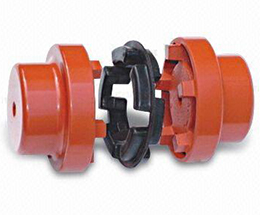
- Käftkopplingar: Käftkopplingar har elastomerkopplingar som passar mellan två nav. De kan hantera vinkel- och parallellförskjutningar samtidigt som de dämpar vibrationer.
- Skivkopplingar: Skivkopplingar använder tunna metallskivor för att sammankoppla axlarna. De är mycket flexibla och ger utmärkt feljusteringskompensation.
- Växelkopplingar: Kugghjulskopplingar använder kugghjul för att överföra vridmoment. De erbjuder hög vridmomentkapacitet och kan hantera måttliga snedställningar.
- Balkkopplingar: Balkkopplingar använder ett enda stycke flexibelt material, såsom en metallbalk, för att överföra vridmoment samtidigt som de kompenserar för feljustering.
- Bälgkopplingar: Bälgkopplingar använder en bälgliknande struktur för att möjliggöra axiell, vinkelmässig och parallell feljusteringskompensation.
- Oldham-kopplingar: Oldham-kopplingar använder tre skivor, där den mittersta har ett vinkelrätt spår för att möjliggöra kompensation för feljustering.
Hur en flexibel koppling fungerar:
Funktionen hos en flexibel koppling beror på dess specifika design, men de allmänna principerna är likartade. Låt oss ta exemplet med en käftkoppling för att förklara hur en flexibel koppling fungerar:
- Två axlar är anslutna till kopplingsnaven på vardera sidan, med en elastomeraxel placerad mellan dem.
- När vridmoment appliceras på en axel, orsakar det att spindeln komprimeras och deformeras något, vilket överför vridmomentet till den andra axeln.
- Vid feljustering mellan axlarna böjer sig elastomerknölen och kompenserar för feljusteringen, vilket säkerställer en jämn momentöverföring utan att axlarna eller ansluten utrustning utsätts för alltför stora belastningar.
- Elastomerspindeln fungerar också som ett dämpningselement som absorberar vibrationer och stötar under drift, vilket minskar slitaget på utrustningen och förbättrar systemets stabilitet.
Sammantaget är flexibiliteten och förmågan att kompensera för feljustering de viktigaste egenskaperna som gör att en flexibel koppling kan fungera effektivt. Valet av en specifik flexibel kopplingstyp beror på applikationens krav, såsom momentkapacitet, feljusteringskompensation och miljöförhållanden.


editor by CX 2024-01-23