Produktbeskrivning
Produktbeskrivning
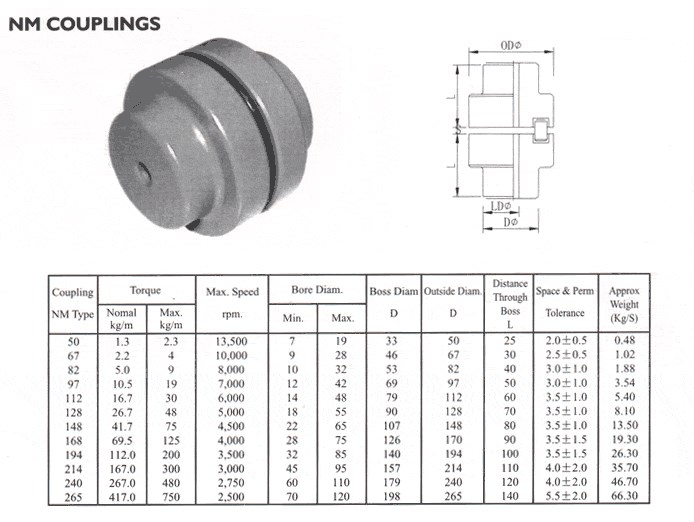
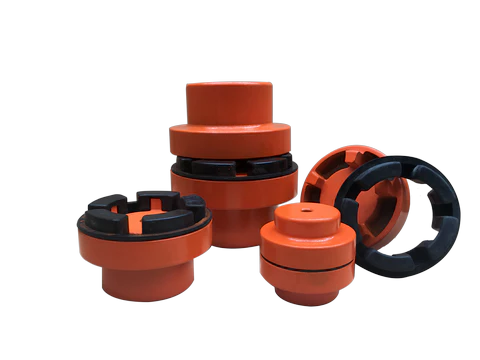
High Quality NM Flexible Coupling
Mighty can produce the following NM flexible couplings: NM50, NM67, NM82, NM97, NM112, NM128, NM148, NM168, NM194, NM214.
Material: cast iron GG25; Bore type: pilot bore, finished bore for set screw, bearing, keyway, taper bush; Surface finish: phosphate coated.
NM Coupling Features:
|
Namn |
NM-koppling |
|
Typ |
Internationell standard tandaxelkoppling, flexibel axelkoppling, stel axelkoppling. Justerbar böjd tandaxelkoppling, käft, balk, metallbelägen, Oldham, skivkoppling. |
|
Material |
Stål, aluminium eller som ditt krav |
|
Ytbehandling |
Spray paint |
Produktparametrar
Förpackning och frakt
All the products can be packed in cartons,or,you can choose the pallet packing.
MADE IN CHINA can be pressed on wooden cases.Land,air,sea transportation are available.UPS,DHL,TNT,
FedEx and EMS are all supported.
Företagsprofil
About Mighty Machinery
ZheJiang Mighty Machinery Co., Ltd., specializes in manufacturing Mechanical Power Transmission Products. After over 13 years hard work, MIGHTY have already get the certificate of ISO9001:2000 and become a holding company for 3 manufacturing factories.
MIGHTY advantage
1, Abundant experience in the mechanical processing industries.
2,Large quality of various material purchase and stock in warhouse which ensure the low cost for the material and production in time.
3,Now have 5 technical staff, we have strong capacity for design and process design, and more than 70 worker now work in our FTY and double shift eveyday.
4,Strick quality control are apply in the whole prodution. we have incoming inspection,process inspection and final production inspection which can ensure the perfect of the goods quality.
5,Long time cooperate with the Global Buyer, make us easy to understand the csutomer and handle the export.
Vanliga frågor
Q: How long can I get reply after send inquiry?
A: All inquiries will be replied within 12 hours, also you may call us at any time.
Q: How soon can I get sample ?
A: Generally standard sample can be send out within 7days, and for the customize parts, it will depond on the detail requirment.
Q:What information should I give to you for inquiry?
A:Pls send the detail of the specification and QTY, also specail demands etc, and it’s better you can send us the detail drawings or catalogue.
Q: If I don’t have drawing or catalogue, how can I get sample ?
A:If you don’t have the drawing or catalogue, you can send us your sample, so we can make the drawing and sample accordingly.
Q:What is the Warranty for your products?
A:Normally our warranty is 1 year.
/* 22 januari 2571 19:08:37 */!function(){function s(e,r){var a,o={};try{e&&e.split(“,”).forEach(function(e,t){e&&(a=e.match(/(.*?):(.*)$/)))
| Standard eller icke-standard: | Standard |
|---|---|
| Strukturera: | Normex |
| Material: | Cast Iron/Steel/C45 |
| Typ: | Flexible Coupling |
| Warranty: | 6 Months |
| Product Name: | Normex Couplings |
| Prover: |
US$ 14.9/Piece
1 styck (minsta beställning) | |
|---|
| Anpassning: |
Tillgänglig
| Anpassad förfrågan |
|---|
What industries commonly use flexible couplings for power transmission?
Flexible couplings are widely used in various industries for power transmission and motion control applications. Their ability to accommodate misalignment, dampen vibrations, and protect equipment from shock loads makes them valuable components in many industrial processes. Here are some of the industries that commonly utilize flexible couplings:
- Manufacturing: Flexible couplings are extensively used in manufacturing industries such as automotive, aerospace, electronics, and consumer goods production. They play a critical role in transmitting power between motors and various machinery, including conveyor systems, robots, and assembly lines.
- Oil and Gas: In the oil and gas industry, flexible couplings are used in pumps, compressors, turbines, and generators. They help transfer power in offshore platforms, refineries, pipelines, and drilling operations while compensating for the dynamic nature of these applications.
- Power Generation: Power plants, both conventional and renewable, rely on flexible couplings to transmit power from turbines and generators to electrical generators. They are used in coal-fired, natural gas, nuclear, hydroelectric, and wind power plants.
- Mining: In mining operations, flexible couplings are employed in various equipment, including conveyor systems, crushers, and large industrial pumps. They are designed to withstand the heavy loads and harsh conditions commonly found in mining environments.
- Marine: Flexible couplings are essential in marine propulsion systems, connecting engines to propellers or water jets. They also find use in shipboard machinery, auxiliary systems, and offshore applications.
- Pulp and Paper: The pulp and paper industry relies on flexible couplings in machinery used for wood processing, pulp production, papermaking, and printing processes.
- Chemical and Petrochemical: In chemical plants and petrochemical refineries, flexible couplings are utilized in pumps, mixers, agitators, and other rotating equipment to ensure efficient power transmission and protect sensitive machinery.
- Construction: The construction industry employs flexible couplings in various equipment, such as concrete pumps, cranes, excavators, and drilling machines.
- Water and Wastewater: Flexible couplings are used in water treatment plants, wastewater facilities, and irrigation systems to transfer power between motors and pumps.
- Agriculture: In agricultural machinery, flexible couplings are utilized in tractors, harvesters, and irrigation systems, enabling efficient power transmission and operation.
The versatility and adaptability of flexible couplings make them indispensable components in a wide range of industries, contributing to increased equipment reliability, reduced downtime, and improved overall system performance.
Vilka faktorer ska man beakta när man väljer en flexibel koppling för ett specifikt system?
Att välja rätt flexibel koppling för ett specifikt system kräver noggrant övervägande av flera faktorer. Följande är de viktigaste faktorerna som bör beaktas:
- 1. Krav för feljustering: Bedöm typen och omfattningen av den förväntade feljusteringen i systemet. Olika kopplingar är utformade för att hantera specifika typer av feljustering, såsom vinkel-, parallell- eller axiell feljustering. Välj en koppling som kan hantera den förväntade feljusteringen för att förhindra för tidigt slitage och fel.
- 2. Momentkapacitet: Bestäm kopplingens erforderliga vridmomentkapacitet för att säkerställa att den kan överföra den nödvändiga kraften mellan axlarna. Beakta både de kontinuerliga och maximala vridmomentbelastningarna som systemet kan utsättas för.
- 3. Driftshastighet: Ta hänsyn till systemets rotationshastighet. Höghastighetstillämpningar kan kräva kopplingar som kan hantera de ytterligare centrifugalkrafterna och balanskraven.
- 4. Temperaturområde: Beakta systemets driftstemperaturområde. Välj ett kopplingsmaterial som tål de utsatta temperaturerna utan att förlora sina mekaniska egenskaper.
- 5. Miljö och förhållanden: Utvärdera de miljöförhållanden där kopplingen kommer att användas, såsom exponering för fukt, kemikalier, damm eller frätande ämnen. Välj ett kopplingsmaterial som är kompatibelt med driftsmiljön.
- 6. Utrymmesbegränsningar: Bedöm det tillgängliga utrymmet för kopplingsinstallationen. Vissa kopplingar har kompakta utföranden som är lämpliga för tillämpningar med begränsat utrymme.
- 7. Installation och underhåll: Tänk på hur enkelt det är att installera och underhålla. Vissa kopplingar kan kräva specialverktyg eller demontering för underhåll, medan andra erbjuder snabb och enkel installation.
- 8. Vridstyvhet: Utvärdera kopplingens vridstyvhet. En balans mellan flexibilitet och styvhet är avgörande för att förhindra överdrivna vridningsvibrationer samtidigt som feljustering kan kompenseras.
- 9. Stöt- och vibrationsdämpning: För applikationer med höga stötbelastningar eller vibrationer, välj en koppling med utmärkta dämpningsegenskaper för att skydda systemet mot alltför stora krafter.
- 10. Kostnad och budget: Jämför kostnaden för kopplingen med systemets totala budget. Tänk på de långsiktiga kostnadskonsekvenserna, inklusive underhålls- och utbyteskostnader.
I slutändan bör valet av en flexibel koppling anpassas till systemets specifika krav och driftsförhållanden. Samråd med kopplingstillverkare eller tekniska experter kan ge värdefulla insikter för att säkerställa det optimala valet av en koppling som förbättrar systemets prestanda, tillförlitlighet och effektivitet.
What are the advantages of using flexible couplings in mechanical systems?
Flexible couplings offer several advantages in mechanical systems, making them essential components in various applications. Here are the key advantages of using flexible couplings:
- Feljusteringskompensation: One of the primary advantages of flexible couplings is their ability to compensate for shaft misalignment. In mechanical systems, misalignment can occur due to various factors such as installation errors, thermal expansion, or shaft deflection. Flexible couplings can accommodate angular, parallel, and axial misalignment, ensuring smooth power transmission and reducing stress on the connected equipment and shafts.
- Vibrationsdämpning: Flexible couplings act as damping elements, absorbing and dissipating vibrations and shocks generated during operation. This feature helps to reduce noise, protect the equipment from excessive wear, and enhance overall system reliability and performance.
- Torsional Flexibility: Flexible couplings provide torsional flexibility, allowing them to handle slight angular and axial deflections. This capability protects the equipment from sudden torque fluctuations, shock loads, and torque spikes, ensuring smoother operation and preventing damage to the machinery.
- Overload Protection: In case of sudden overloads or torque spikes, flexible couplings can absorb and distribute the excess torque, protecting the connected equipment and drivetrain from damage. This overload protection feature prevents unexpected failures and reduces downtime in critical applications.
- Reduce Wear and Maintenance: By compensating for misalignment and damping vibrations, flexible couplings help reduce wear on the connected equipment, bearings, and seals. This results in extended component life and reduced maintenance requirements, leading to cost savings and improved system reliability.
- Compensation for Thermal Expansion: In systems exposed to temperature variations, flexible couplings can compensate for thermal expansion and contraction, maintaining proper alignment and preventing binding or excessive stress on the equipment during temperature changes.
- Electric Isolation: Some types of flexible couplings, such as disc couplings, offer electrical isolation between shafts. This feature is beneficial in applications where galvanic corrosion or electrical interference between connected components needs to be minimized.
- Space and Weight Savings: Flexible couplings often have compact designs and low inertia, which is advantageous in applications with space constraints and where minimizing weight is crucial for performance and efficiency.
- Cost-Effectiveness: Flexible couplings are generally cost-effective solutions for power transmission and motion control, especially when compared to more complex and expensive coupling types. Their relatively simple design and ease of installation contribute to cost savings.
In summary, flexible couplings play a vital role in mechanical systems by providing misalignment compensation, vibration damping, overload protection, and torsional flexibility. These advantages lead to improved system performance, reduced wear and maintenance, and enhanced equipment reliability, making flexible couplings a preferred choice in various industrial, automotive, marine, and aerospace applications.


editor by CX 2024-04-02