Productbeschrijving
Productbeschrijving
COUPLINGS
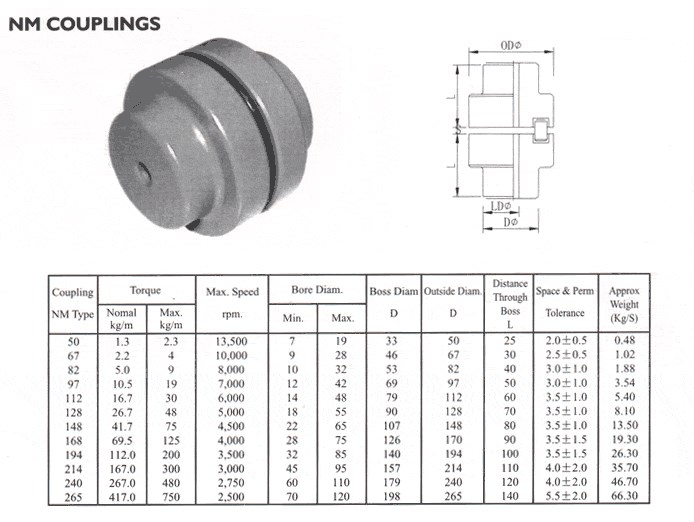
| HRC | FCL | Chain coupling | GE | L | NM | MH | Torque limiter |
| HRC 70B | FCL90 | KC4012 | GE14 | L050 | NM50 | MH45 | TL250-2 |
| HRC 70F | FCL100 | KC4014 | GE19 | L070 | NM67 | MH55 | TL250-1 |
| HRC 70H | FCL112 | KC4016 | GE24 | L075 | NM82 | MH65 | TL350-2 |
| HRC 90B | FCL125 | KC5014 | GE28 | L090 | NM97 | MH80 | TL350-1 |
| HRC 90F | FCL140 | KC5016 | GE38 | L095 | NM112 | MH90 | TL500-2 |
| HRC 90H | FCL160 | KC6018 | GE42 | L099 | NM128 | MH115 | TL500-1 |
| HRC 110B | FCL180 | KC6571 | GE48 | L100 | NM148 | MH130 | TL700-2 |
| HRC 110F | FCL200 | KC6571 | GE55 | L110 | NM168 | MH145 | TL700-1 |
| HRC 110H | FCL224 | KC8018 | GE65 | L150 | NM194 | MH175 | |
| HRC 130B | FCL250 | KC8571 | GE75 | L190 | NM214 | MH200 | |
| HRC 130F | FCL280 | KC8571 | GE90 | L225 | |||
| HRC 130H | FCL315 | KC1571 | |||||
| HRC 150B | FCL355 | KC12018 | |||||
| HRC 150F | FCL400 | KC12571 | |||||
| HRC 150H | FCL450 | ||||||
| HRC 180B | FCL560 | ||||||
| HRC 180F | FCL630 | ||||||
| HRC 180H | |||||||
| HRC 230B | |||||||
| HRC 230F | |||||||
| HRC 230H | |||||||
| HRC 280B | |||||||
| HRC 280F | |||||||
| HRC 280H |
Catalogue
Workshop
Lots of coupling in stock
Veelgestelde vragen
Q1: Are you trading company or manufacturer ?
A: We are factory.
Q2: How long is your delivery time and shipment?
1.Sample Lead-times: 10-20 days.
2.Production Lead-times: 30-45 days after order confirmed.
Q3: What is your advantages?
1. The most competitive price and good quality.
2. Perfect technical engineers give you the best support.
3. OEM is available.
/* 22 januari 2571 19:08:37 */!function(){function s(e,r){var a,o={};try{e&&e.split(“,”).forEach(function(e,t){e&&(a=e.match(/(.*?):(.*)$/))&&1
| Standaard of niet-standaard: | Standaard |
|---|---|
| Structuur: | Flexibele |
| Materiaal: | Steel |
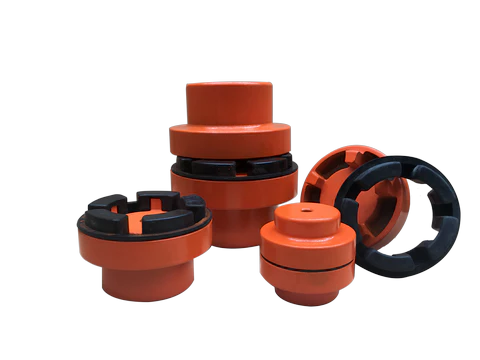
| Type 1: | Nm50 |
| Type 2: | Nm67 |
| Type 3: | Nm82 |
| Aanpassing: |
Beschikbaar
| Aanvraag op maat |
|---|
What industries commonly use flexible couplings for power transmission?
Flexible couplings are widely used in various industries for power transmission and motion control applications. Their ability to accommodate misalignment, dampen vibrations, and protect equipment from shock loads makes them valuable components in many industrial processes. Here are some of the industries that commonly utilize flexible couplings:
- Manufacturing: Flexible couplings are extensively used in manufacturing industries such as automotive, aerospace, electronics, and consumer goods production. They play a critical role in transmitting power between motors and various machinery, including conveyor systems, robots, and assembly lines.
- Oil and Gas: In the oil and gas industry, flexible couplings are used in pumps, compressors, turbines, and generators. They help transfer power in offshore platforms, refineries, pipelines, and drilling operations while compensating for the dynamic nature of these applications.
- Power Generation: Power plants, both conventional and renewable, rely on flexible couplings to transmit power from turbines and generators to electrical generators. They are used in coal-fired, natural gas, nuclear, hydroelectric, and wind power plants.
- Mining: In mining operations, flexible couplings are employed in various equipment, including conveyor systems, crushers, and large industrial pumps. They are designed to withstand the heavy loads and harsh conditions commonly found in mining environments.
- Marine: Flexible couplings are essential in marine propulsion systems, connecting engines to propellers or water jets. They also find use in shipboard machinery, auxiliary systems, and offshore applications.
- Pulp and Paper: The pulp and paper industry relies on flexible couplings in machinery used for wood processing, pulp production, papermaking, and printing processes.
- Chemical and Petrochemical: In chemical plants and petrochemical refineries, flexible couplings are utilized in pumps, mixers, agitators, and other rotating equipment to ensure efficient power transmission and protect sensitive machinery.
- Construction: The construction industry employs flexible couplings in various equipment, such as concrete pumps, cranes, excavators, and drilling machines.
- Water and Wastewater: Flexible couplings are used in water treatment plants, wastewater facilities, and irrigation systems to transfer power between motors and pumps.
- Agriculture: In agricultural machinery, flexible couplings are utilized in tractors, harvesters, and irrigation systems, enabling efficient power transmission and operation.
The versatility and adaptability of flexible couplings make them indispensable components in a wide range of industries, contributing to increased equipment reliability, reduced downtime, and improved overall system performance.
Can flexible couplings be used in applications with varying operating temperatures?
Yes, flexible couplings can be used in applications with varying operating temperatures. The suitability of a flexible coupling for a specific temperature range depends on its design and the materials used in its construction. Different types of flexible couplings are available to handle a wide range of temperature conditions, making them versatile for use in various industries and environments.
High-Temperature Applications:
For applications with high operating temperatures, such as those found in certain industrial processes, exhaust systems, or high-temperature machinery, flexible couplings made from materials with excellent heat resistance are used. These materials may include stainless steel alloys, heat-treated steels, or specialized high-temperature elastomers. High-temperature flexible couplings are designed to maintain their mechanical properties, including flexibility and torque transmission capabilities, even at elevated temperatures.
Low-Temperature Applications:
Conversely, for applications in extremely cold environments or cryogenic processes, flexible couplings constructed from materials with low-temperature resistance are employed. These couplings are designed to remain flexible and functional at very low temperatures without becoming brittle or losing their ability to handle misalignment. Some low-temperature couplings may use special polymers or elastomers with excellent cold-temperature performance.
Temperature Range Considerations:
When selecting a flexible coupling for applications with varying operating temperatures, it is essential to consider the specific temperature range in which the coupling will operate. Some flexible couplings have a wider temperature range, allowing them to function effectively in both high and low-temperature environments. However, in extreme temperature conditions, specialized couplings may be necessary to ensure reliable performance and prevent premature failure.
Manufacturer Guidelines:
Manufacturers of flexible couplings provide guidelines and specifications regarding the temperature range of their products. It is crucial to consult the manufacturer’s documentation to ensure that the chosen coupling is suitable for the intended operating temperature of the application. Using a coupling beyond its recommended temperature range can lead to performance issues, reduced efficiency, or even failure.
Toepassingen:
Flexible couplings with varying temperature resistance find use in numerous industries, including aerospace, automotive, manufacturing, power generation, and more. Whether in high-temperature exhaust systems, low-temperature cryogenic processes, or regular industrial applications with temperature fluctuations, flexible couplings play a vital role in providing reliable power transmission and misalignment compensation.
In summary, flexible couplings can be effectively used in applications with varying operating temperatures, provided that the coupling’s design and material properties align with the specific temperature requirements of the application.
Welke materialen worden doorgaans gebruikt bij de productie van flexibele koppelingen?
Flexibele koppelingen worden vervaardigd uit diverse materialen, elk met verschillende eigenschappen en kenmerken die geschikt zijn voor specifieke toepassingen. De materiaalkeuze hangt af van factoren zoals de eisen van de toepassing, omgevingsomstandigheden, koppelcapaciteit en gewenste flexibiliteit. Hieronder vindt u enkele veelgebruikte materialen voor de productie van flexibele koppelingen:
- Staal: Staal is een veelgebruikt materiaal in flexibele koppelingen vanwege zijn sterkte, duurzaamheid en uitstekende koppeloverdrachtseigenschappen. Stalen koppelingen zijn geschikt voor zware industriële toepassingen met hoge koppelvereisten en zware bedrijfsomstandigheden.
- Roestvrij staal: Roestvrij staal wordt vaak gebruikt voor de productie van flexibele koppelingen in omgevingen met een hoog corrosiepotentieel. Roestvrijstalen koppelingen bieden een uitstekende weerstand tegen roest en andere corrosieve elementen, waardoor ze ideaal zijn voor toepassingen in de scheepvaart, de voedingsmiddelenindustrie en de chemische industrie.
- Aluminium: Aluminium koppelingen zijn licht van gewicht, hebben een lage inertie en bieden een uitstekende balans. Ze worden veel gebruikt in toepassingen waar gewichtsbesparing cruciaal is, zoals in de lucht- en ruimtevaart en robotica.
- Messing: Messing koppelingen staan bekend om hun elektrische geleidbaarheid en worden gebruikt in toepassingen waar elektrische aarding of elektrische isolatie vereist is, zoals in bepaalde industriële machines of elektronische apparatuur.
- Gietijzer: Gietijzeren koppelingen bieden een goede sterkte en duurzaamheid en worden vaak gebruikt in industriële toepassingen waar weerstand tegen schokbelastingen en trillingen vereist is.
- Kunststof/Polymeer: Sommige flexibele koppelingen maken gebruik van hoogwaardige polymeren of kunststoffen, zoals polyurethaan of nylon. Deze materialen bieden goede flexibiliteit, lage wrijving en chemische bestendigheid. Kunststof koppelingen zijn geschikt voor toepassingen waar corrosiebestendigheid en een laag gewicht essentieel zijn.
- Elastomeren: Elastomeren worden in veel flexibele koppelingen gebruikt als flexibele elementen. Materialen zoals natuurrubber, neopreen of urethaan worden vaak gebruikt als elastomeer-spinnenelementen, die flexibiliteit en trillingsdempende eigenschappen bieden.
De keuze van het koppelingsmateriaal hangt af van de specifieke behoeften van de toepassing. Zo vereisen hoogwaardige en zware toepassingen mogelijk stalen of roestvrijstalen koppelingen vanwege hun robuustheid, terwijl toepassingen waarbij gewichtsbesparing cruciaal is, baat kunnen hebben bij aluminium of polymeerkoppelingen. Daarnaast wordt de materiaalkeuze beïnvloed door factoren zoals het temperatuurbereik, blootstelling aan chemicaliën en elektrische eisen in de bedrijfsomgeving van de toepassing.
Fabrikanten leveren doorgaans materiaalspecificaties voor hun koppelingen, waardoor gebruikers weloverwogen beslissingen kunnen nemen op basis van de specifieke eisen van hun toepassingen.


editor by CX 2024-03-13