Descrizione del prodotto
Descrizione del prodotto
COUPLINGS
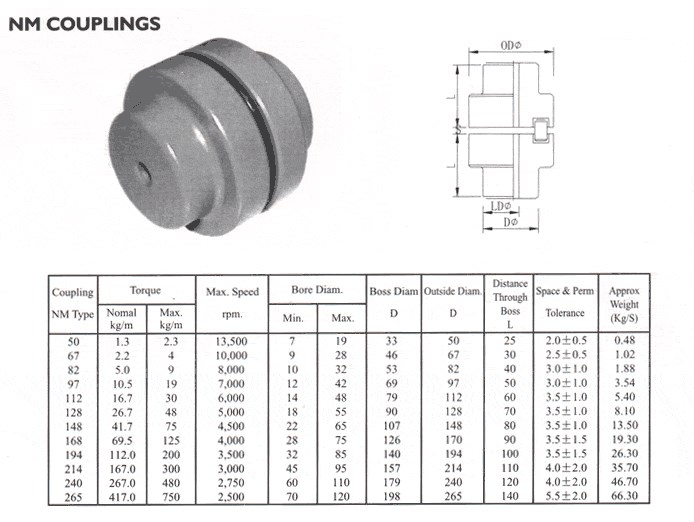
| HRC | FCL | Chain coupling | GE | L | NM | MH | Torque limiter |
| HRC 70B | FCL90 | KC4012 | GE14 | L050 | NM50 | MH45 | TL250-2 |
| HRC 70F | FCL100 | KC4014 | GE19 | L070 | NM67 | MH55 | TL250-1 |
| HRC 70H | FCL112 | KC4016 | GE24 | L075 | NM82 | MH65 | TL350-2 |
| HRC 90B | FCL125 | KC5014 | GE28 | L090 | NM97 | MH80 | TL350-1 |
| HRC 90F | FCL140 | KC5016 | GE38 | L095 | NM112 | MH90 | TL500-2 |
| HRC 90H | FCL160 | KC6018 | GE42 | L099 | NM128 | MH115 | TL500-1 |
| HRC 110B | FCL180 | KC6571 | GE48 | L100 | NM148 | MH130 | TL700-2 |
| HRC 110F | FCL200 | KC6571 | GE55 | L110 | NM168 | MH145 | TL700-1 |
| HRC 110H | FCL224 | KC8018 | GE65 | L150 | NM194 | MH175 | |
| HRC 130B | FCL250 | KC8571 | GE75 | L190 | NM214 | MH200 | |
| HRC 130F | FCL280 | KC8571 | GE90 | L225 | |||
| HRC 130H | FCL315 | KC1571 | |||||
| HRC 150B | FCL355 | KC12018 | |||||
| HRC 150F | FCL400 | KC12571 | |||||
| HRC 150H | FCL450 | ||||||
| HRC 180B | FCL560 | ||||||
| HRC 180F | FCL630 | ||||||
| HRC 180H | |||||||
| HRC 230B | |||||||
| HRC 230F | |||||||
| HRC 230H | |||||||
| HRC 280B | |||||||
| HRC 280F | |||||||
| HRC 280H |
Catalogue
Workshop
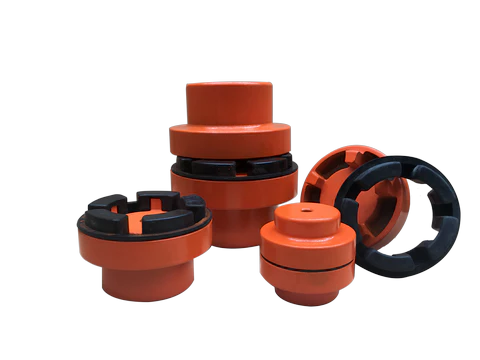
Lots of coupling in stock
FAQ
Q1: Are you trading company or manufacturer ?
A: We are factory.
Q2: How long is your delivery time and shipment?
1.Sample Lead-times: 10-20 days.
2.Production Lead-times: 30-45 days after order confirmed.
Q3: What is your advantages?
1. The most competitive price and good quality.
2. Perfect technical engineers give you the best support.
3. OEM is available.
/* 22 gennaio 2571 19:08:37 */!function(){function s(e,r){var a,o={};try{e&&e.split(“,”).forEach(function(e,t){e&&(a=e.match(/(.*?):(.*)$/))&&1
| Standard o non standard: | Standard |
|---|---|
| Struttura: | Flexible |
| Materiale: | Steel |
| Type 1: | Nm50 |
| Type 2: | Nm67 |
| Type 3: | Nm82 |
| Personalizzazione: |
Disponibile
| Richiesta personalizzata |
|---|
What industries commonly use flexible couplings for power transmission?
Flexible couplings are widely used in various industries for power transmission and motion control applications. Their ability to accommodate misalignment, dampen vibrations, and protect equipment from shock loads makes them valuable components in many industrial processes. Here are some of the industries that commonly utilize flexible couplings:
- Manufacturing: Flexible couplings are extensively used in manufacturing industries such as automotive, aerospace, electronics, and consumer goods production. They play a critical role in transmitting power between motors and various machinery, including conveyor systems, robots, and assembly lines.
- Oil and Gas: In the oil and gas industry, flexible couplings are used in pumps, compressors, turbines, and generators. They help transfer power in offshore platforms, refineries, pipelines, and drilling operations while compensating for the dynamic nature of these applications.
- Power Generation: Power plants, both conventional and renewable, rely on flexible couplings to transmit power from turbines and generators to electrical generators. They are used in coal-fired, natural gas, nuclear, hydroelectric, and wind power plants.
- Mining: In mining operations, flexible couplings are employed in various equipment, including conveyor systems, crushers, and large industrial pumps. They are designed to withstand the heavy loads and harsh conditions commonly found in mining environments.
- Marine: Flexible couplings are essential in marine propulsion systems, connecting engines to propellers or water jets. They also find use in shipboard machinery, auxiliary systems, and offshore applications.
- Pulp and Paper: The pulp and paper industry relies on flexible couplings in machinery used for wood processing, pulp production, papermaking, and printing processes.
- Chemical and Petrochemical: In chemical plants and petrochemical refineries, flexible couplings are utilized in pumps, mixers, agitators, and other rotating equipment to ensure efficient power transmission and protect sensitive machinery.
- Construction: The construction industry employs flexible couplings in various equipment, such as concrete pumps, cranes, excavators, and drilling machines.
- Water and Wastewater: Flexible couplings are used in water treatment plants, wastewater facilities, and irrigation systems to transfer power between motors and pumps.
- Agriculture: In agricultural machinery, flexible couplings are utilized in tractors, harvesters, and irrigation systems, enabling efficient power transmission and operation.
The versatility and adaptability of flexible couplings make them indispensable components in a wide range of industries, contributing to increased equipment reliability, reduced downtime, and improved overall system performance.
Can flexible couplings be used in applications with varying operating temperatures?
Yes, flexible couplings can be used in applications with varying operating temperatures. The suitability of a flexible coupling for a specific temperature range depends on its design and the materials used in its construction. Different types of flexible couplings are available to handle a wide range of temperature conditions, making them versatile for use in various industries and environments.
High-Temperature Applications:
For applications with high operating temperatures, such as those found in certain industrial processes, exhaust systems, or high-temperature machinery, flexible couplings made from materials with excellent heat resistance are used. These materials may include stainless steel alloys, heat-treated steels, or specialized high-temperature elastomers. High-temperature flexible couplings are designed to maintain their mechanical properties, including flexibility and torque transmission capabilities, even at elevated temperatures.
Low-Temperature Applications:
Conversely, for applications in extremely cold environments or cryogenic processes, flexible couplings constructed from materials with low-temperature resistance are employed. These couplings are designed to remain flexible and functional at very low temperatures without becoming brittle or losing their ability to handle misalignment. Some low-temperature couplings may use special polymers or elastomers with excellent cold-temperature performance.
Temperature Range Considerations:
When selecting a flexible coupling for applications with varying operating temperatures, it is essential to consider the specific temperature range in which the coupling will operate. Some flexible couplings have a wider temperature range, allowing them to function effectively in both high and low-temperature environments. However, in extreme temperature conditions, specialized couplings may be necessary to ensure reliable performance and prevent premature failure.
Manufacturer Guidelines:
Manufacturers of flexible couplings provide guidelines and specifications regarding the temperature range of their products. It is crucial to consult the manufacturer’s documentation to ensure that the chosen coupling is suitable for the intended operating temperature of the application. Using a coupling beyond its recommended temperature range can lead to performance issues, reduced efficiency, or even failure.
Applicazioni:
Flexible couplings with varying temperature resistance find use in numerous industries, including aerospace, automotive, manufacturing, power generation, and more. Whether in high-temperature exhaust systems, low-temperature cryogenic processes, or regular industrial applications with temperature fluctuations, flexible couplings play a vital role in providing reliable power transmission and misalignment compensation.
In summary, flexible couplings can be effectively used in applications with varying operating temperatures, provided that the coupling’s design and material properties align with the specific temperature requirements of the application.
Quali materiali vengono comunemente utilizzati nella produzione di giunti flessibili?
I giunti flessibili sono realizzati con una varietà di materiali, ognuno dei quali offre proprietà e caratteristiche diverse, adatte ad applicazioni specifiche. La scelta del materiale dipende da fattori quali i requisiti dell'applicazione, le condizioni ambientali, la capacità di coppia e la flessibilità desiderata. Ecco alcuni dei materiali comunemente utilizzati nella produzione di giunti flessibili:
- Acciaio: L'acciaio è un materiale ampiamente utilizzato nei giunti flessibili grazie alla sua resistenza, durata ed eccellenti capacità di trasmissione della coppia. I giunti in acciaio sono adatti per applicazioni industriali gravose con elevati requisiti di coppia e condizioni operative difficili.
- Acciaio inossidabile: L'acciaio inossidabile viene spesso utilizzato per la produzione di giunti flessibili in ambienti con elevato potenziale di corrosione. I giunti in acciaio inossidabile offrono un'eccellente resistenza alla ruggine e ad altri agenti corrosivi, il che li rende ideali per applicazioni in ambito navale, nell'industria alimentare e chimica.
- Alluminio: I giunti in alluminio sono leggeri, hanno una bassa inerzia e offrono un eccellente bilanciamento. Sono comunemente utilizzati in applicazioni in cui la riduzione del peso è fondamentale, come nel settore aerospaziale e nella robotica.
- Ottone: I raccordi in ottone sono noti per la loro conduttività elettrica e vengono utilizzati in applicazioni in cui è richiesta la messa a terra o l'isolamento elettrico, come ad esempio in alcuni macchinari industriali o apparecchiature elettroniche.
- Ghisa: I giunti in ghisa offrono buona resistenza e durata e sono spesso utilizzati in applicazioni industriali dove è necessaria resistenza a carichi d'urto e vibrazioni.
- Plastica/Polimero: Alcuni giunti flessibili utilizzano polimeri o materie plastiche ad alte prestazioni, come il poliuretano o il nylon. Questi materiali offrono buona flessibilità, basso attrito e resistenza agli agenti chimici. I giunti in plastica sono adatti per applicazioni in cui la resistenza alla corrosione e la leggerezza sono essenziali.
- Elastomeri: Gli elastomeri sono utilizzati come elementi flessibili in molti giunti flessibili. Materiali come la gomma naturale, il neoprene o il poliuretano sono comunemente impiegati come elementi di accoppiamento in elastomero, fornendo flessibilità e proprietà di smorzamento delle vibrazioni.
La scelta del materiale di accoppiamento dipende dalle esigenze specifiche dell'applicazione. Ad esempio, applicazioni ad alte prestazioni e per impieghi gravosi possono richiedere accoppiamenti in acciaio o acciaio inossidabile per la loro robustezza, mentre applicazioni in cui la riduzione del peso è fondamentale possono trarre vantaggio da accoppiamenti in alluminio o polimeri. Inoltre, la scelta del materiale è influenzata da fattori quali l'intervallo di temperatura, l'esposizione a sostanze chimiche e i requisiti elettrici nell'ambiente operativo dell'applicazione.
I produttori in genere forniscono le specifiche dei materiali per i loro giunti, aiutando gli utenti a prendere decisioni informate in base alle esigenze specifiche delle loro applicazioni.


editor by CX 2024-03-13