Descrizione del prodotto
Descrizione del prodotto
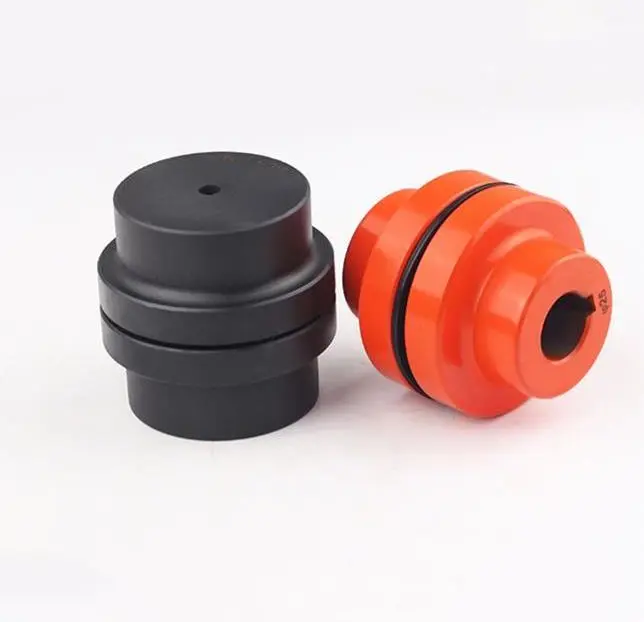
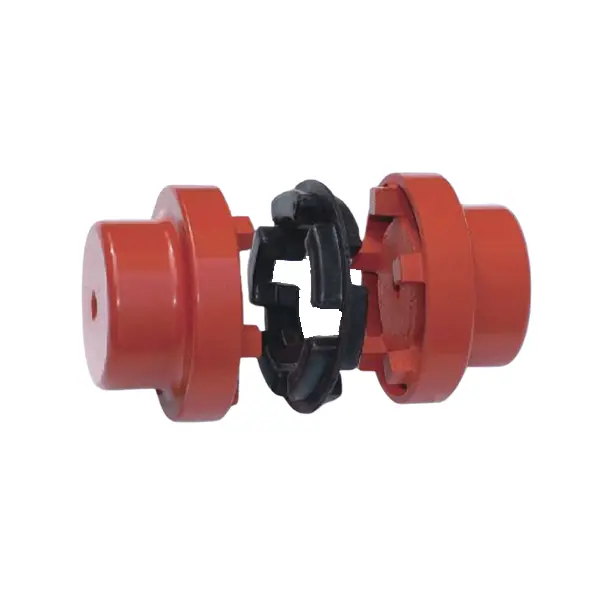
Cast Iron Spider Rubber Flexible NM 128 water pump Shaft coupling
Cast iron NM flexible shaft coupling is a cylindrical pin made of some non-metallic materials, which is placed between the 2 sides of the coupling and the inner surface of the outer ring, and a device to transfer the torque through the column pin to realize the connection between 2 half couplings.
Cast iron NM flexible shaft coupling between the slider made of bakelite cloth or polyurethane, suitable for high speed, large torque, no sharp impact of the 2 connections. The standard code of the pump industry is Bl104. The maximum allowable torque is 850N m, and the maximum shaft diameter is 50mm.
The characteristics of the China Manufactory NM Spider Coupling:
1. It is small in size, light in quality, simple in structure, convenient in installation and low in price. It is often used in small power occasions.
2, the transmission torque is large, and in the same torque, most of the rotary diameter is smaller than the tooth coupling, and it can partly replace the tooth coupling.
3, the inertia force is small, it is suitable for 2 axis connection with little torque, high speed and no sharp impact. The transmission torque of nylon slider is small, but it is more suitable for high-speed operation without lubrication.
Parametri del prodotto
Imballaggio e spedizione
All the products can be packed in cartons,or,you can choose the pallet packing.
MADE IN CHINA can be pressed on wooden cases.Land,air,sea transportation are available.UPS,DHL,TNT,
FedEx and EMS are all supported.
Profilo Aziendale
About Mighty Machinery
ZheJiang Mighty Machinery Co., Ltd., specializes in manufacturing Mechanical Power Transmission Products. After over 13 years hard work, MIGHTY have already get the certificate of ISO9001:2000 and become a holding company for 3 manufacturing factories.
MIGHTY advantage
1, Abundant experience in the mechanical processing industries.
2,Large quality of various material purchase and stock in warhouse which ensure the low cost for the material and production in time.
3,Now have 5 technical staff, we have strong capacity for design and process design, and more than 70 worker now work in our FTY and double shift eveyday.
4,Strick quality control are apply in the whole prodution. we have incoming inspection,process inspection and final production inspection which can ensure the perfect of the goods quality.
5,Long time cooperate with the Global Buyer, make us easy to understand the csutomer and handle the export.
FAQ
Q1: Are you trading company or manufacturer ?
A: We are factory.
Q2:Do you provide samples ? is it free or extra ?
A: : Yes, we could offer the sample but not for free.Actually we have a very good price principle, when you make the bulk order then cost of sample will be return to you.
Q3: How long is your delivery time?
A: Generally it is 10-15 days if the goods are in stock. Or it is 7-25 days if the goods are not in stock, it is according to quantity.
Q4:How long is your warranty?
A: Our Warranty is 12 month.
Q5 :Do you have inspection procedures for coupling ?
A:100% self-inspection before packing
Q6. What’s your payment?
A:1) 100% T/T. 2) 30% in advance, others before shipment. 3) L/C Q7:Can I have a visit to your factory before the order? A: Sure,welcome to visit our factory.
| Standard o non standard: | Standard |
|---|---|
| Coppia: | 25-12500(N.M) |
| Velocità: | 1500-8500(R/M) |
| Struttura: | Jaw / Spider |
| Materiale: | Cast Iron |
| Tipo: | Flexible Coupling |
| Esempi: |
US$ 15.9/Piece
1 pezzo (ordine minimo) | |
|---|
| Personalizzazione: |
Disponibile
| Richiesta personalizzata |
|---|

Can flexible couplings accommodate high torque and high-speed applications?
Yes, flexible couplings can accommodate both high torque and high-speed applications, but the suitability depends on the specific design and material of the flexible coupling. Different types of flexible couplings have varying torque and speed capacities, and it’s crucial to select the right type of coupling based on the application requirements.
High Torque Applications:
Some flexible couplings, such as gear couplings and disc couplings, are designed to handle high torque levels. Gear couplings consist of toothed hubs that mesh with each other, providing a robust and efficient torque transmission. They are commonly used in heavy-duty industrial applications, such as steel mills, mining equipment, and power generation plants, where high torque loads are prevalent.
Disc couplings are also suitable for high torque applications. They use a series of flexible metal discs that can handle significant torque while compensating for misalignment. Disc couplings are often used in high-speed machinery and critical applications where precise torque transmission is essential.
High-Speed Applications:
Flexible couplings can also be used in high-speed applications. For instance, certain disc couplings, elastomeric couplings, and grid couplings are capable of handling high rotational speeds. These couplings have low inertia, which means they can respond quickly to changes in speed and provide efficient power transmission at high RPMs.
Elastomeric couplings, such as jaw couplings and tire couplings, are commonly used in various industrial applications, including pumps, compressors, and fans, where both torque and speed requirements are high. They offer good flexibility and damping properties, making them suitable for applications with high-speed variations and vibrations.
Considerations:
When selecting a flexible coupling for high torque and high-speed applications, several factors should be considered:
- The torque and speed ratings provided by the coupling manufacturer should be checked to ensure they meet or exceed the application’s requirements.
- The design and materials of the coupling should be suitable for the specific operating conditions, including temperature, environment, and potential exposure to corrosive substances.
- Proper alignment and installation of the coupling are critical to ensure optimal performance and prevent premature wear.
- In some cases, it may be necessary to use additional components, such as torque limiters or speed reducers, to protect the coupling and the connected equipment from excessive loads or speed fluctuations.
In conclusion, flexible couplings can indeed accommodate high torque and high-speed applications, but the appropriate coupling type and proper selection are essential to ensure reliable and efficient performance in these demanding conditions.
Can flexible couplings be used in corrosive or harsh environments?
Yes, flexible couplings can be designed and selected to be used in corrosive or harsh environments. The choice of materials and coatings plays a crucial role in ensuring the coupling’s durability and performance under challenging conditions.
Corrosion-Resistant Materials:
In corrosive environments, it is essential to use materials that can withstand chemical attacks and oxidation. Stainless steel, specifically grades like 316 or 17-4 PH, is commonly chosen for flexible couplings in such situations. Stainless steel offers excellent corrosion resistance, making it suitable for applications where the coupling may come into contact with corrosive substances or moisture.
Special Coatings:
For certain harsh environments, coupling manufacturers may apply special coatings to enhance the coupling’s corrosion resistance. Examples of coatings include zinc plating, nickel plating, or epoxy coatings. These coatings provide an additional layer of protection against corrosive agents and help extend the coupling’s lifespan.
Sealed Designs:
In environments where the coupling is exposed to contaminants like dust, dirt, or moisture, sealed designs are preferred. Sealed flexible couplings prevent these substances from entering the coupling’s internal components, thus reducing the risk of corrosion and wear. The sealed design also helps to maintain the coupling’s performance over time in challenging conditions.
High-Temperature Applications:
For harsh environments with high temperatures, flexible couplings made from high-temperature resistant materials, such as certain heat-resistant stainless steels or superalloys, can be used. These materials retain their mechanical properties and corrosion resistance even at elevated temperatures.
Chemical Resistance:
For applications where the coupling might encounter chemicals or solvents, it is essential to select a coupling material that is chemically resistant. This prevents degradation and ensures the coupling’s integrity in such environments.
Specialized Designs:
In some cases, where the environment is exceptionally harsh or unique, custom-designed flexible couplings may be necessary. Engineering a coupling to meet the specific demands of the environment ensures optimal performance and reliability.
Consultation with Manufacturers:
When considering flexible couplings for corrosive or harsh environments, it is advisable to consult with coupling manufacturers or engineering experts. They can provide valuable insights and recommend suitable materials, coatings, and designs based on the specific operating conditions.
Summary:
Flexible couplings can indeed be used in corrosive or harsh environments, provided the appropriate materials, coatings, and designs are chosen. Stainless steel, sealed designs, and special coatings are some of the solutions that enhance the coupling’s corrosion resistance and performance. It is essential to consider the specific environment and application requirements when selecting a flexible coupling to ensure optimal functionality and durability in challenging conditions.
Che cos'è un giunto flessibile e come funziona?
Un giunto flessibile è un dispositivo meccanico utilizzato per collegare due alberi consentendo un movimento relativo tra di essi. È progettato per trasmettere la coppia da un albero all'altro, compensando disallineamenti, vibrazioni e urti. I giunti flessibili sono componenti essenziali in diverse macchine e sistemi rotanti, in quanto contribuiscono a proteggere le apparecchiature collegate e a migliorarne le prestazioni complessive.
Tipologie di giunti flessibili:
Esistono diversi tipi di giunti flessibili, ognuno con un design e caratteristiche uniche. Alcuni tipi comuni includono:
- Giunti a ganasce: I giunti a ganasce sono dotati di elementi elastici a forma di ragno che si inseriscono tra due mozzi. Sono in grado di compensare disallineamenti angolari e paralleli, smorzando al contempo le vibrazioni.
- Giunti a disco: I giunti a disco utilizzano sottili dischi metallici per collegare gli alberi. Sono estremamente flessibili e offrono un'eccellente compensazione dei disallineamenti.
- Giunti a ingranaggi: I giunti a ingranaggi utilizzano i denti degli ingranaggi per trasmettere la coppia. Offrono un'elevata capacità di coppia e possono gestire disallineamenti moderati.
- Giunti per travi: I giunti a trave utilizzano un singolo elemento di materiale flessibile, come una trave metallica, per trasmettere la coppia compensando al contempo il disallineamento.
- Giunti a soffietto: I giunti a soffietto utilizzano una struttura a soffietto per consentire la compensazione dei disallineamenti assiali, angolari e paralleli.
- Giunti Oldham: I giunti Oldham utilizzano tre dischi, di cui quello centrale presenta una fessura perpendicolare per consentire la compensazione del disallineamento.
Come funziona un giunto flessibile:
Il funzionamento di un giunto flessibile dipende dalla sua specifica progettazione, ma i principi generali sono simili. Prendiamo come esempio un giunto a ganasce per spiegare come funziona un giunto flessibile:
- Due alberi sono collegati ai mozzi di accoppiamento su entrambi i lati, con un elemento elastico a forma di ragno interposto tra di essi.
- Quando viene applicata una coppia a un albero, il supporto della ruota dentata si comprime e si deforma leggermente, trasmettendo la coppia all'altro albero.
- In caso di disallineamento tra gli alberi, il supporto in elastomero si flette e compensa il disallineamento, garantendo una trasmissione di coppia fluida senza imporre carichi eccessivi sugli alberi o sulle apparecchiature collegate.
- Il supporto elastomerico funge anche da elemento smorzante, assorbendo vibrazioni e urti durante il funzionamento, riducendo così l'usura delle apparecchiature e migliorando la stabilità del sistema.
Nel complesso, la flessibilità e la capacità di compensare i disallineamenti sono le caratteristiche chiave che consentono a un giunto flessibile di funzionare efficacemente. La scelta di uno specifico tipo di giunto flessibile dipende dai requisiti dell'applicazione, come la capacità di coppia, la compensazione dei disallineamenti e le condizioni ambientali.


editor by CX 2023-10-11