Mô tả sản phẩm
Mô tả sản phẩm
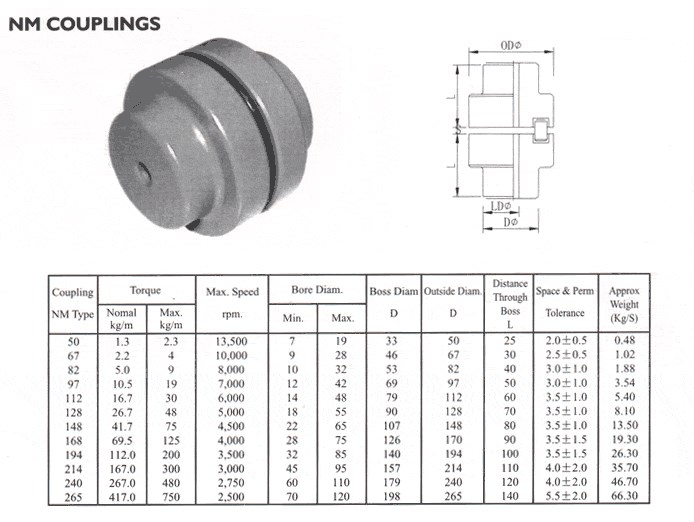
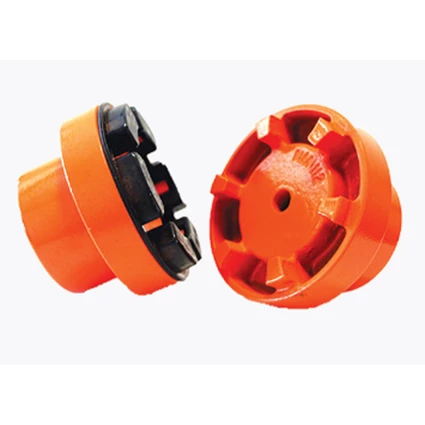
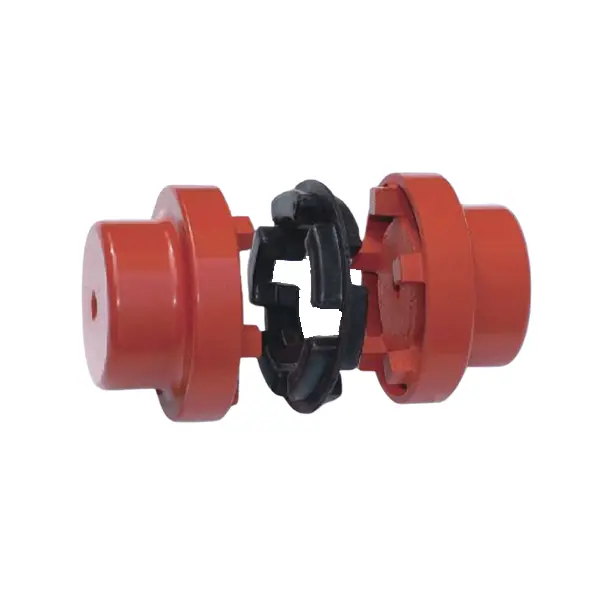
Cast Iron Spider Rubber Flexible NM 128 water pump Shaft coupling
Cast iron NM flexible shaft coupling is a cylindrical pin made of some non-metallic materials, which is placed between the 2 sides of the coupling and the inner surface of the outer ring, and a device to transfer the torque through the column pin to realize the connection between 2 half couplings.
Cast iron NM flexible shaft coupling between the slider made of bakelite cloth or polyurethane, suitable for high speed, large torque, no sharp impact of the 2 connections. The standard code of the pump industry is Bl104. The maximum allowable torque is 850N m, and the maximum shaft diameter is 50mm.
The characteristics of the China Manufactory NM Spider Coupling:
1. It is small in size, light in quality, simple in structure, convenient in installation and low in price. It is often used in small power occasions.
2, the transmission torque is large, and in the same torque, most of the rotary diameter is smaller than the tooth coupling, and it can partly replace the tooth coupling.
3, the inertia force is small, it is suitable for 2 axis connection with little torque, high speed and no sharp impact. The transmission torque of nylon slider is small, but it is more suitable for high-speed operation without lubrication.
Thông số sản phẩm
Đóng gói & Vận chuyển
All the products can be packed in cartons,or,you can choose the pallet packing.
MADE IN CHINA can be pressed on wooden cases.Land,air,sea transportation are available.UPS,DHL,TNT,
FedEx and EMS are all supported.
Hồ sơ công ty
About Mighty Machinery
ZheJiang Mighty Machinery Co., Ltd., specializes in manufacturing Mechanical Power Transmission Products. After over 13 years hard work, MIGHTY have already get the certificate of ISO9001:2000 and become a holding company for 3 manufacturing factories.
MIGHTY advantage
1, Abundant experience in the mechanical processing industries.
2,Large quality of various material purchase and stock in warhouse which ensure the low cost for the material and production in time.
3,Now have 5 technical staff, we have strong capacity for design and process design, and more than 70 worker now work in our FTY and double shift eveyday.
4,Strick quality control are apply in the whole prodution. we have incoming inspection,process inspection and final production inspection which can ensure the perfect of the goods quality.
5,Long time cooperate with the Global Buyer, make us easy to understand the csutomer and handle the export.
Câu hỏi thường gặp
Q1: Are you trading company or manufacturer ?
A: Chúng tôi là nhà máy.
Q2:Do you provide samples ? is it free or extra ?
A: : Yes, we could offer the sample but not for free.Actually we have a very good price principle, when you make the bulk order then cost of sample will be return to you.
Q3: How long is your delivery time?
A: Generally it is 10-15 days if the goods are in stock. Or it is 7-25 days if the goods are not in stock, it is according to quantity.
Q4:How long is your warranty?
A: Our Warranty is 12 month.
Q5 :Do you have inspection procedures for coupling ?
A:100% self-inspection before packing
Q6. What’s your payment?
A:1) 100% T/T. 2) 30% in advance, others before shipment. 3) L/C Q7:Can I have a visit to your factory before the order? A: Sure,welcome to visit our factory.
| Tiêu chuẩn hay không tiêu chuẩn: | Tiêu chuẩn |
|---|---|
| Mô-men xoắn: | 25-12500(N.M) |
| Tốc độ: | 1500-8500(R/M) |
| Kết cấu: | Jaw / Spider |
| Vật liệu: | Cast Iron |
| Kiểu: | Flexible Coupling |
| Mẫu: |
US$ 15.9/Piece
1 chiếc (Số lượng đặt tối thiểu) | |
|---|
| Tùy chỉnh: |
Có sẵn
| Yêu cầu tùy chỉnh |
|---|
Are there any safety considerations when using flexible couplings in rotating machinery?
Yes, there are several safety considerations to keep in mind when using flexible couplings in rotating machinery. While flexible couplings offer numerous benefits in terms of misalignment compensation, vibration isolation, and shock absorption, improper use or maintenance can lead to safety hazards. Here are some important safety considerations:
- Proper Installation: Ensure that the flexible coupling is installed correctly and securely following the manufacturer’s guidelines. Improper installation can lead to coupling failure, unexpected disconnection, or ejection of coupling components, which may result in equipment damage or injury to personnel.
- Alignment: Proper shaft alignment is essential for the reliable and safe operation of flexible couplings. Misaligned shafts can cause excessive stress on the coupling and connected components, leading to premature wear and possible failure. Regularly check and maintain proper shaft alignment to prevent safety risks.
- Operating Conditions: Consider the environmental and operating conditions of the machinery when selecting a flexible coupling. Some couplings are designed for specific temperature ranges, hazardous environments, or corrosive atmospheres. Using a coupling that is not suitable for the operating conditions can compromise safety and performance.
- Torque and Speed Limits: Always operate the flexible coupling within its specified torque and speed limits. Exceeding these limits can cause coupling failure, leading to unexpected downtime, equipment damage, and potential safety hazards.
- Maintenance: Regularly inspect and maintain the flexible coupling to ensure its continued safe operation. Check for signs of wear, damage, or corrosion, and promptly replace any worn or damaged components with genuine parts from the manufacturer.
- Emergency Stop Mechanism: In applications where safety is critical, consider implementing an emergency stop mechanism to quickly halt machinery operation in case of coupling failure or other emergencies.
- Personal Protective Equipment (PPE): When working with rotating machinery or during maintenance tasks involving couplings, personnel should wear appropriate PPE, such as gloves, eye protection, and clothing that can resist entanglement hazards.
- Training and Awareness: Ensure that personnel working with the machinery understand the potential hazards associated with flexible couplings and receive proper training on safe handling, installation, and maintenance procedures.
By adhering to these safety considerations, operators and maintenance personnel can mitigate potential risks and ensure the safe and reliable operation of rotating machinery with flexible couplings. Additionally, it is essential to comply with relevant safety standards and regulations specific to the industry and application to ensure a safe working environment.
Can flexible couplings be used in applications with varying operating temperatures?
Yes, flexible couplings can be used in applications with varying operating temperatures. The suitability of a flexible coupling for a specific temperature range depends on its design and the materials used in its construction. Different types of flexible couplings are available to handle a wide range of temperature conditions, making them versatile for use in various industries and environments.
High-Temperature Applications:
For applications with high operating temperatures, such as those found in certain industrial processes, exhaust systems, or high-temperature machinery, flexible couplings made from materials with excellent heat resistance are used. These materials may include stainless steel alloys, heat-treated steels, or specialized high-temperature elastomers. High-temperature flexible couplings are designed to maintain their mechanical properties, including flexibility and torque transmission capabilities, even at elevated temperatures.
Low-Temperature Applications:
Conversely, for applications in extremely cold environments or cryogenic processes, flexible couplings constructed from materials with low-temperature resistance are employed. These couplings are designed to remain flexible and functional at very low temperatures without becoming brittle or losing their ability to handle misalignment. Some low-temperature couplings may use special polymers or elastomers with excellent cold-temperature performance.
Temperature Range Considerations:
When selecting a flexible coupling for applications with varying operating temperatures, it is essential to consider the specific temperature range in which the coupling will operate. Some flexible couplings have a wider temperature range, allowing them to function effectively in both high and low-temperature environments. However, in extreme temperature conditions, specialized couplings may be necessary to ensure reliable performance and prevent premature failure.
Manufacturer Guidelines:
Manufacturers of flexible couplings provide guidelines and specifications regarding the temperature range of their products. It is crucial to consult the manufacturer’s documentation to ensure that the chosen coupling is suitable for the intended operating temperature of the application. Using a coupling beyond its recommended temperature range can lead to performance issues, reduced efficiency, or even failure.
Ứng dụng:
Flexible couplings with varying temperature resistance find use in numerous industries, including aerospace, automotive, manufacturing, power generation, and more. Whether in high-temperature exhaust systems, low-temperature cryogenic processes, or regular industrial applications with temperature fluctuations, flexible couplings play a vital role in providing reliable power transmission and misalignment compensation.
In summary, flexible couplings can be effectively used in applications with varying operating temperatures, provided that the coupling’s design and material properties align with the specific temperature requirements of the application.
Những vật liệu nào thường được sử dụng trong sản xuất khớp nối mềm?
Các khớp nối mềm được sản xuất bằng nhiều loại vật liệu khác nhau, mỗi loại đều có những đặc tính và đặc điểm riêng phù hợp với các ứng dụng cụ thể. Việc lựa chọn vật liệu phụ thuộc vào các yếu tố như yêu cầu của ứng dụng, điều kiện môi trường, khả năng chịu momen xoắn và độ linh hoạt mong muốn. Dưới đây là một số vật liệu thường được sử dụng trong sản xuất khớp nối mềm:
- Thép: Thép là vật liệu được sử dụng rộng rãi trong các khớp nối mềm nhờ độ bền, độ chắc chắn và khả năng truyền mô-men xoắn tuyệt vời. Khớp nối thép phù hợp cho các ứng dụng công nghiệp nặng với yêu cầu mô-men xoắn cao và điều kiện hoạt động khắc nghiệt.
- Thép không gỉ: Thép không gỉ thường được sử dụng để chế tạo các khớp nối mềm trong môi trường có khả năng ăn mòn cao. Các khớp nối bằng thép không gỉ có khả năng chống gỉ và các yếu tố ăn mòn khác tuyệt vời, lý tưởng cho các ứng dụng trong ngành hàng hải, chế biến thực phẩm và công nghiệp hóa chất.
- Nhôm: Các khớp nối bằng nhôm có trọng lượng nhẹ, quán tính thấp và khả năng cân bằng tuyệt vời. Chúng thường được sử dụng trong các ứng dụng mà việc giảm trọng lượng là rất quan trọng, chẳng hạn như hàng không vũ trụ và robot.
- Thau: Các khớp nối bằng đồng thau nổi tiếng về khả năng dẫn điện và được sử dụng trong các ứng dụng yêu cầu nối đất hoặc cách điện, chẳng hạn như trong một số máy móc công nghiệp hoặc thiết bị điện tử.
- Gang đúc: Các khớp nối bằng gang có độ bền và độ chắc chắn tốt, thường được sử dụng trong các ứng dụng công nghiệp cần khả năng chịu được tải trọng va đập và rung động.
- Nhựa/Polyme: Một số khớp nối mềm sử dụng các polyme hoặc nhựa hiệu suất cao, chẳng hạn như polyurethane hoặc nylon. Những vật liệu này mang lại độ linh hoạt tốt, ma sát thấp và khả năng chống hóa chất. Khớp nối bằng nhựa phù hợp cho các ứng dụng cần khả năng chống ăn mòn và trọng lượng nhẹ.
- Chất đàn hồi: Vật liệu đàn hồi được sử dụng làm các phần tử linh hoạt trong nhiều khớp nối mềm. Các vật liệu như cao su tự nhiên, neoprene hoặc urethane thường được sử dụng làm các phần tử đàn hồi dạng mạng nhện, mang lại tính linh hoạt và khả năng giảm chấn rung động.
Việc lựa chọn vật liệu khớp nối phụ thuộc vào nhu cầu cụ thể của ứng dụng. Ví dụ, các ứng dụng hiệu suất cao và tải nặng có thể yêu cầu khớp nối bằng thép hoặc thép không gỉ vì độ bền của chúng, trong khi các ứng dụng mà việc giảm trọng lượng là rất quan trọng có thể hưởng lợi từ khớp nối bằng nhôm hoặc polyme. Ngoài ra, việc lựa chọn vật liệu còn bị ảnh hưởng bởi các yếu tố như phạm vi nhiệt độ, tiếp xúc với hóa chất và các yêu cầu về điện trong môi trường hoạt động của ứng dụng.
Các nhà sản xuất thường cung cấp thông số kỹ thuật vật liệu cho các khớp nối của họ, giúp người dùng đưa ra quyết định sáng suốt dựa trên các yêu cầu cụ thể của ứng dụng.


editor by CX 2023-10-17