Produktbeskrivning
Produktbeskrivning
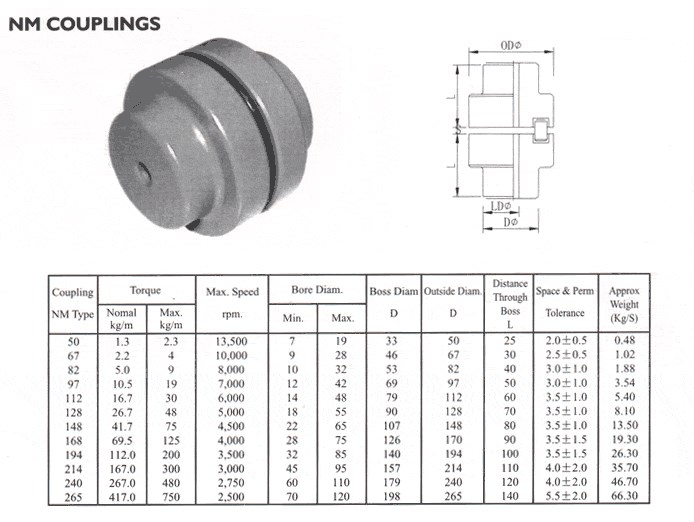
NM coupling extensively used in compressors, diesel engine drives, pumps, conveyors, and many other drive units.
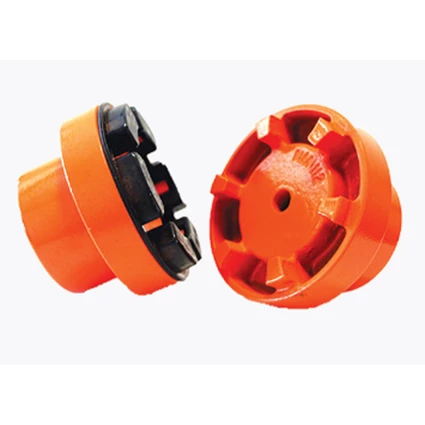
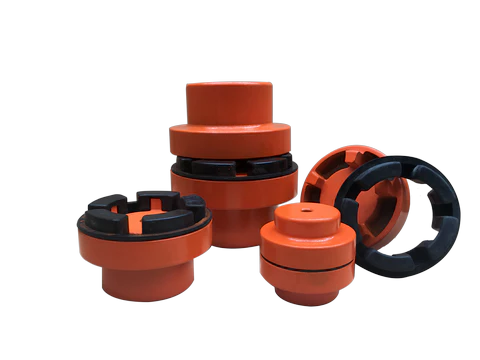
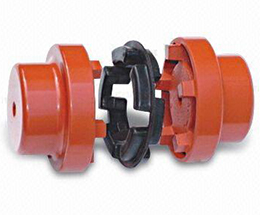
NM coupling consists of 2 hubs and flexible ring able to compensate all type of shaft misalignments.The flexible rings are made of Nitile rubber(NBR) which have a high internal damping characteristic which enable to absorb and dampen torsional vibrations,operate effectively in temperature range of -40~+100.
Size avalible from: 50,67,82,97,112,128,148,168,194,214,240,265.
NM coupling characteristics:Quiet and smooth operation.Easy installation and maintenance free. Available to machine with high torque and intermittent operation.
Applikationer
NM couplings are offered in the industry’s largest variety of stock bore/keyway combinations. These couplings require no lubrication and provide highly reliable service for light, medium, and heavy duty electrical motor and internal combustion power transmission applications. Applications include power transmission to industrial equipment such as pumps, gear boxes, compressors, blowers, mixers, and conveyors.
Detaljerade foton
Produktparametrar
Förpackning och frakt
Företagsprofil
ZheJiang Mighty Machinery Co., Ltd. specializes in manufacturing Mechanical Power Transmission Products.We Mighty is the division/branch of SCMC Group, which is a wholly state-owned company, established in 1980.
Om Mighty:
-3 tillverkningsfabriker, we have 5 technical staff, our FTY have strong capacity for design and process design, and more than 70 workers and double shift eveyday.
-Hög kvalitet på inköp av olika material and stock in warhouse which ensure the low cost for the material and production in time.
-Strick quality control are apply in the whole production.
we have incoming inspection,process inspection and final production inspection which can ensure the perfect of the goods quality.
-14 års erfarenhet av bearbetning. Long time cooperate with the Global Buyer, make us easy to understand the csutomer and handle the export. MIGHTY’s products are mainly exported to Europa, Amerika och Mellanöstern-marknaden. With the top-ranking management, professional technical support and abundant export experience, MIGHTY has established lasting and stable business partnership with many world famous companies and has got good reputation from CHINAMFG customers in international sales.
| Standard eller icke-standard: | Standard |
|---|---|
| Axelhål: | Anpassad |
| Borrdiameter: | Anpassad |
| Strukturera: | Flexibel |
| Material: | Steel, Stainless Steel, Cast Iron |
| Kvalitetskontroll: | 100% Inspection |
| Prover: |
US$ 1/Styck
1 styck (minsta beställning) | |
|---|
| Anpassning: |
Tillgänglig
| Anpassad förfrågan |
|---|
Are there any safety considerations when using flexible couplings in rotating machinery?
Yes, there are several safety considerations to keep in mind when using flexible couplings in rotating machinery. While flexible couplings offer numerous benefits in terms of misalignment compensation, vibration isolation, and shock absorption, improper use or maintenance can lead to safety hazards. Here are some important safety considerations:
- Proper Installation: Ensure that the flexible coupling is installed correctly and securely following the manufacturer’s guidelines. Improper installation can lead to coupling failure, unexpected disconnection, or ejection of coupling components, which may result in equipment damage or injury to personnel.
- Alignment: Proper shaft alignment is essential for the reliable and safe operation of flexible couplings. Misaligned shafts can cause excessive stress on the coupling and connected components, leading to premature wear and possible failure. Regularly check and maintain proper shaft alignment to prevent safety risks.
- Operating Conditions: Consider the environmental and operating conditions of the machinery when selecting a flexible coupling. Some couplings are designed for specific temperature ranges, hazardous environments, or corrosive atmospheres. Using a coupling that is not suitable for the operating conditions can compromise safety and performance.
- Torque and Speed Limits: Always operate the flexible coupling within its specified torque and speed limits. Exceeding these limits can cause coupling failure, leading to unexpected downtime, equipment damage, and potential safety hazards.
- Maintenance: Regularly inspect and maintain the flexible coupling to ensure its continued safe operation. Check for signs of wear, damage, or corrosion, and promptly replace any worn or damaged components with genuine parts from the manufacturer.
- Emergency Stop Mechanism: In applications where safety is critical, consider implementing an emergency stop mechanism to quickly halt machinery operation in case of coupling failure or other emergencies.
- Personal Protective Equipment (PPE): When working with rotating machinery or during maintenance tasks involving couplings, personnel should wear appropriate PPE, such as gloves, eye protection, and clothing that can resist entanglement hazards.
- Training and Awareness: Ensure that personnel working with the machinery understand the potential hazards associated with flexible couplings and receive proper training on safe handling, installation, and maintenance procedures.
By adhering to these safety considerations, operators and maintenance personnel can mitigate potential risks and ensure the safe and reliable operation of rotating machinery with flexible couplings. Additionally, it is essential to comply with relevant safety standards and regulations specific to the industry and application to ensure a safe working environment.
Can flexible couplings be used for both motor-to-shaft and shaft-to-shaft connections?
Yes, flexible couplings can be used for both motor-to-shaft and shaft-to-shaft connections in various applications. The versatility of flexible couplings allows them to adapt to different types of connections and meet the specific requirements of the system.
Motor-to-Shaft Connections:
When connecting a motor to a shaft, a flexible coupling serves as an intermediary component that joins the motor shaft and the driven shaft. Flexible couplings are commonly used in motor-driven systems to accommodate misalignment between the motor and the driven load. In motor applications, flexible couplings help reduce stress and wear on the motor bearings, thus extending the motor’s life and enhancing overall system reliability. They also act as vibration dampeners, minimizing vibrations transmitted from the motor to the driven shaft, and subsequently to connected equipment, ensuring smoother operation.
Shaft-to-Shaft Connections:
In many mechanical systems, such as those in the manufacturing, automation, and power transmission industries, shaft-to-shaft connections are required. A flexible coupling can bridge the gap between two shafts and transmit torque while accommodating misalignment. This type of coupling is commonly used to connect shafts that are not perfectly aligned due to factors like manufacturing tolerances, thermal expansion, or foundation settling. By allowing for misalignment, the flexible coupling protects the connected components from excessive stresses and ensures efficient power transmission.
Versatility and Advantages:
The ability of flexible couplings to handle both motor-to-shaft and shaft-to-shaft connections makes them versatile solutions for a wide range of industrial applications. Some of the advantages of using flexible couplings in these connections include:
- Minimizing stress and wear on connected components, such as bearings and seals.
- Compensating for misalignment, ensuring smooth power transmission.
- Damping vibrations and shock loads, reducing the risk of mechanical failures.
- Protecting equipment from excessive forces, enhancing system reliability.
- Simplifying installation and alignment procedures, reducing downtime.
- Improving overall system performance and operational efficiency.
Användningsområden:
Flexible couplings find applications in a wide range of industries, including manufacturing, material handling, automotive, aerospace, robotics, and more. Whether connecting a motor to a shaft or joining two shafts directly, flexible couplings play a crucial role in enhancing the reliability and efficiency of rotating machinery and mechanical systems.
In conclusion, flexible couplings can effectively serve as connectors for both motor-to-shaft and shaft-to-shaft connections, providing essential misalignment compensation and protection for connected equipment in various industrial applications.
Vad är en flexibel koppling och hur fungerar den?
En flexibel koppling är en mekanisk anordning som används för att koppla samman två axlar samtidigt som den möjliggör relativ rörelse mellan dem. Den är utformad för att överföra vridmoment från en axel till en annan samtidigt som den kompenserar för feljustering, vibrationer och stötar. Flexibla kopplingar är viktiga komponenter i olika roterande maskiner och system, eftersom de hjälper till att skydda den anslutna utrustningen och förbättra den totala prestandan.
Typer av flexibla kopplingar:
Det finns flera typer av flexibla kopplingar, var och en med sin unika design och egenskaper. Några vanliga typer inkluderar:
- Käftkopplingar: Käftkopplingar har elastomerkopplingar som passar mellan två nav. De kan hantera vinkel- och parallellförskjutningar samtidigt som de dämpar vibrationer.
- Skivkopplingar: Skivkopplingar använder tunna metallskivor för att sammankoppla axlarna. De är mycket flexibla och ger utmärkt feljusteringskompensation.
- Växelkopplingar: Kugghjulskopplingar använder kugghjul för att överföra vridmoment. De erbjuder hög vridmomentkapacitet och kan hantera måttliga snedställningar.
- Balkkopplingar: Balkkopplingar använder ett enda stycke flexibelt material, såsom en metallbalk, för att överföra vridmoment samtidigt som de kompenserar för feljustering.
- Bälgkopplingar: Bälgkopplingar använder en bälgliknande struktur för att möjliggöra axiell, vinkelmässig och parallell feljusteringskompensation.
- Oldham-kopplingar: Oldham-kopplingar använder tre skivor, där den mittersta har ett vinkelrätt spår för att möjliggöra kompensation för feljustering.
Hur en flexibel koppling fungerar:
Funktionen hos en flexibel koppling beror på dess specifika design, men de allmänna principerna är likartade. Låt oss ta exemplet med en käftkoppling för att förklara hur en flexibel koppling fungerar:
- Två axlar är anslutna till kopplingsnaven på vardera sidan, med en elastomeraxel placerad mellan dem.
- När vridmoment appliceras på en axel, orsakar det att spindeln komprimeras och deformeras något, vilket överför vridmomentet till den andra axeln.
- Vid feljustering mellan axlarna böjer sig elastomerknölen och kompenserar för feljusteringen, vilket säkerställer en jämn momentöverföring utan att axlarna eller ansluten utrustning utsätts för alltför stora belastningar.
- Elastomerspindeln fungerar också som ett dämpningselement som absorberar vibrationer och stötar under drift, vilket minskar slitaget på utrustningen och förbättrar systemets stabilitet.
Sammantaget är flexibiliteten och förmågan att kompensera för feljustering de viktigaste egenskaperna som gör att en flexibel koppling kan fungera effektivt. Valet av en specifik flexibel kopplingstyp beror på applikationens krav, såsom momentkapacitet, feljusteringskompensation och miljöförhållanden.


editor by CX 2023-10-05