Description du produit
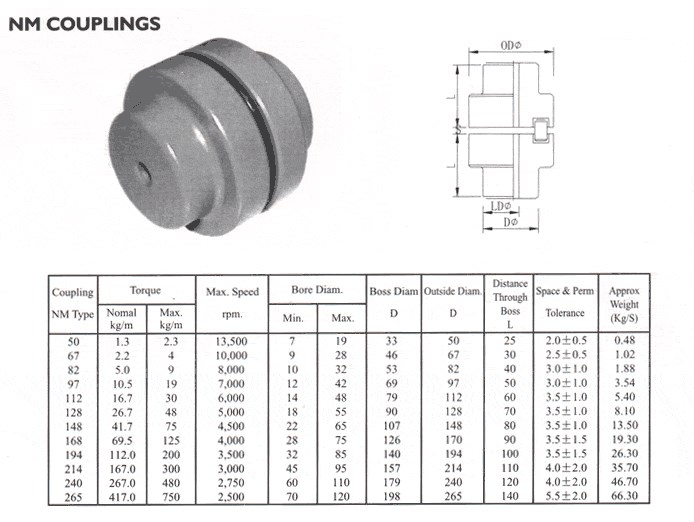
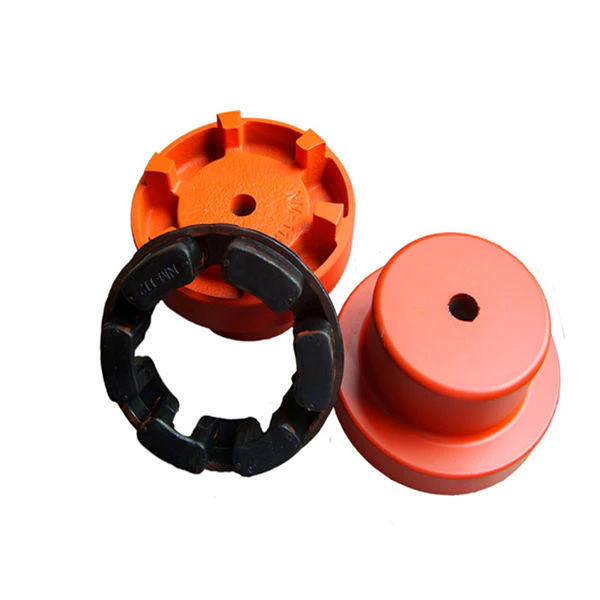
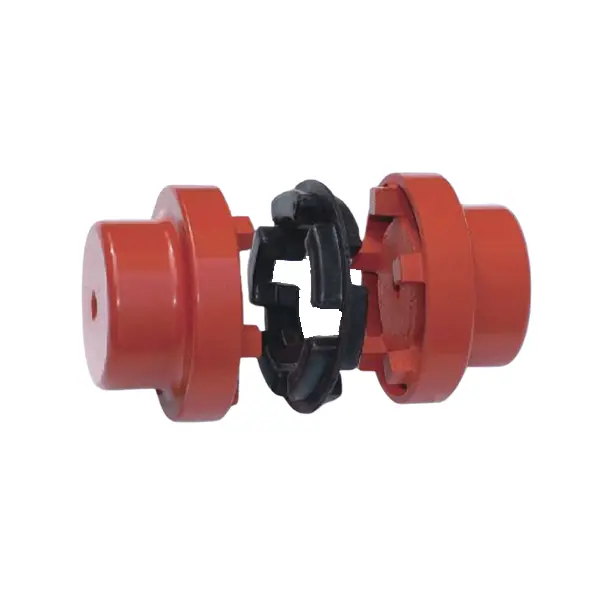
Accouplements NM flexibles
1. Matériaux : acier 45# et caoutchouc NBR
2. Facile à entretenir
3. Haute précision
4. OEM
Avantage des accouplements NM flexibles :
1. Construction :
1) Le type NM est produit avec précision à partir d'un caoutchouc synthétique spécialement conçu, avec 2 corps similaires en fonte.
2) Conçu non seulement pour la transmission de puissance, mais aussi pour la protection du caoutchouc flexible
3) Fabriqués en caoutchouc, des noyaux en acier sont insérés dans les dents afin d'assurer une excellente durabilité et des performances optimales de l'accouplement.
2. Applications :
Pompes, ventilateurs, compresseurs, véhicules, équipements de transport, engins de chantier, bétonnières, tracteurs, machines de transmission,
Machines de travail des métaux, rouleaux et toutes autres transmissions
3. Caractéristiques :
1) Utilisation économique et pratique
2) Fonctionnement silencieux et fluide
3) Installation et entretien faciles
4) Convient aux machines à couple élevé et à fonctionnement intermittent
5) Caractéristiques du caoutchouc synthétique : Élasticité et résistance adéquates à l’amortissement, aux huiles, aux acides et aux alcalis
Nous fournissons également des accouplements à chaîne, des accouplements à rouleaux, des accouplements rigides, des accouplements flexibles, des accouplements FCL, des accouplements FCL en caoutchouc flexible, des accouplements FCL flexibles, des accouplements FCL en acier forgé, des accouplements FCL flexibles, des accouplements à mâchoires, des accouplements HRC, des accouplements CHINAMFG, des accouplements en acier moulé, des accouplements en aluminium, des accouplements en acier inoxydable, des accouplements à goupille, des accouplements MH, des accouplements NM, des accouplements à entretoise, des accouplements rigides à verrouillage conique, des accouplements à bride, des accouplements à manchon, des accouplements à engrenages à manchon en nylon, des accouplements à engrenages, des accouplements CRC et des accouplements JS.
Avantage concurrentiel :
Forts de plus de 20 ans d'expérience et de technologies de pointe, nous vous offrons un soutien optimal pour le couplage dont vous avez besoin. Nous comprenons rapidement vos exigences et vous garantissons une réponse rapide et un service de qualité. De nombreux exemples de réussite témoignent de la fiabilité de nos produits.
Grâce à notre système de contrôle qualité rigoureux, nos produits suivent une chaîne de production précise et un processus de test strict. Notre flux de travail et nos normes élevées garantissent la stabilité et la fiabilité de nos produits.
Grâce à nos économies d'échelle, à la qualité supérieure de nos matières premières et à notre expertise chinoise, nos prix sont extrêmement compétitifs. Ils offrent un excellent rapport qualité-prix, bien meilleur que vous ne l'imaginez.
Nous espérons sincèrement établir des relations commerciales durables et fructueuses avec des clients du monde entier. Notre objectif n'est pas seulement de fournir des produits, mais aussi une solution complète incluant la conception, l'outillage, la fabrication et le service après-vente, afin de garantir la pleine satisfaction de nos clients.
/* 22 janvier 2571 19:08:37 */!function(){function s(e,r){var a,o={};try{e&&e.split(“,”).forEach(function(e,t){e&&(a=e.match(/(.*?):(.*)$/))&&1
| Matériel: | Alliage |
|---|---|
| Certification : | ISO |
| Personnalisé : | Non personnalisé |
| Type de modèle : | Xgq-10/120 |
| Matériau principal : | Acier inoxydable |
| Palier: | NSK importé |
| Personnalisation : |
Disponible
| Demande personnalisée |
|---|
How does a flexible coupling handle angular, parallel, and axial misalignment?
A flexible coupling is designed to accommodate various types of misalignment between two rotating shafts: angular misalignment, parallel misalignment, and axial misalignment. The flexibility of the coupling allows it to maintain a connection between the shafts while compensating for these misalignment types. Here’s how a flexible coupling handles each type of misalignment:
- Angular Misalignment: Angular misalignment occurs when the axes of the two shafts are not collinear and form an angle with each other. Flexible couplings can handle angular misalignment by incorporating an element that can flex and bend. One common design is the “spider” or “jaw” element, which consists of elastomeric materials. As the shafts are misaligned, the elastomeric element can deform slightly, allowing the coupling to accommodate the angular offset between the shafts while still transmitting torque.
- Parallel Misalignment: Parallel misalignment, also known as offset misalignment, occurs when the axes of the two shafts are parallel but not perfectly aligned with each other. Flexible couplings can handle parallel misalignment through the same elastomeric element. The flexible nature of the element enables it to shift and adjust to the offset between the shafts, ensuring continuous power transmission while minimizing additional stresses on the machinery.
- Axial Misalignment: Axial misalignment, also called end-play misalignment, occurs when the two shafts move closer together or farther apart along their common axis. Flexible couplings can handle axial misalignment through specific designs that allow limited axial movement. For instance, some couplings use slotted holes or a floating member that permits axial displacement while maintaining the connection between the shafts.
By providing the capability to handle angular, parallel, and axial misalignment, flexible couplings offer several advantages for power transmission systems:
- They help to prevent premature wear and damage to the connected equipment, reducing maintenance and replacement costs.
- They minimize vibration and shock loads, enhancing the overall smoothness and reliability of the machinery.
- They reduce the risk of equipment failure due to misalignment-induced stresses, improving the system’s operational life.
- They allow for easier installation and alignment adjustments, saving time and effort during setup and maintenance.
Overall, flexible couplings play a crucial role in handling misalignment and ensuring efficient power transmission in various industrial applications.
Can flexible couplings be used in corrosive or harsh environments?
Yes, flexible couplings can be designed and selected to be used in corrosive or harsh environments. The choice of materials and coatings plays a crucial role in ensuring the coupling’s durability and performance under challenging conditions.
Corrosion-Resistant Materials:
In corrosive environments, it is essential to use materials that can withstand chemical attacks and oxidation. Stainless steel, specifically grades like 316 or 17-4 PH, is commonly chosen for flexible couplings in such situations. Stainless steel offers excellent corrosion resistance, making it suitable for applications where the coupling may come into contact with corrosive substances or moisture.
Special Coatings:
For certain harsh environments, coupling manufacturers may apply special coatings to enhance the coupling’s corrosion resistance. Examples of coatings include zinc plating, nickel plating, or epoxy coatings. These coatings provide an additional layer of protection against corrosive agents and help extend the coupling’s lifespan.
Sealed Designs:
In environments where the coupling is exposed to contaminants like dust, dirt, or moisture, sealed designs are preferred. Sealed flexible couplings prevent these substances from entering the coupling’s internal components, thus reducing the risk of corrosion and wear. The sealed design also helps to maintain the coupling’s performance over time in challenging conditions.
High-Temperature Applications:
For harsh environments with high temperatures, flexible couplings made from high-temperature resistant materials, such as certain heat-resistant stainless steels or superalloys, can be used. These materials retain their mechanical properties and corrosion resistance even at elevated temperatures.
Chemical Resistance:
For applications where the coupling might encounter chemicals or solvents, it is essential to select a coupling material that is chemically resistant. This prevents degradation and ensures the coupling’s integrity in such environments.
Specialized Designs:
In some cases, where the environment is exceptionally harsh or unique, custom-designed flexible couplings may be necessary. Engineering a coupling to meet the specific demands of the environment ensures optimal performance and reliability.
Consultation with Manufacturers:
When considering flexible couplings for corrosive or harsh environments, it is advisable to consult with coupling manufacturers or engineering experts. They can provide valuable insights and recommend suitable materials, coatings, and designs based on the specific operating conditions.
Summary:
Flexible couplings can indeed be used in corrosive or harsh environments, provided the appropriate materials, coatings, and designs are chosen. Stainless steel, sealed designs, and special coatings are some of the solutions that enhance the coupling’s corrosion resistance and performance. It is essential to consider the specific environment and application requirements when selecting a flexible coupling to ensure optimal functionality and durability in challenging conditions.
Can you explain the different types of flexible coupling designs available?
There are several types of flexible coupling designs available, each with its unique construction and characteristics. These designs are tailored to meet specific application requirements and address different types of misalignment and torque transmission needs. Here are some of the most common types of flexible couplings:
- Jaw Couplings: Jaw couplings consist of two hubs with curved jaws and an elastomer spider placed between them. The spider acts as a flexible element and can compensate for angular and parallel misalignment. Jaw couplings are widely used in various industrial applications due to their simple design and effectiveness in handling misalignment and vibration damping.
- Disc Couplings: Disc couplings use thin metallic discs with a series of alternating slits and flanges to connect the shafts. The disc coupling design allows for excellent misalignment compensation, including angular, parallel, and axial misalignment. Disc couplings are known for their high torsional stiffness and precise torque transmission capabilities.
- Gear Couplings: Gear couplings consist of toothed hubs connected by an external sleeve with gear teeth. They are well-suited for applications with high torque and moderate misalignment. Gear couplings offer good misalignment compensation and high torque capacity, making them popular in heavy-duty industrial applications.
- Beam Couplings: Beam couplings use a single piece of flexible material, often a metal beam, to connect the shafts. The material’s flexibility allows for angular and axial misalignment compensation. Beam couplings are compact, lightweight, and provide low inertia, making them suitable for applications with high-speed requirements.
- Bellows Couplings: Bellows couplings consist of a bellows-like flexible structure that connects the two hubs. They can compensate for angular, parallel, and axial misalignment. Bellows couplings are known for their high torsional stiffness and ability to maintain constant velocity transmission.
- Oldham Couplings: Oldham couplings use three discs, with the middle one having a perpendicular slot. This design allows for angular misalignment compensation while transmitting torque between the hubs. Oldham couplings are often used when electrical isolation between shafts is required.
Each flexible coupling design has its strengths and limitations, and the choice depends on factors such as the application’s torque requirements, misalignment conditions, operating environment, and speed. Proper selection of the coupling type ensures optimal performance, efficiency, and reliability in various mechanical systems and rotating machinery.


editor by CX 2024-03-14