Description du produit
Caractéristiques
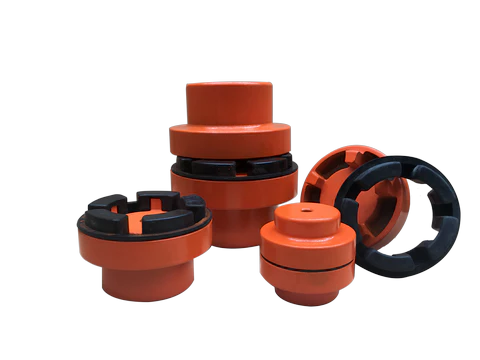
We are the leading NM Coupling Spider manufacturer, and are specializing in various high quality NM coupling.
1. Matériaux : Fonte, caoutchouc.
2. Les services OEM et ODM sont disponibles.
3. Haute efficacité de transmission
4. Finition : Peint.
5. Haute qualité à prix compétitif
6. Différents modèles adaptés à vos différents besoins
7. Stock disponible pour différents diamètres d'alésage des deux côtés.
8. Application dans une large gamme d'environnements.
9. Montage et démontage rapides et faciles.
10. Résistant à l'huile et à l'isolation électrique.
11. Caractéristiques de rotation identiques dans le sens horaire et antihoraire.
12. Petites dimensions, faible poids, couple transmis élevé.
13. Il offre de bonnes performances en matière de compensation du désalignement.
14.Coupling Type :NM50,NM67, NM82, NM97, NM12, NM128, NM148,NM168, NM194, NM214
Applications
NM couplings are offered in the industry’s largest variety of stock bore/keyway combinations. These couplings require no lubrication and provide highly reliable service for light, medium, and heavy duty electrical motor and internal combustion power transmission applications. Applications include power transmission to industrial equipment such as pumps, gear boxes, compressors, blowers, mixers, and conveyors.
Availability
Standard coupling
OEM coupling
High Performance
Strong Ultimate tensile strength
Perfect surface treatment
Durable,Flexible
High Quality
Corrosion resistance
Durable, Robust and Reliable
Bad condition resistance
Lower weight–high speed
Emballer
Plastic bag+ Neutral Box+ Plywood CaseNos avantages
NM coupling extensively used in compressors, diesel engine drives, pumps, conveyors, and many other drive units.
NM coupling consists of 2 hubs and flexible ring able to compensate all type of shaft misalignments.The flexible rings are made of Nitile rubber(NBR) which have a high internal damping characteristic which enable to absorb and dampen torsional vibrations,operate effectively in temperature range of -40~+100.
Size avalible from: 50,67,82,97,112,128,148,168,194,214,240,265.
NM coupling characteristics:Quiet and smooth operation.Easy installation and maintenance free. Available to machine with high torque and intermittent operation.
| Packing&Shipping | |
| Emballer | Standard suitable package / Pallet or container. Polybag inside export carton outside, blister and Tape and reel package available. If customers have specific requirements for the packaging, we will gladly accommodate |
| Expédition |
10-20working days ofter payment receipt comfirmed (based on actual quantity). Professional goods shipping forward. |
About MIGHTY
ZheJiang Mighty Machinery Co., Ltd. specializes in manufacturing Mechanical Power Transmission Products.We Mighty is the division/branch of SCMC Group, which is a wholly state-owned company, established in 1980.
About Mighty:
-3 manufacturing factories, we have 5 technical staff, our FTY have strong capacity for design and process design, and more than 70 workers and double shift eveyday.
-Large quality of various material purchase and stock in warhouse which ensure the low cost for the material and production in time.
-Strick quality control are apply in the whole production.
we have incoming inspection,process inspection and final production inspection which can ensure the perfect of the goods quality.
-14 years of machining experience. Long time cooperate with the Global Buyer, make us easy to understand the csutomer and handle the export. MIGHTY’s products are mainly exported to Europe, America and the Middle East market. With the top-ranking management, professional technical support and abundant export experience, MIGHTY has established lasting and stable business partnership with many world famous companies and has got good reputation from CHINAMFG customers in international sales.
FAQ
Q : Êtes-vous une société commerciale ou un fabricant ?
A: Nous sommes une usine.
Q : Quel est votre délai de livraison ?
A: Generally it is 5-10 days if the goods are in stock. or it is 15-20 days if the goods are not in stock, it is according to quantity.
Q: Do you provide samples ? is it free or extra ?
A: Yes, we could offer the sample for free charge but do not pay the cost of freight.
Q : Quelles sont vos conditions de paiement ?
A: Payment=1000USD, 30% T/T in advance ,balance before shippment.
We warmly welcome friends from domestic and abroad come to us for business negotiation and cooperation for mutual benefit. To supply customers excellent quality products with good price and punctual delivery time is our responsibility.
| Standard ou non standard : | Standard |
|---|---|
| Trou d'arbre : | 19-32 |
| Couple : | >80 N.M |
| Diamètre d'alésage : | 19 mm |
| Vitesse: | 4000 tr/min |
| Structure: | Flexible |
| Exemples : |
US$ 0/Piece
1 pièce (commande minimale) | |
|---|
| Personnalisation : |
Disponible
| Demande personnalisée |
|---|

Quels secteurs industriels utilisent couramment des accouplements flexibles pour la transmission de puissance ?
Les accouplements flexibles sont largement utilisés dans diverses industries pour la transmission de puissance et le contrôle de mouvement. Leur capacité à compenser les défauts d'alignement, à amortir les vibrations et à protéger les équipements des chocs en fait des composants précieux dans de nombreux procédés industriels. Voici quelques-unes des industries qui utilisent couramment des accouplements flexibles :
- Fabrication: Les accouplements flexibles sont largement utilisés dans des secteurs industriels tels que l'automobile, l'aérospatiale, l'électronique et la production de biens de consommation. Ils jouent un rôle essentiel dans la transmission de puissance entre les moteurs et diverses machines, notamment les systèmes de convoyage, les robots et les chaînes de montage.
- Pétrole et gaz : Dans l'industrie pétrolière et gazière, les accouplements flexibles sont utilisés dans les pompes, les compresseurs, les turbines et les générateurs. Ils permettent de transmettre la puissance sur les plateformes offshore, dans les raffineries, les pipelines et lors des opérations de forage, tout en compensant les variations dynamiques inhérentes à ces applications.
- Production d'énergie : Les centrales électriques, qu'elles soient conventionnelles ou à énergies renouvelables, utilisent des accouplements flexibles pour transmettre l'énergie des turbines et des générateurs aux générateurs électriques. On les retrouve dans les centrales au charbon, au gaz naturel, nucléaires, hydroélectriques et éoliennes.
- Exploitation minière: Dans les opérations minières, les accouplements flexibles sont utilisés dans divers équipements, notamment les systèmes de convoyage, les concasseurs et les grandes pompes industrielles. Ils sont conçus pour résister aux charges importantes et aux conditions difficiles généralement rencontrées dans les environnements miniers.
- Marin: Les accouplements flexibles sont essentiels dans les systèmes de propulsion marine, assurant la liaison entre les moteurs et les hélices ou les hydrojets. Ils sont également utilisés dans les machines embarquées, les systèmes auxiliaires et les applications offshore.
- Pâtes et papiers : L'industrie des pâtes et papiers dépend des accouplements flexibles dans les machines utilisées pour le traitement du bois, la production de pâte à papier, la fabrication du papier et les procédés d'impression.
- Chimie et pétrochimie : Dans les usines chimiques et les raffineries pétrochimiques, des accouplements flexibles sont utilisés dans les pompes, les mélangeurs, les agitateurs et autres équipements rotatifs pour assurer une transmission de puissance efficace et protéger les machines sensibles.
- Construction: Le secteur de la construction utilise des accouplements flexibles dans divers équipements, tels que les pompes à béton, les grues, les excavatrices et les foreuses.
- Eau et eaux usées : Les accouplements flexibles sont utilisés dans les stations d'épuration, les installations de traitement des eaux usées et les systèmes d'irrigation pour transférer la puissance entre les moteurs et les pompes.
- Agriculture: Dans le domaine des machines agricoles, les accouplements flexibles sont utilisés dans les tracteurs, les moissonneuses-batteuses et les systèmes d'irrigation, permettant une transmission et un fonctionnement efficaces de la puissance.
La polyvalence et l'adaptabilité des accouplements flexibles en font des composants indispensables dans un large éventail d'industries, contribuant à une fiabilité accrue des équipements, à une réduction des temps d'arrêt et à une amélioration des performances globales du système.
Can flexible couplings be used for both motor-to-shaft and shaft-to-shaft connections?
Yes, flexible couplings can be used for both motor-to-shaft and shaft-to-shaft connections in various applications. The versatility of flexible couplings allows them to adapt to different types of connections and meet the specific requirements of the system.
Motor-to-Shaft Connections:
When connecting a motor to a shaft, a flexible coupling serves as an intermediary component that joins the motor shaft and the driven shaft. Flexible couplings are commonly used in motor-driven systems to accommodate misalignment between the motor and the driven load. In motor applications, flexible couplings help reduce stress and wear on the motor bearings, thus extending the motor’s life and enhancing overall system reliability. They also act as vibration dampeners, minimizing vibrations transmitted from the motor to the driven shaft, and subsequently to connected equipment, ensuring smoother operation.
Shaft-to-Shaft Connections:
In many mechanical systems, such as those in the manufacturing, automation, and power transmission industries, shaft-to-shaft connections are required. A flexible coupling can bridge the gap between two shafts and transmit torque while accommodating misalignment. This type of coupling is commonly used to connect shafts that are not perfectly aligned due to factors like manufacturing tolerances, thermal expansion, or foundation settling. By allowing for misalignment, the flexible coupling protects the connected components from excessive stresses and ensures efficient power transmission.
Versatility and Advantages:
The ability of flexible couplings to handle both motor-to-shaft and shaft-to-shaft connections makes them versatile solutions for a wide range of industrial applications. Some of the advantages of using flexible couplings in these connections include:
- Minimizing stress and wear on connected components, such as bearings and seals.
- Compensating for misalignment, ensuring smooth power transmission.
- Damping vibrations and shock loads, reducing the risk of mechanical failures.
- Protecting equipment from excessive forces, enhancing system reliability.
- Simplifying installation and alignment procedures, reducing downtime.
- Improving overall system performance and operational efficiency.
Applications :
Flexible couplings find applications in a wide range of industries, including manufacturing, material handling, automotive, aerospace, robotics, and more. Whether connecting a motor to a shaft or joining two shafts directly, flexible couplings play a crucial role in enhancing the reliability and efficiency of rotating machinery and mechanical systems.
In conclusion, flexible couplings can effectively serve as connectors for both motor-to-shaft and shaft-to-shaft connections, providing essential misalignment compensation and protection for connected equipment in various industrial applications.
What is a flexible coupling and how does it work?
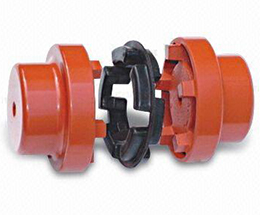
A flexible coupling is a mechanical device used to connect two shafts while allowing for relative movement between them. It is designed to transmit torque from one shaft to another while compensating for misalignment, vibration, and shock. Flexible couplings are essential components in various rotating machinery and systems, as they help protect the connected equipment and enhance overall performance.
Types of Flexible Couplings:
There are several types of flexible couplings, each with its unique design and characteristics. Some common types include:
- Accouplements à mâchoires : Jaw couplings feature elastomer spiders that fit between two hubs. They can accommodate angular and parallel misalignment while dampening vibrations.
- Accouplements à disque : Disc couplings use thin metallic discs to connect the shafts. They are highly flexible and provide excellent misalignment compensation.
- Accouplements d'engrenages : Gear couplings use gear teeth to transmit torque. They offer high torque capacity and can handle moderate misalignment.
- Accouplements de poutres : Beam couplings use a single piece of flexible material, such as a metal beam, to transmit torque while compensating for misalignment.
- Accouplements à soufflets : Bellows couplings use a bellows-like structure to allow for axial, angular, and parallel misalignment compensation.
- Accouplements Oldham : Oldham couplings use three discs, with the middle one having a perpendicular slot to allow for misalignment compensation.
How a Flexible Coupling Works:
The operation of a flexible coupling depends on its specific design, but the general principles are similar. Let’s take the example of a jaw coupling to explain how a flexible coupling works:
- Two shafts are connected to the coupling hubs on either side, with an elastomer spider placed between them.
- When torque is applied to one shaft, it causes the spider to compress and deform slightly, transmitting the torque to the other shaft.
- In case of misalignment between the shafts, the elastomer spider flexes and compensates for the misalignment, ensuring smooth torque transmission without imposing excessive loads on the shafts or connected equipment.
- The elastomer spider also acts as a damping element, absorbing vibrations and shocks during operation, which reduces wear on the equipment and enhances system stability.
Overall, the flexibility and ability to compensate for misalignment are the key features that allow a flexible coupling to function effectively. The choice of a specific flexible coupling type depends on the application’s requirements, such as torque capacity, misalignment compensation, and environmental conditions.


editor by CX 2023-09-30